What does an occlusal splint change?
When biting, the opposing teeth meet the fitted splint. This can limit direct friction between tooth surfaces, but does not automatically stop clenching.

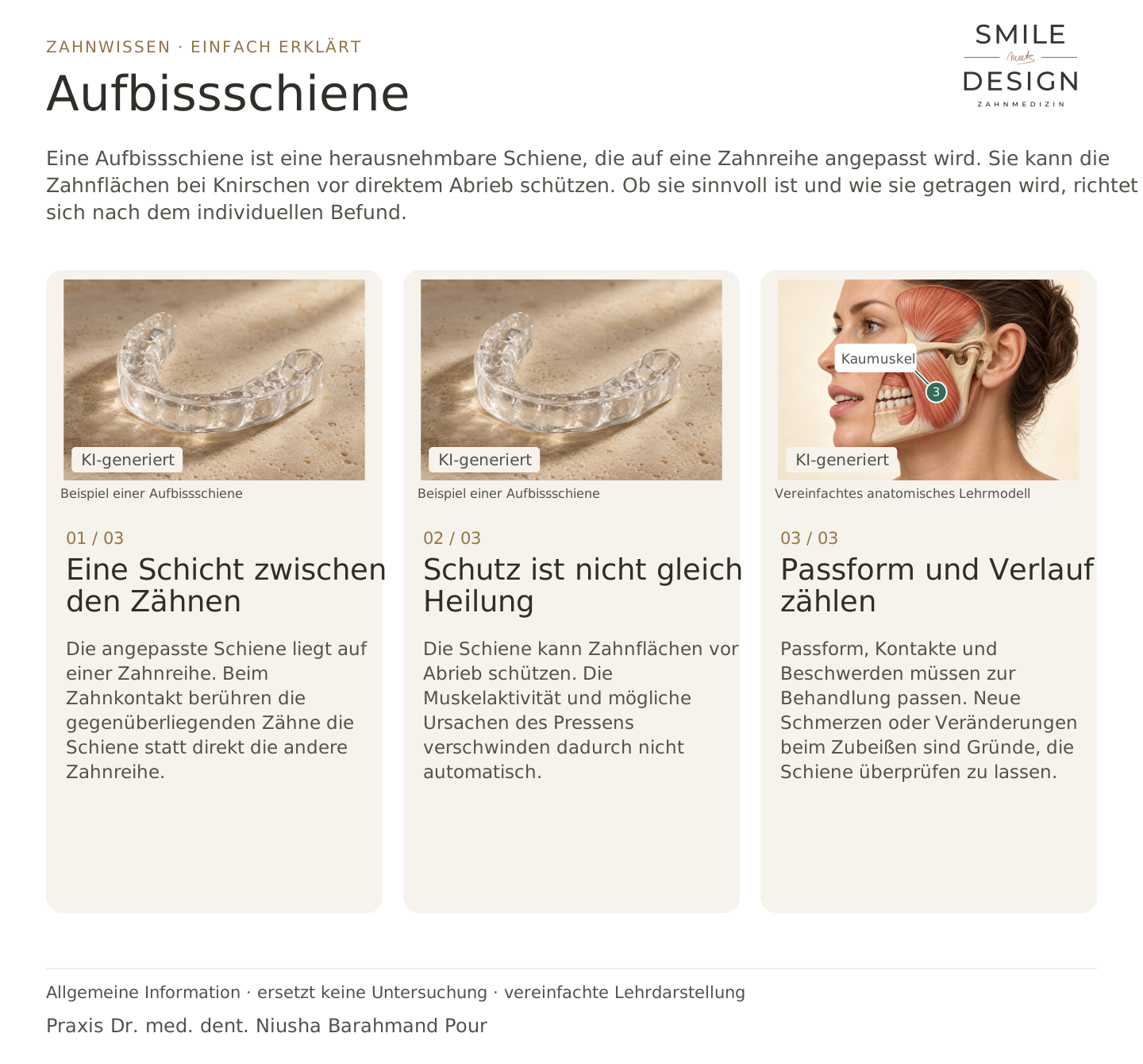
An occlusal splint is a removable appliance fitted to one row of teeth. It can protect tooth surfaces from direct wear during grinding. Whether it is suitable and how it should be worn depend on individual findings.
For dental trainees & teams
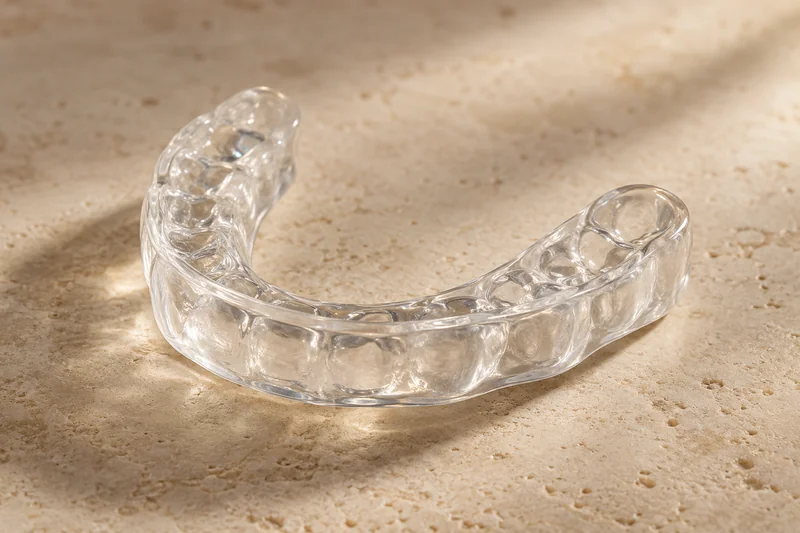
The fitted splint sits over one row of teeth. When the teeth meet, the opposing teeth contact the splint rather than the other row directly.
The splint can protect tooth surfaces from wear. It does not automatically eliminate muscle activity or the possible causes of clenching.
The fit, contacts and symptoms must be considered throughout treatment. New pain or changes in the bite are reasons to have the splint checked.
When biting, the opposing teeth meet the fitted splint. This can limit direct friction between tooth surfaces, but does not automatically stop clenching.
In grinding or clenching, protecting strained tooth surfaces may be a treatment goal. Not everyone with bruxism needs a splint.
The examination and treatment aim determine the splint type and how it is worn. Fit, tooth contacts and symptoms are monitored; new pain should be checked.
Three steps. Straight to the point.
Explanations are also shown on screen.

Silent film in German · English explanations in the three views above
An occlusal splint is used here for protection during grinding. A retainer is intended to stabilise tooth positions after orthodontic treatment. The appliances are not freely interchangeable.
No. Protecting tooth surfaces is a different aim from stopping muscle activity. Depending on the situation, further measures may be useful.
Do not simply carry on wearing it as before. Contact the treating practice to have the fit and symptoms checked.
No. The splint type, treatment aim and wearing schedule are decided individually. Follow the personal instructions from the treating practice.
A question to discuss with Dr. med. dent. Niusha Barahmand Pour:
What specific aim would a splint have for my findings, and how would its fit and progress be checked?
Her practice approach combines preserving teeth with function. Suitable measures are discussed in light of the individual starting point.
After an examination, we discuss whether an occlusal splint is suitable for your findings.
Arrange a splint consultationChoose an appointment on DoctolibBuild on the simple explanation with clinical terms, key distinctions and a knowledge question.
Protecting teeth and stopping muscle activity are different goals. A splint does not automatically eliminate clenching or grinding.
Editorial research: 22 October 2026. This explanation covers general principles and does not replace a personal examination. Suitable treatment is discussed following individual assessment.