What is it used for?
A defined wound-care purpose; it is not routine for every wound.

Dental wound packing is a temporary material, such as a suitable dressing, placed in or against a treated wound. Depending on the situation, it may provide wound care, pressure or a medication carrier. The clinical team determines its purpose, material and review schedule; do not insert packing into a wound yourself.
For training & practice ↓
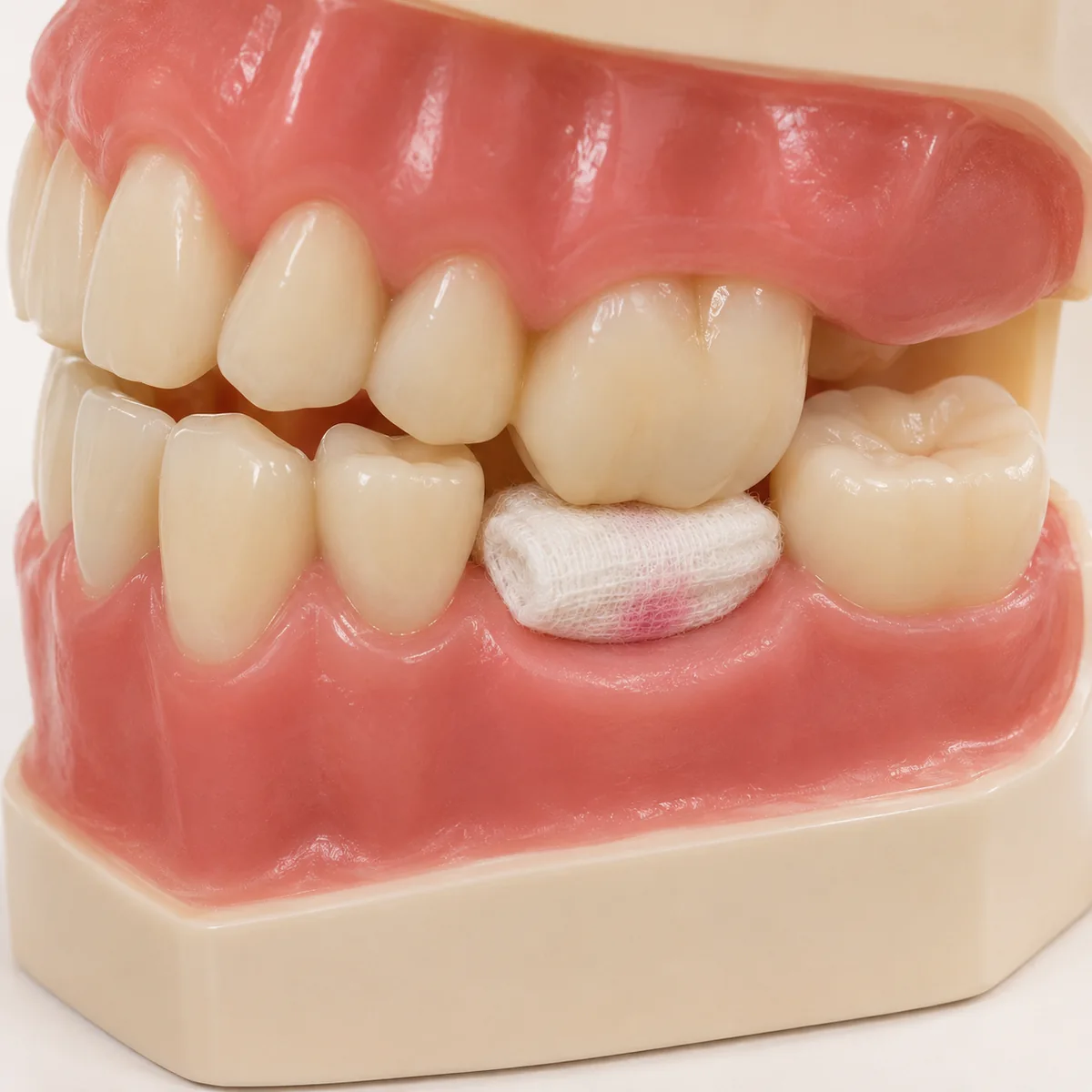
Not all dressings do the same job. A dressing for a painful extraction socket differs from the gauze pad briefly bitten on to control bleeding.
If a dressing has been placed, find out whether it needs checking, replacement or removal. Do not pull at it or push it back into the wound yourself.
Follow the individual instructions. Persistent bleeding, increasing pain or swelling should be discussed with the treating team.
A defined wound-care purpose; it is not routine for every wound.
No. Do not insert objects or dressing material into a wound yourself.
According to the agreed plan, or earlier for persistent bleeding or increasing symptoms.
Three steps. No audio.
Each scene can also be selected manually.

Silent educational film with German on-screen text and simplified teaching images. Not a patient case or a promised treatment outcome. The full English explanation is available as text.
Packing is material placed by the clinician. A blood clot is formed by the body and should be protected during healing.
The terms are sometimes used loosely. A bite pad lies over the wound and provides pressure. Packing is placed in the treated area for a defined purpose.
It depends on the material. Ask when it should be changed or removed. Its appearance cannot tell you the correct schedule.
Do not push it back into the wound. Contact the treating practice and explain what happened, particularly if there is bleeding, pain or swelling.
You can bring this question to your appointment:
What material has been placed in my wound, and when should it be checked or removed?
If you receive a wound dressing, ask for a clear explanation of its purpose and follow-up.
Discuss your findingsAppointment selection at DoctolibPacking is material placed by the clinician. A blood clot is formed by the body and should be protected during healing.
Editorial research: . General information, not an individual diagnosis or treatment recommendation. Teaching illustrations are simplified and do not depict a patient case.