Early protection?
The blood clot.

A blood clot initially protects the wound after a tooth is removed. New tissue gradually replaces it. The gum surface may close while the underlying bone is still remodelling. Recovery and aftercare depend on the procedure and individual factors.
For training & practice ↓
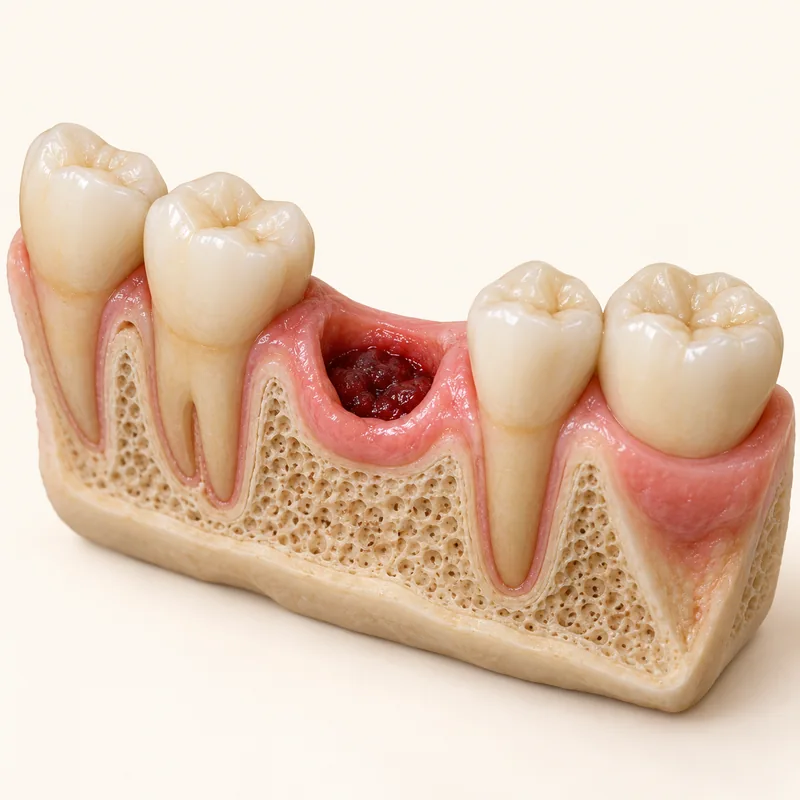
The clot belongs in the socket. Avoid checking it with your tongue, fingers or objects.
Soft tissue and bone heal at different rates. There is no single date that establishes complete healing for everyone.
Follow the personal aftercare plan and attend reviews. Worsening symptoms or persistent bleeding need direct advice.
The blood clot.
No, recovery varies.
Your aftercare plan and symptoms.
Three steps. No audio.
Each scene can also be selected manually.

Silent educational film with German on-screen text and simplified teaching images. Not a patient case or a promised treatment outcome. The full English explanation is available below.
The clot belongs in the socket. Avoid checking it with your tongue, fingers or objects.
Soft tissue and bone heal at different rates. There is no single date that establishes complete healing for everyone.
Follow the personal aftercare plan and attend reviews. Worsening symptoms or persistent bleeding need direct advice.
Closed gum tissue and mature underlying bone represent different healing stages. Stitches do not make healing complete.
Timing varies. A closed surface does not establish that bone remodelling has finished.
Do not probe it or flush it with a water flosser. Your aftercare instructions explain cleaning of the other teeth and later the wound area.
No. Appearance alone cannot reliably distinguish a healing coating from infection. Call if pain, swelling or fever develops or increases.
Editorially suggested question to discuss with Dr Niusha Barahmand Pour:
Which changes are expected in my wound, and when should I contact you?
Describe the procedure and current symptoms when asking about recovery.
Discuss healing by telephone · 0221 669 401 80Telephone contactClosed gum tissue and mature underlying bone represent different healing stages. Stitches do not make healing complete.
Editorial research: . General information, not an individual diagnosis or treatment recommendation. Teaching illustrations are simplified and do not depict a patient case.