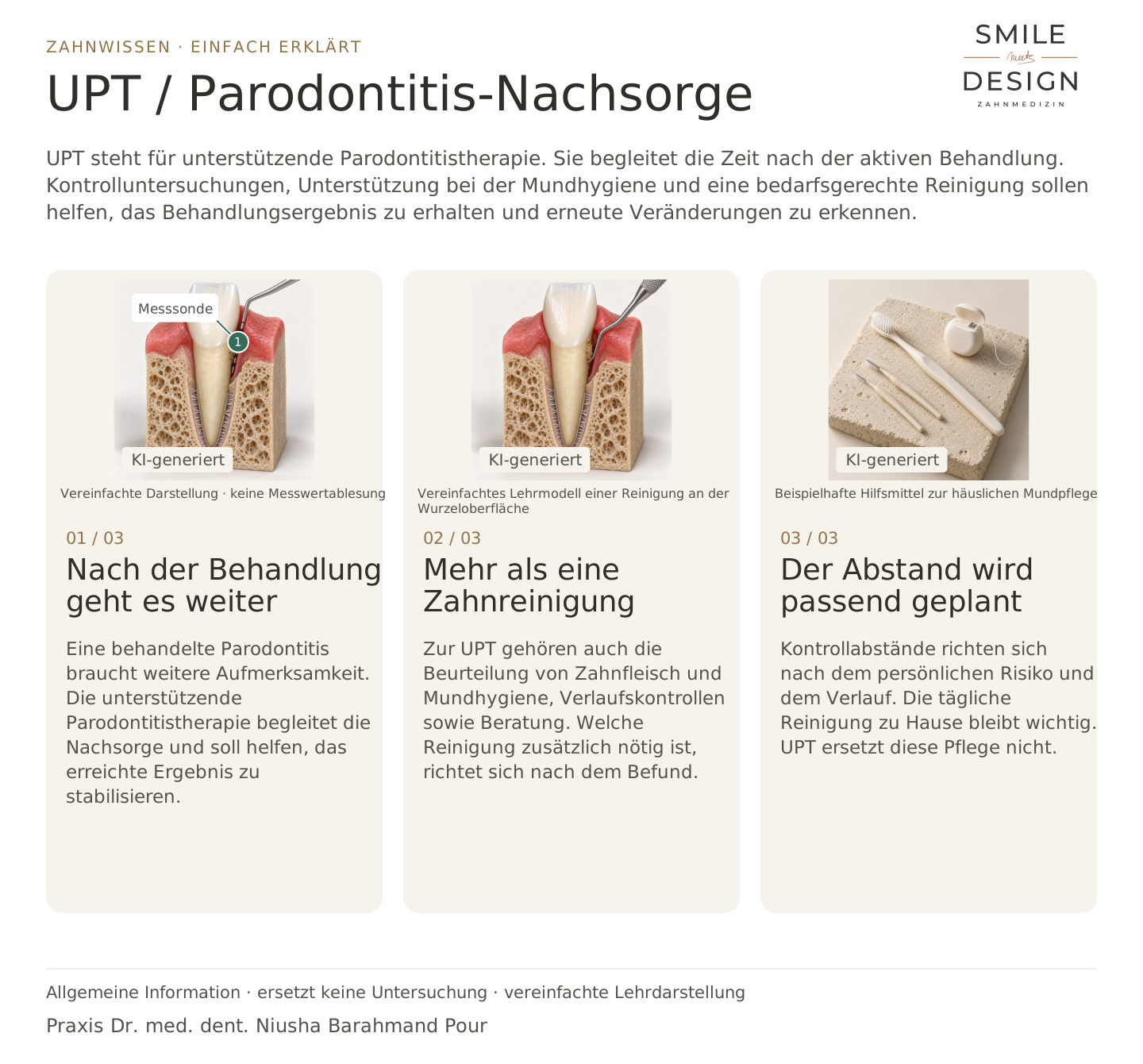
What does follow-up include?
Alongside cleaning according to need, it includes monitoring, gum assessment and support for home oral care. It is therefore more than professional cleaning alone.

Supportive periodontal therapy, known as UPT in Germany, follows active periodontal treatment. Check-ups, oral hygiene support and cleaning according to need aim to help maintain the treatment result and identify further changes.
For dental trainees & teams
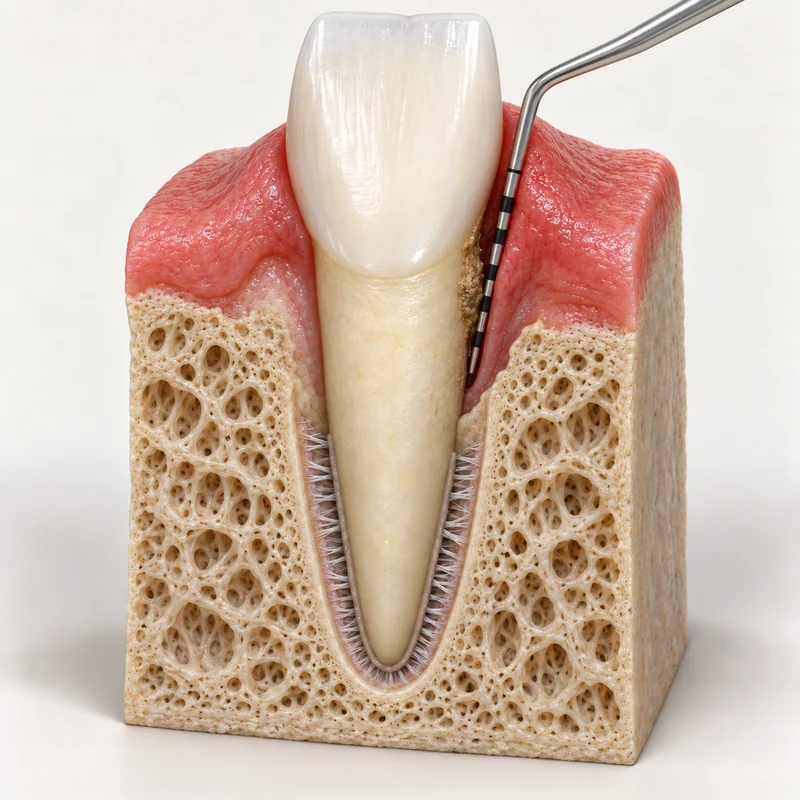
Treated periodontitis needs ongoing attention. Supportive periodontal therapy provides follow-up care and aims to help stabilise the result achieved.
Supportive periodontal therapy includes gum and oral hygiene assessment, monitoring and advice. Any additional cleaning required depends on the findings.
Check-up intervals depend on individual risk and the course of the disease. Daily home cleaning remains important. Supportive periodontal therapy does not replace it.
Alongside cleaning according to need, it includes monitoring, gum assessment and support for home oral care. It is therefore more than professional cleaning alone.
It supports people after active periodontal treatment. The aim is to identify new changes early and stabilise the result achieved where possible.
Individual risk and the condition's previous course determine check-up intervals. Findings are checked and necessary measures adjusted at these appointments.
Three steps. Straight to the point.
Explanations are also shown on screen.

Silent film in German · English explanations in the three views above
Professional dental cleaning is known as PZR in Germany. Supportive periodontal therapy is follow-up specifically for periodontitis, combining checks, advice and cleaning according to need.
No. Cleaning may be part of it. Supportive periodontal therapy is structured care after periodontitis treatment, including clinical checks and support for home oral hygiene.
No. The course of the disease and personal risks influence planning. The practice explains which checks are planned and why.
The risk of renewed inflammation remains. Follow-up and home care help identify changes early and maintain the result where possible.
A question to discuss with Dr. med. dent. Niusha Barahmand Pour:
Which findings and personal risks determine my follow-up, and what should I pay attention to at home?
Prevention and preserving teeth for the long term are part of the practice's approach to treatment.
We arrange suitable follow-up appointments based on the treatment so far and the available records.
Arrange your follow-up appointmentArrange an appointment with the practiceBuild on the simple explanation with clinical terms, key distinctions and a knowledge question.
Supportive periodontal therapy follows treated periodontitis. It is not equivalent to an isolated professional cleaning or active treatment of previously untreated disease.
Editorial research: 22 October 2026. This explanation covers general principles and does not replace a personal examination. Suitable treatment is discussed following individual assessment.