
Which distance is measured?
A fine probe measures the distance from the gum margin to the accessible base of the space. This is the probing depth, not a direct measure of bone loss.

A periodontal pocket is a deepened space between a tooth and the gum. Probing depth describes the distance measured there. It is an important clinical measurement but cannot alone diagnose periodontitis or determine its severity.
For dental trainees & teams
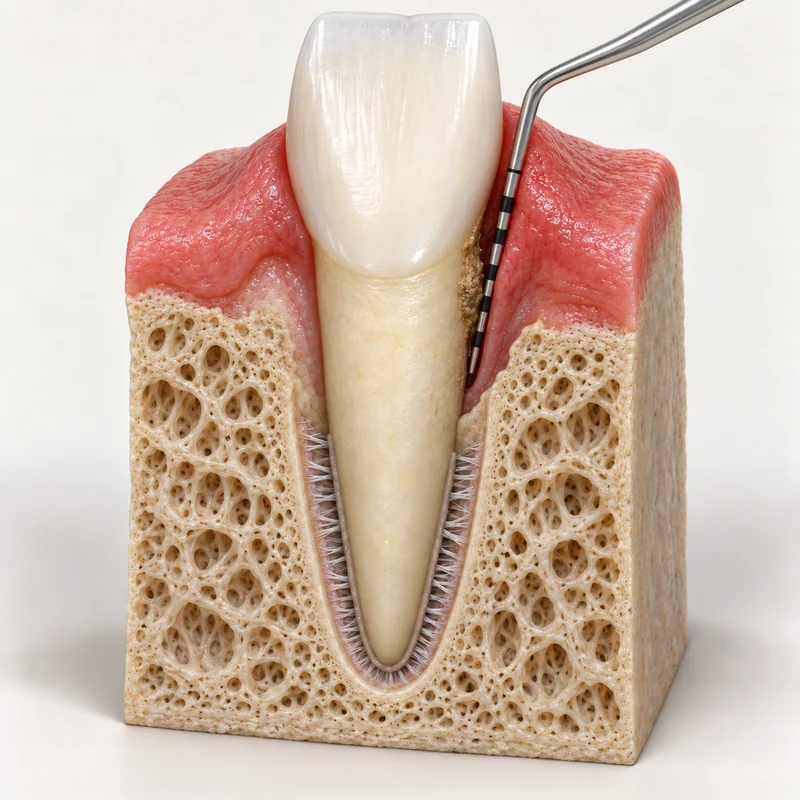
A fine probe is gently guided alongside the tooth. It measures the distance from the gum margin to the accessible base of the space.
Deepened pockets can indicate disease. Bleeding, gum recession and the condition of the surrounding bone also matter in assessing them.
The Periodontal Screening Index (PSI) gives an initial overview. Unusual results may require a more detailed periodontal examination and, where appropriate, X-rays.
A fine probe measures the distance from the gum margin to the accessible base of the space. This is the probing depth, not a direct measure of bone loss.
It may indicate disease, but is not enough for a diagnosis on its own. Bleeding, gum recession and other findings must also be considered.
Initial screening may be followed by a detailed periodontal assessment. Individual measurement sites are recorded, with X-rays included if needed.
Three steps. Straight to the point.
Explanations are also shown on screen.

Silent film in German · English explanations in the three views above
A pocket is a deepened space. Gum recession describes a change in the position of the gum margin. Both can occur together, but are not the same thing.
No. The probe measures a distance from the gum margin. Whether bone has been lost, and how much, is assessed using further findings.
This is part of a dental examination. Accurate measurement needs suitable instruments, a controlled technique and professional interpretation.
PSI is an initial screening assessment. If findings warrant it, individual teeth and measurement sites are examined and recorded in more detail.
A question to discuss with Dr. med. dent. Niusha Barahmand Pour:
What do the pocket measurements mean alongside the other findings, and what are the next steps?
Dr. Barahmand Pour discusses findings and treatment options personally, with long-term tooth preservation as an important consideration.
We explain what pocket measurements mean in the context of your gum examination.
Have your gums examinedChoose an appointment on DoctolibBuild on the simple explanation with clinical terms, key distinctions and a knowledge question.
Probing depth and bone loss are different measurements. Diagnosis considers the gum margins, bleeding and, where appropriate, X-ray findings together.
Editorial research: 22 October 2026. This explanation covers general principles and does not replace a personal examination. Suitable treatment is discussed following individual assessment.