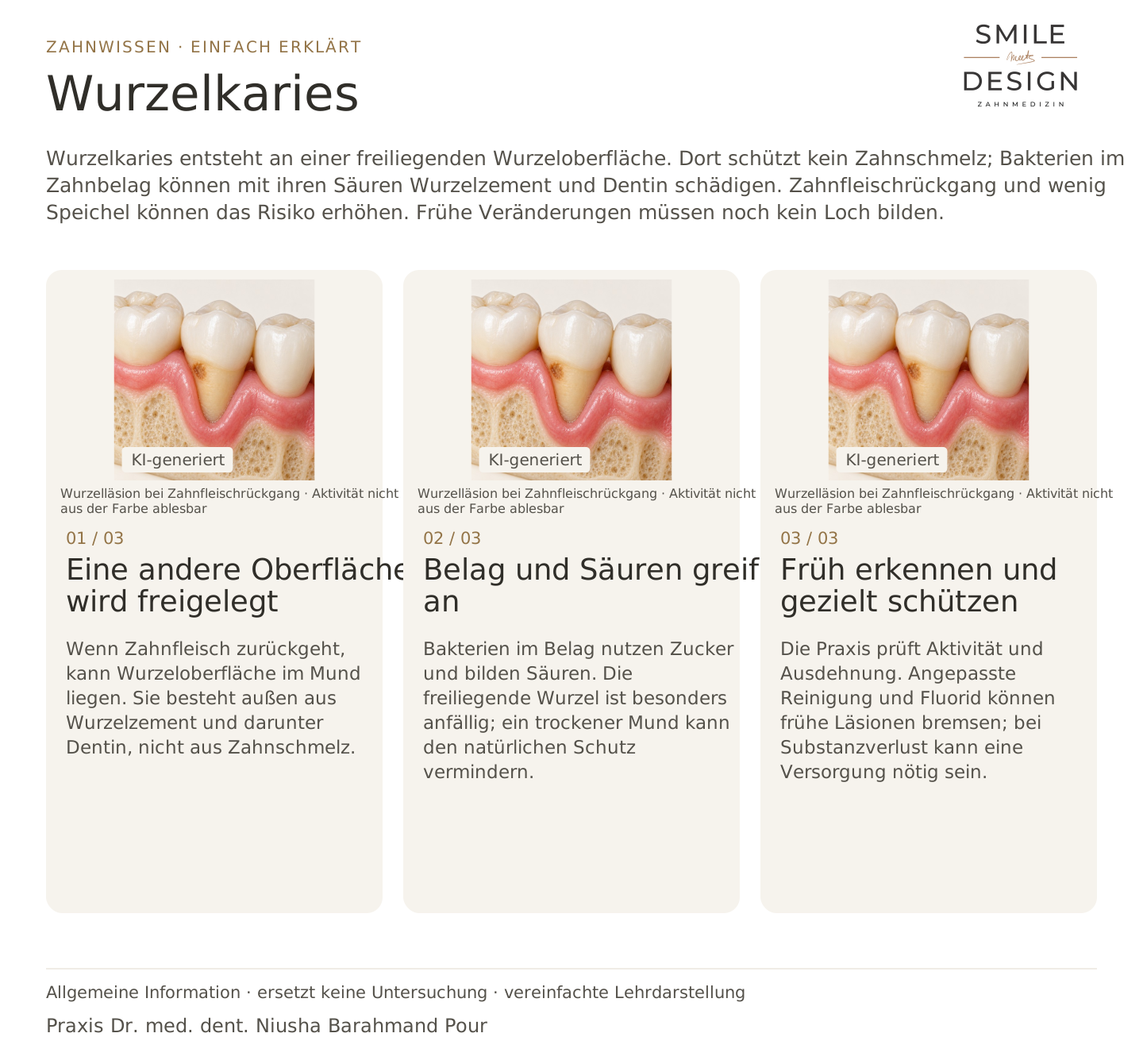
Where does it develop?
On a root surface exposed to the mouth.

Root caries affects an exposed root surface. There is no protective enamel there; acids from bacteria in plaque can damage cementum and dentine. Receding gums and reduced saliva may increase the risk. Early changes do not necessarily mean a cavity has formed.
For dental trainees & teams
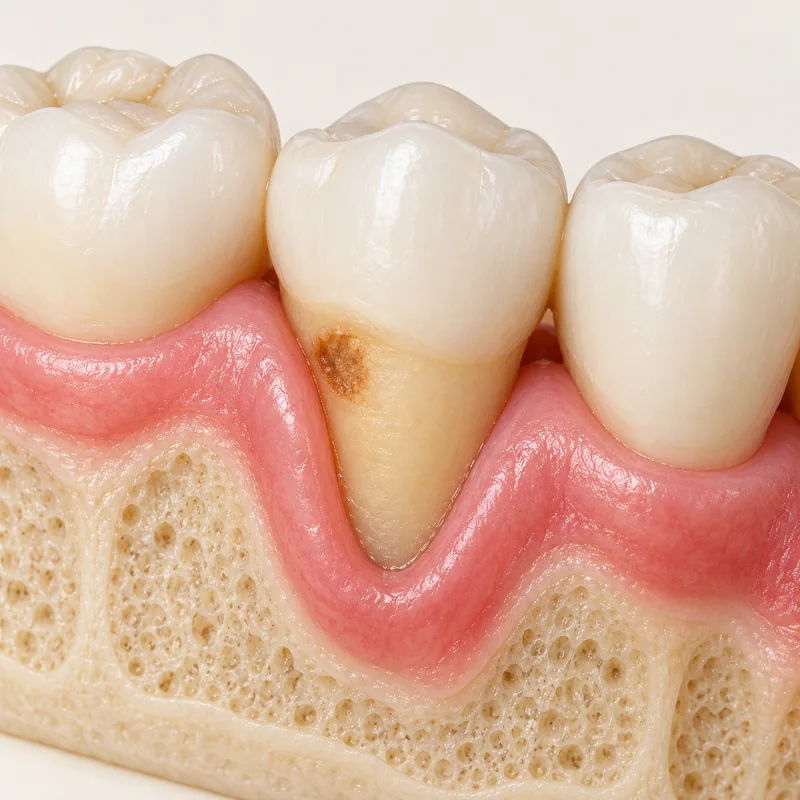
When gums recede, a root surface may become exposed in the mouth. Its outer layer is cementum, with dentine beneath, rather than enamel.
Bacteria in plaque use sugars and produce acids. An exposed root is particularly vulnerable; a dry mouth may reduce natural protection.
The practice assesses activity and extent. Adapted cleaning and fluoride may slow early lesions; loss of tooth tissue may require restoration.
On a root surface exposed to the mouth.
Plaque, frequent sugar intake and reduced protection from saliva.
Activity, depth and cleanability before treatment is planned.
Three steps. Straight to the point.
Explanations are also shown on screen.

Silent film in German · English explanations in the three views above
Both may affect exposed roots. Brief pain from cold does not prove decay; root caries may initially be painless.
No. Colour alone cannot reliably distinguish staining, active and inactive caries. Surface features, location and progression are assessed.
Not always. The approach depends on factors including activity, depth, cleanability and symptoms.
No. Exposed root surfaces and individual risk factors matter, not age alone.
A question to discuss with Dr. med. dent. Niusha Barahmand Pour:
Is the area on my root actively decaying, and how can I keep it clean gently?
Symptoms, examination findings and personal wishes form the basis of individual treatment planning.
An examination can assess exposed or altered tooth-neck areas.
Have exposed tooth necks examinedChoose an appointment on DoctolibBuild on the simple explanation with clinical terms, key distinctions and a knowledge question.
Root caries is defined by location. A lesion cannot be classified as active from colour alone.
Editorial research: 23 October 2026. This explanation covers general principles and does not replace a personal examination. Suitable treatment is discussed following individual assessment.