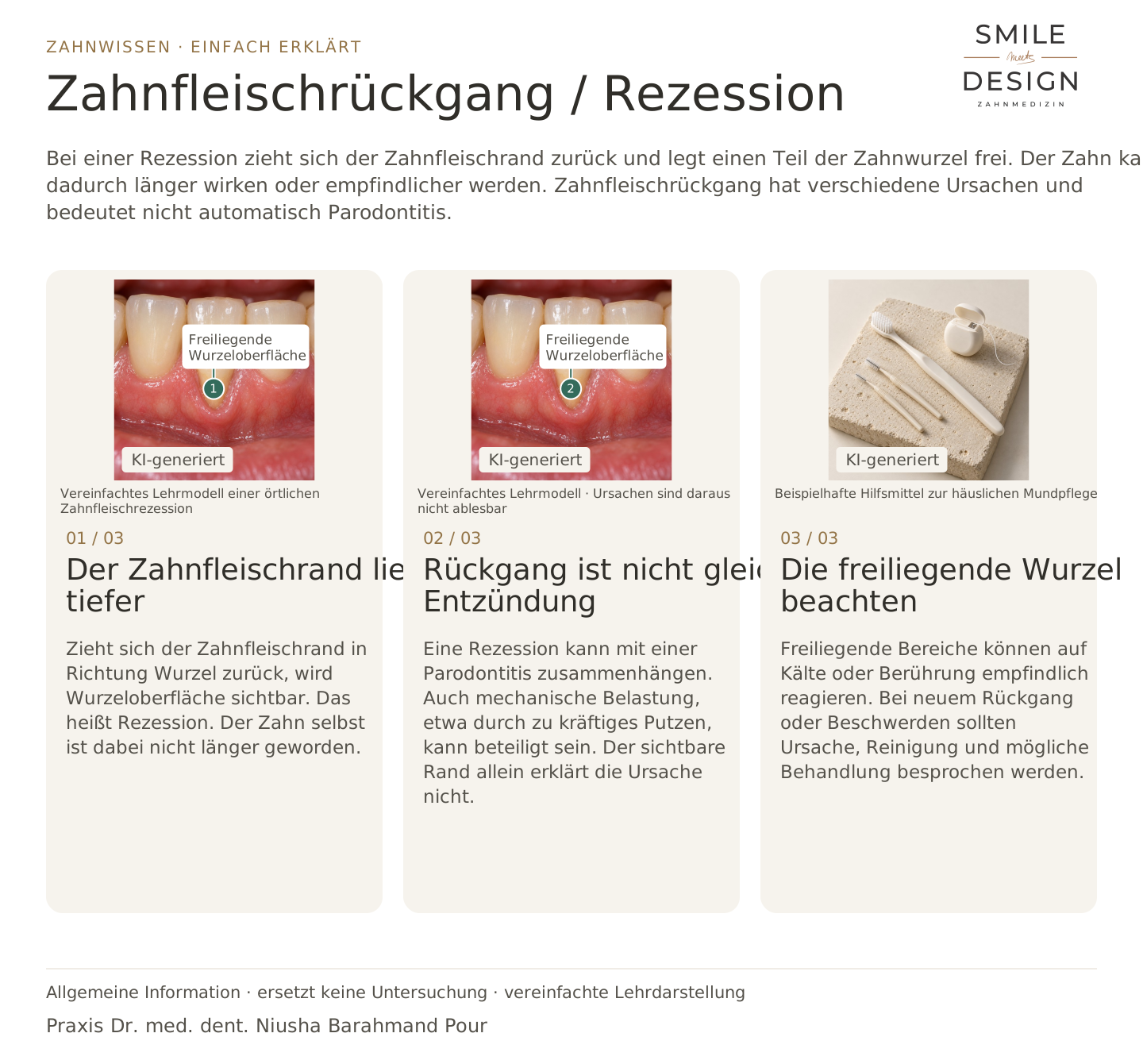
Why does the tooth look longer?
The gum margin moves towards the root and exposes previously covered surface. The tooth itself has not grown.

In gum recession, the gum margin moves back and exposes part of the tooth root. This can make the tooth look longer or feel more sensitive. Gum recession has several causes and does not automatically mean periodontitis.
For dental trainees & teams
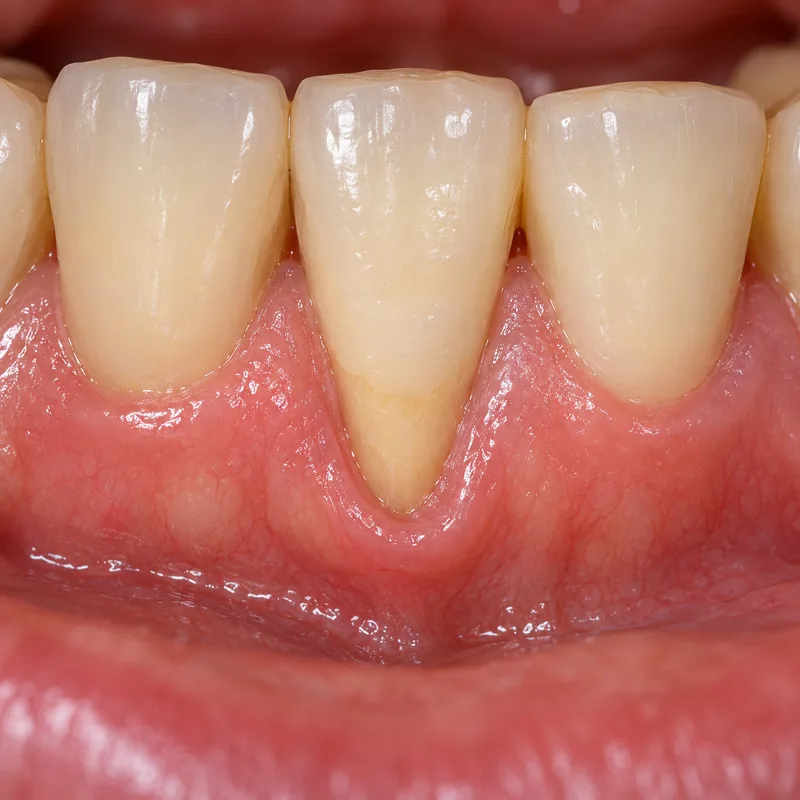
When the gum margin moves towards the root, root surface becomes visible. This is called recession. The tooth itself has not become longer.
Recession can be associated with periodontitis. Mechanical factors, such as brushing too hard, may also contribute. The visible margin alone does not explain the cause.
Exposed areas may be sensitive to cold or touch. New recession or symptoms are reasons to discuss the cause, cleaning and possible treatment.
The gum margin moves towards the root and exposes previously covered surface. The tooth itself has not grown.
Periodontitis may contribute, as may mechanical factors such as brushing too hard. The cause cannot be established from the visible margin alone.
Progression, symptoms and the exposed root's need for protection influence the approach. Gentle brushing remains important, but does not simply return the gum margin to its former position.
Three steps. Straight to the point.
Explanations are also shown on screen.

Silent film in German · English explanations in the three views above
Recession describes a receded gum margin. Pocket depth is measured between the margin and the base reached by a probe. Both can be present at the same time.
No. An examination establishes whether inflammation and damage to the supporting tissues are present or other factors are involved.
Gentle cleaning is important. However, a receded gum margin will not simply grow back to its previous position as a result.
This depends on the cause, progression, symptoms and the root's need for protection, among other factors. Not every visible recession needs the same procedure.
A question to discuss with Dr. med. dent. Niusha Barahmand Pour:
What could explain the recession at this site, and which findings should be monitored over time?
Healthy gums, preserving teeth and aesthetic preferences are considered together at the practice.
We discuss visible gum recession and suitable care based on your findings.
Have gum recession assessedChoose an appointment on DoctolibBuild on the simple explanation with clinical terms, key distinctions and a knowledge question.
A receded gum margin describes recession. Whether periodontitis is also present cannot be determined from this alone.
Editorial research: 22 October 2026. This explanation covers general principles and does not replace a personal examination. Suitable treatment is discussed following individual assessment.