No pain?
Still discuss the finding.

A retained root is part of a tooth root left after severe decay, a deep fracture or extraction. Whether removal is appropriate depends on symptoms, infection, position and the risks of treatment.
For training & practice ↓
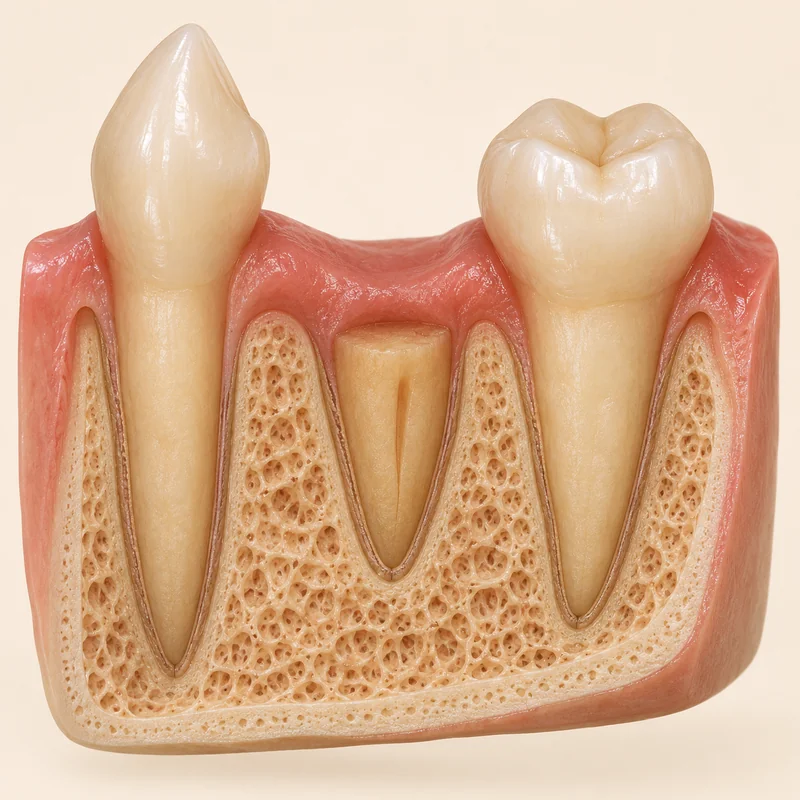
A severely damaged tooth or broken root fragment may remain in the jaw. A small remnant is not always visible in the mouth.
Examination and, when indicated, an X-ray help assess position and signs of infection. Nearby nerves, the sinus and adjacent teeth affect planning.
Removal or retention needs an explained clinical decision. If a root is left, clarify the finding, review plan and symptoms that should prompt reassessment.
Still discuss the finding.
No.
Seek prompt dental assessment.
Three steps. No audio.
Each scene can also be selected manually.

Silent educational film with German on-screen text and simplified teaching images. Not a patient case or a promised treatment outcome. The full English explanation is available as text.
A coronectomy deliberately retains suitable wisdom-tooth roots. An unexpected or decayed remnant is not automatically comparable.
No. However, lack of pain does not exclude a problem that needs treatment.
Surgical access is sometimes required. Do not pull at it or use tools yourself.
The permanent successor must be protected. Small primary-tooth root fragments therefore need separate assessment.
You can bring this question to your appointment:
Why is removal or retention preferred here, and how will it be reviewed?
An examination can clarify the finding and any need for referral.
Arrange an assessmentAppointment selection at DoctolibA coronectomy deliberately retains suitable wisdom-tooth roots. An unexpected or decayed remnant is not automatically comparable.
Editorial research: . General information, not an individual diagnosis or treatment recommendation. Teaching illustrations are simplified and do not depict a patient case.