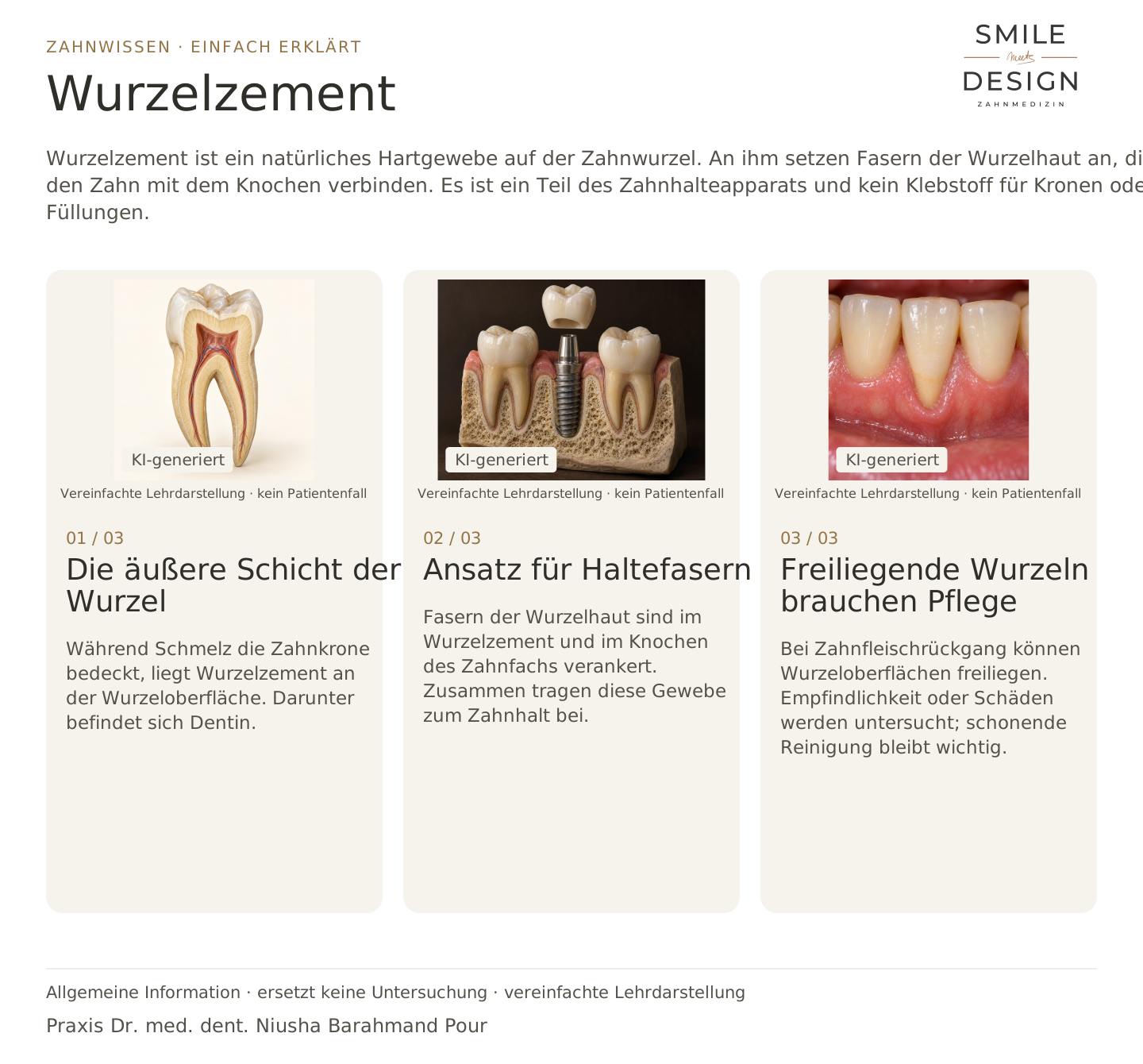
Where is it?
On the outside of a natural root, over the root dentine.

Root cementum is natural hard tissue covering the tooth root. Periodontal ligament fibres attach to it and connect the tooth to bone. It is part of the periodontium, not an adhesive for crowns or fillings.
For dental trainees & teams
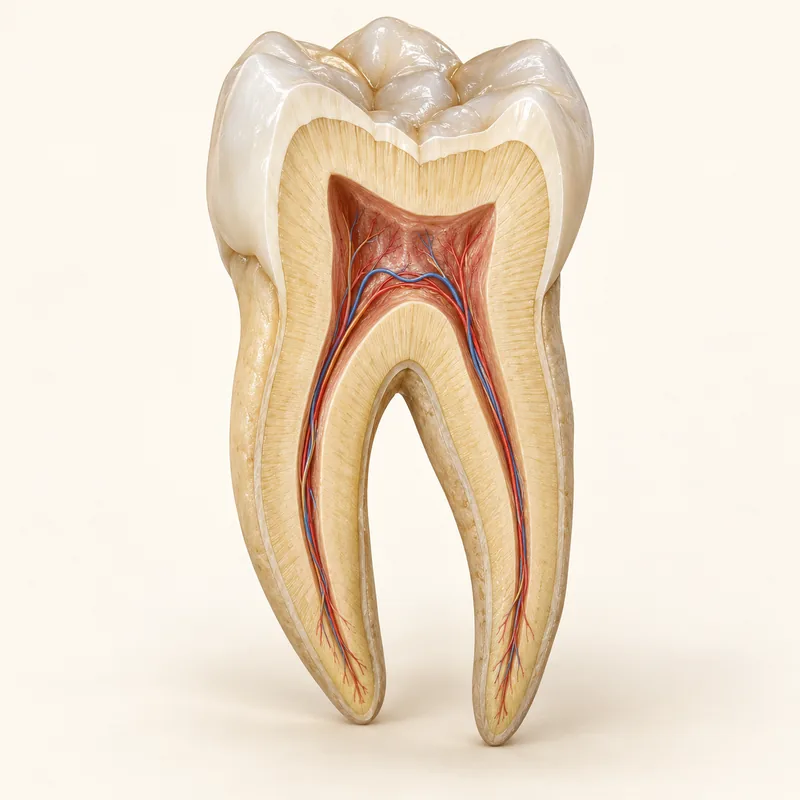
While enamel covers the crown, cementum lies on the root surface. Dentine is underneath.
Periodontal ligament fibres are anchored in root cementum and the bone of the socket. Together, these tissues help support the tooth.
Gum recession can expose root surfaces. Sensitivity or damage needs assessment; gentle cleaning remains important.
On the outside of a natural root, over the root dentine.
It provides attachment sites for fibres anchoring the tooth within the socket.
The root surface may become exposed in the mouth. Its condition and appropriate care should be assessed.
Three steps. Straight to the point.
Explanations are also shown on screen.

Silent film in German · English explanations in the three views above
Root cementum is part of tooth anatomy. A luting cement secures a restoration to a tooth or another intended surface.
No. Cementum forms as natural tissue. Dental cements are manufactured materials used in treatment.
No. Cementum has a different composition and is less mineralised than enamel.
The thin tissue layer cannot be reliably distinguished in a mirror. A teaching illustration is greatly simplified and enlarged.
A question to discuss with Dr. med. dent. Niusha Barahmand Pour:
Which root surfaces are exposed, and how can I clean and protect them appropriately?
At the practice, the findings, personal wishes and possible next steps are discussed through a consultation and examination.
Exposed or sensitive root surfaces can be examined in person.
Discuss sensitive tooth areasChoose an appointment on DoctolibBuild on the simple explanation with clinical terms, key distinctions and a knowledge question.
The similar terms refer to different things: natural root cementum and manufactured luting cements have entirely different roles.
Editorial research: 23 October 2026. This explanation covers general principles and does not replace a personal examination. Suitable treatment is discussed following individual assessment.