What is in it?
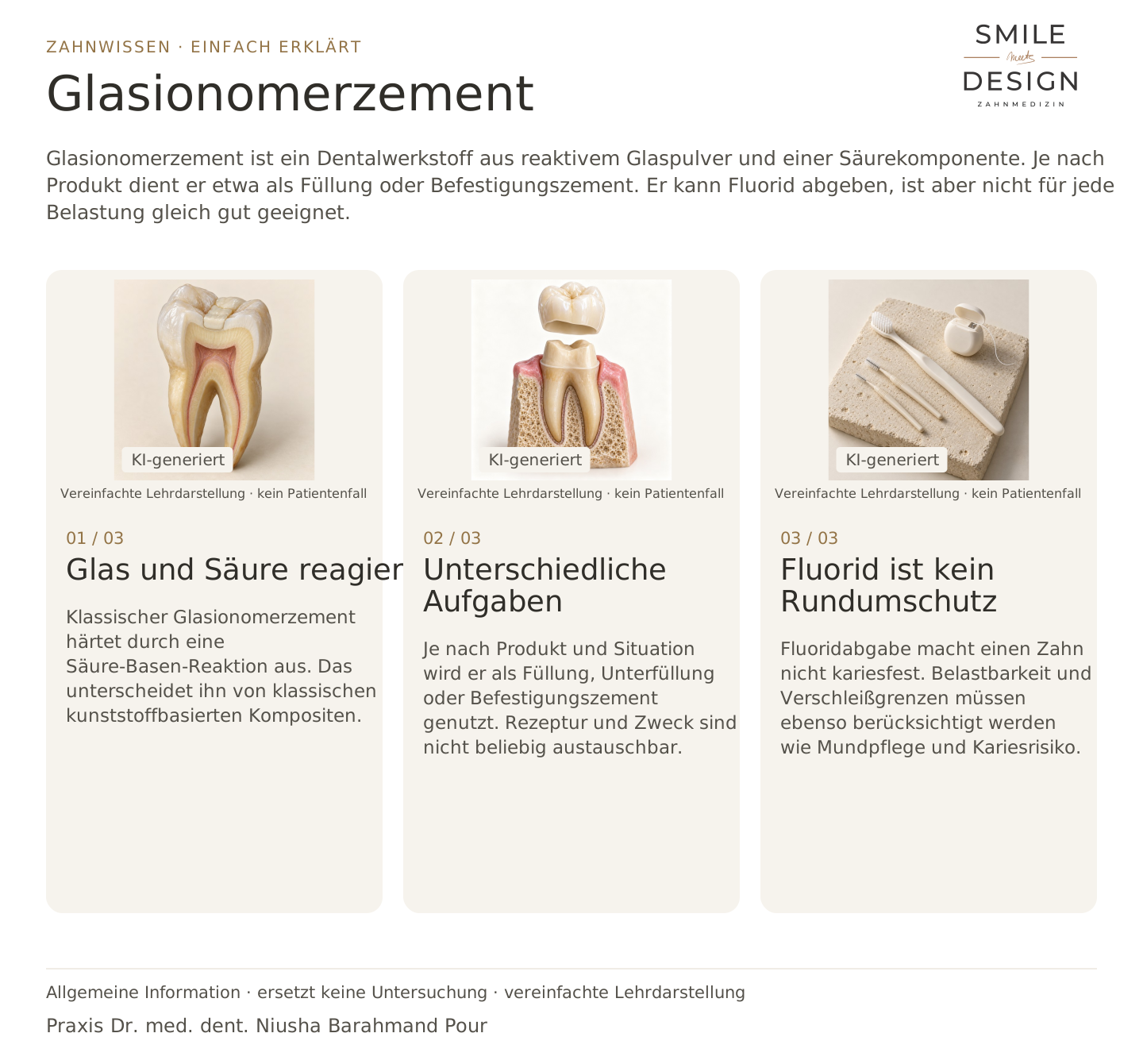
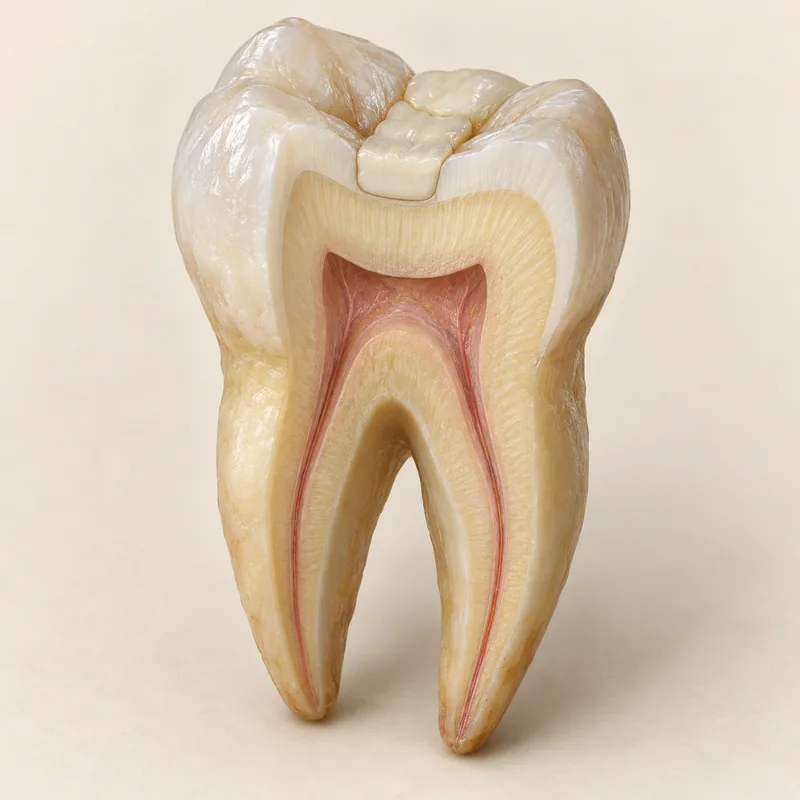
In conventional formulations, glass powder and a polyalkenoic acid react to form a solid material.

Glass ionomer cement is a dental material made from reactive glass powder and an acid component. Depending on the product, it can be used for fillings or as a luting cement. It can release fluoride, but does not suit every load-bearing situation equally.
For dental trainees & teams
Conventional glass ionomer cement sets through an acid–base reaction. This differs from conventional resin-based composites.
Depending on the product and situation, it can be used for a filling, lining or luting. Formulations and purposes are not interchangeable.
Fluoride release does not make a tooth immune to decay. Strength and wear limitations matter alongside oral care and caries risk.
In conventional formulations, glass powder and a polyalkenoic acid react to form a solid material.
Depending on the product, fillings, linings or securing restorations.
Heavily loaded areas may have different requirements. Fluoride release is not a guarantee against decay.
Three steps. Straight to the point.
Explanations are also shown on screen.

Silent film in German · English explanations in the three views above
Glass ionomer cement is a manufactured dental material. Root cementum is natural hard tissue covering the tooth root.
No. Conventional glass ionomers and composites differ in composition and setting. Resin-modified glass ionomers also exist.
It does not provide certain protection from new decay. Cleaning, diet and individual risk remain important.
No. Position, loading, material variety and conditions in the mouth affect durability.
A question to discuss with Dr. med. dent. Niusha Barahmand Pour:
Why does the proposed material suit the position and loading of my defect?
At the practice, the findings, personal wishes and possible next steps are discussed through a consultation and examination.
The suitable filling material depends on the defect, loading and caries risk.
Discuss filling optionsChoose an appointment on DoctolibBuild on the simple explanation with clinical terms, key distinctions and a knowledge question.
The similar words cement and cementum refer to very different things: a dental material and natural root tissue.
Editorial research: 23 October 2026. This explanation covers general principles and does not replace a personal examination. Suitable treatment is discussed following individual assessment.