What is included?
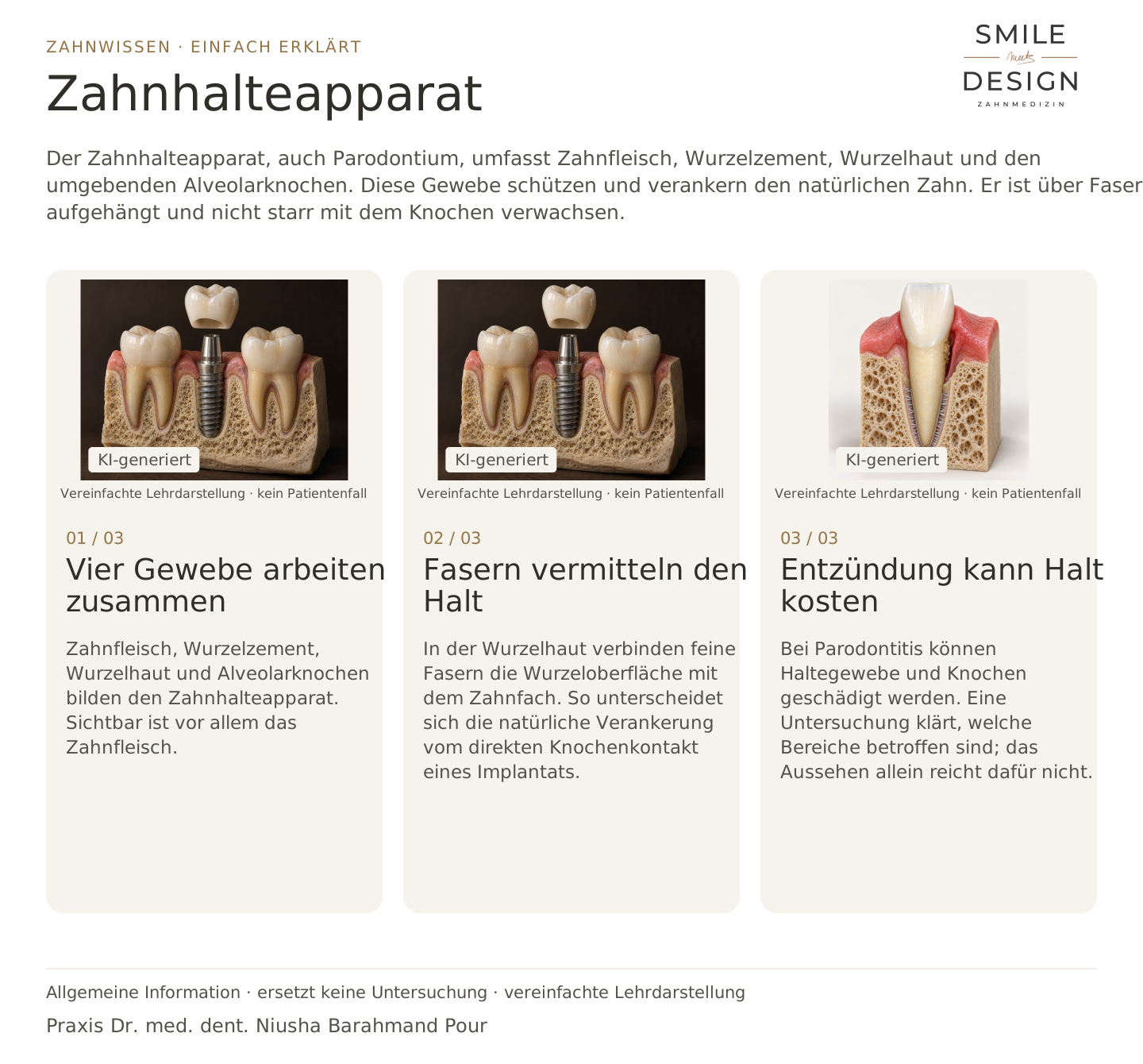
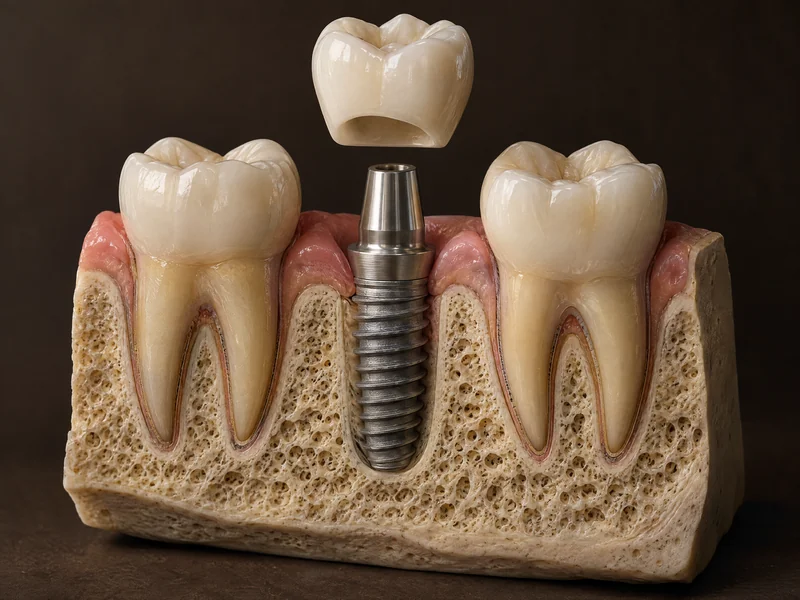
Gums, root cementum, periodontal ligament and alveolar bone.

The periodontium consists of the gums, root cementum, periodontal ligament and surrounding alveolar bone. These tissues protect and anchor a natural tooth. Fibres suspend it; it is not rigidly fused to the bone.
For dental trainees & teams
Gums, root cementum, periodontal ligament and alveolar bone make up the periodontium. The gums are the most visible part.
Fine fibres within the periodontal ligament connect the root surface to the socket. This differs from the direct bone contact of an implant.
Periodontitis can damage supporting tissues and bone. Examination clarifies the areas affected; appearance alone is insufficient.
Gums, root cementum, periodontal ligament and alveolar bone.
Supporting fibres connect the natural root to the bone of the tooth socket.
For example with gum inflammation, deep pockets or looseness. Examination assesses whether support has been damaged.
Three steps. Straight to the point.
Explanations are also shown on screen.

Silent film in German · English explanations in the three views above
The gums are one part of the periodontium. Periodontitis can also damage the deeper tissues anchoring the tooth.
No. It also includes root cementum, the periodontal ligament and the bone of the socket.
Normally not. The periodontal ligament and its fibres lie between them.
Only to a limited extent. Assessment includes gums, pockets and, where needed, X-ray findings.
A question to discuss with Dr. med. dent. Niusha Barahmand Pour:
How healthy is the support around my teeth, and which findings show this?
At the practice, the findings, personal wishes and possible next steps are discussed through a consultation and examination.
Bleeding, gum recession or tooth looseness should be assessed by a dental professional.
Have gums and tooth support checkedChoose an appointment on DoctolibBuild on the simple explanation with clinical terms, key distinctions and a knowledge question.
A natural tooth is supported by fibres; an osseointegrated implant has direct contact with bone.
Editorial research: 23 October 2026. This explanation covers general principles and does not replace a personal examination. Suitable treatment is discussed following individual assessment.