Content?
Findings from examination.

Dental findings record what an examination establishes, such as present teeth, fillings, gum changes or test responses. They provide the basis for interpretation. Diagnosis and treatment planning go further and should be explained clearly.
For training & practice ↓
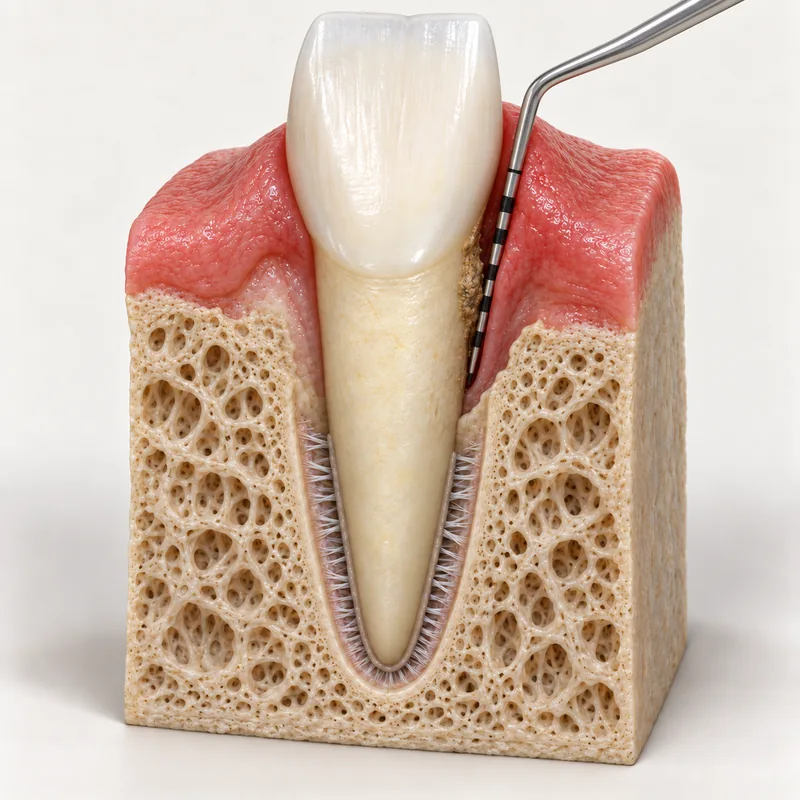
Visible changes and targeted examination results are recorded. The examination follows the individual situation.
Tooth numbers and surface labels show where a finding applies. This helps avoid confusing different sites.
What needs observation, further assessment or treatment? A recorded finding is not an instruction to undertake every possible procedure.
Findings from examination.
Tooth, surface or tissue and date.
Interpretation and discussion.
Three steps. No audio.
Each scene can also be selected manually.

Silent educational film with German on-screen text and simplified teaching images. Not a patient case or a promised treatment outcome. The full English explanation is available as text.
Observation, clinical interpretation and agreed next steps are connected but not interchangeable.
No. A finding describes an observation; a diagnosis interprets it as a condition or state.
They support structured records. Unclear abbreviations can be written out and shown on a tooth chart during discussion.
No. Teeth and tissues can change. Date and course matter; old records complement the current examination.
Editorially suggested question to discuss with Dr Niusha Barahmand Pour:
Which findings matter now, and what next steps follow from them?
Unsure about a record entry? An explanation using a tooth chart can help.
Discuss your findingsAppointment selection at DoctolibObservation, clinical interpretation and agreed next steps are connected but not interchangeable.
Editorial research: . General information, not an individual diagnosis or treatment recommendation. Teaching illustrations are simplified and do not depict a patient case.