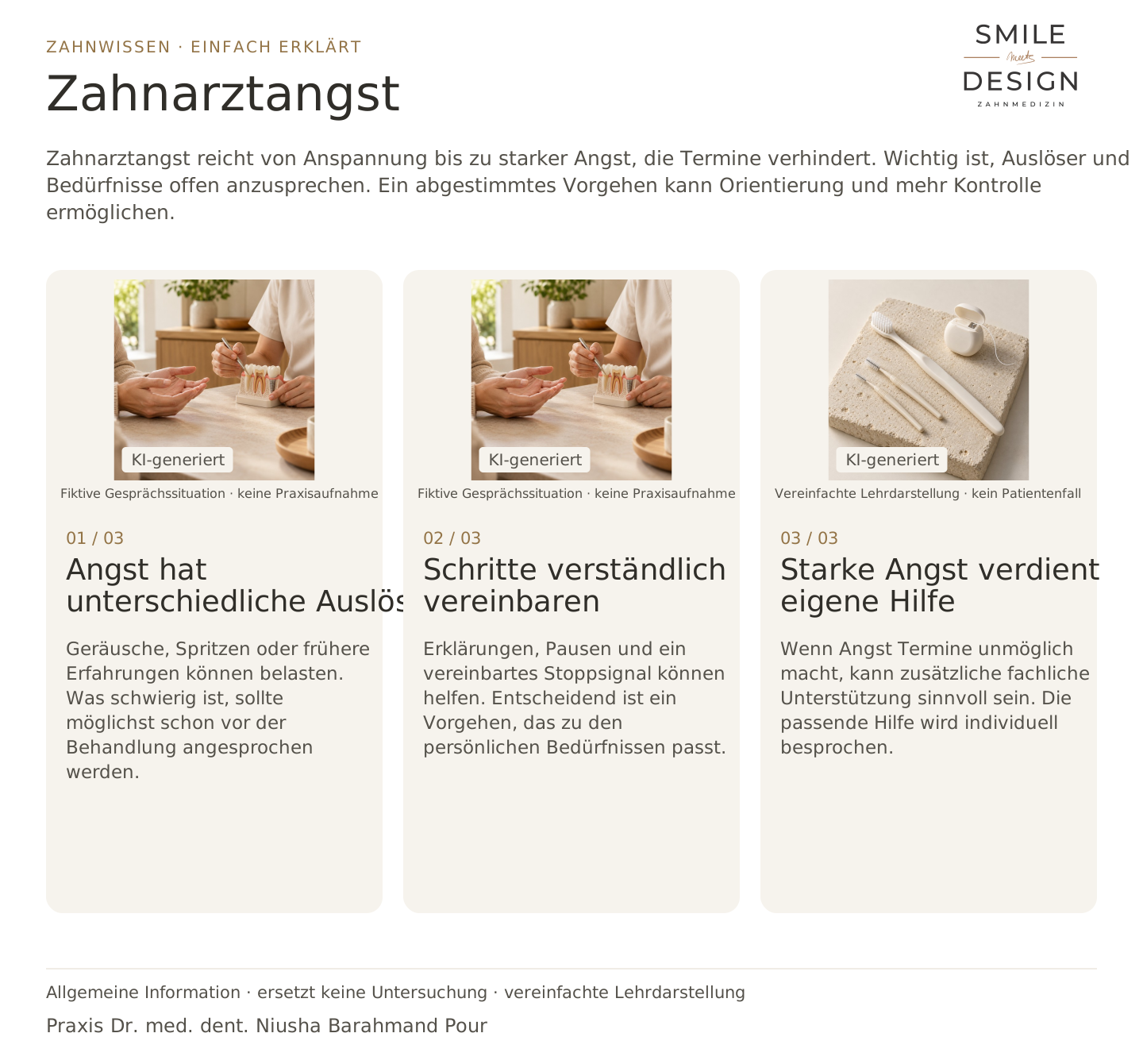
How can dental anxiety show itself?
As tension, intense worry or avoidance of appointments.

Dental anxiety ranges from tension to intense fear that prevents attendance. Discussing triggers and needs matters. An agreed approach can provide orientation and a greater sense of control.
For dental trainees & teams

Sounds, injections or previous experiences can be distressing. It helps to discuss difficult situations before treatment where possible.
Explanations, breaks and an agreed stop signal can help. The approach needs to fit the person's needs.
If fear makes appointments impossible, additional professional support may be helpful. The appropriate help is discussed individually.
As tension, intense worry or avoidance of appointments.
Discuss needs and difficult situations before treatment where possible.
Clear agreements, breaks and, when appropriate, additional professional support.
Three steps. Straight to the point.
Explanations are also shown on screen.

Silent film in German · English explanations in the three views above
The burden varies. When avoidance affects everyday life or access to care, suitable additional support should be discussed.
Yes. An agreed signal makes clear when treatment should pause for discussion.
No. A useful start is describing difficult situations or the support you would like.
No. Local anaesthesia affects pain sensation. Anxiety and tension need separate consideration.
A question to discuss with Dr. med. dent. Niusha Barahmand Pour:
What agreements could give me greater orientation and control during an appointment?
The practice profile explicitly welcomes personal concerns.
You can mention anxiety or uncertainty when you first contact the practice.
Get in touchArrange an appointment with the practiceBuild on the simple explanation with clinical terms, key distinctions and a knowledge question.
Effective numbing does not automatically address every cause of anxiety.
Editorial research: 23 October 2026. This explanation covers general principles and does not replace a personal examination. Suitable treatment is discussed following individual assessment.