What is a dental dam?
An elastic sheet separating the treated tooth from the rest of the mouth.

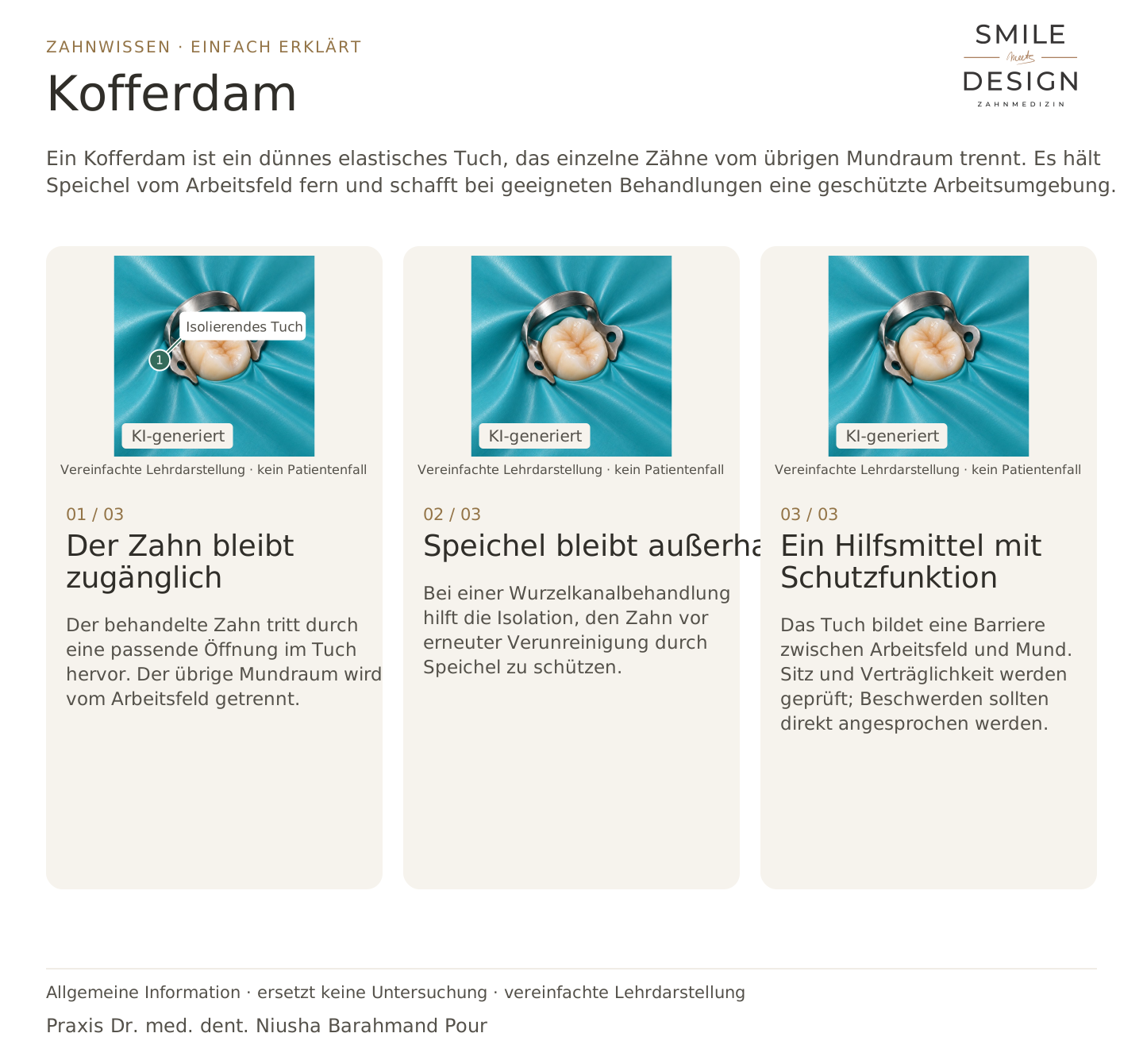
A dental dam is a thin elastic sheet that separates selected teeth from the rest of the mouth. It keeps saliva away from the working area and creates a protected environment for suitable treatments.
For dental trainees & teams
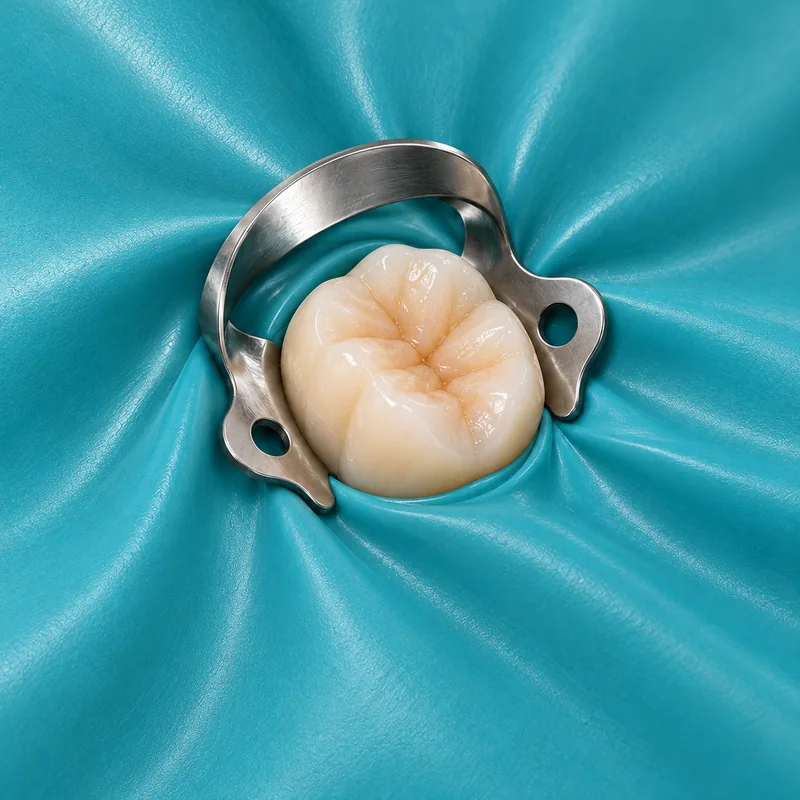
The treated tooth projects through a suitable opening in the sheet. The rest of the mouth is separated from the working area.
During root canal treatment, isolation helps protect the tooth from renewed contamination by saliva.
The sheet forms a barrier between the working area and the mouth. Its fit and tolerance are checked; discomfort should be reported.
An elastic sheet separating the treated tooth from the rest of the mouth.
Among other purposes, to provide a protected, saliva-free working field during root canal treatment.
The tooth stays accessible through a suitable opening; the sheet forms a barrier around it.
Three steps. Straight to the point.
Explanations are also shown on screen.

Silent film in German · English explanations in the three views above
Suction removes liquid. A dental dam also separates the tooth from the rest of the mouth with a barrier.
No. It does not treat disease. It supports the conditions for the actual procedure.
Isolation is an important part of properly performed root canal treatment.
Known material allergies should be mentioned beforehand so that a suitable material can be selected.
A question to discuss with Dr. med. dent. Niusha Barahmand Pour:
How will the working area be protected during my planned treatment?
The profile lists further training in endodontics as part of the dentist's background.
Questions about root canal treatment can be discussed before the procedure.
Discuss the treatment processChoose an appointment on DoctolibBuild on the simple explanation with clinical terms, key distinctions and a knowledge question.
Suction removes fluid; a dental dam additionally creates a physical separation.
Editorial research: 23 October 2026. This explanation covers general principles and does not replace a personal examination. Suitable treatment is discussed following individual assessment.