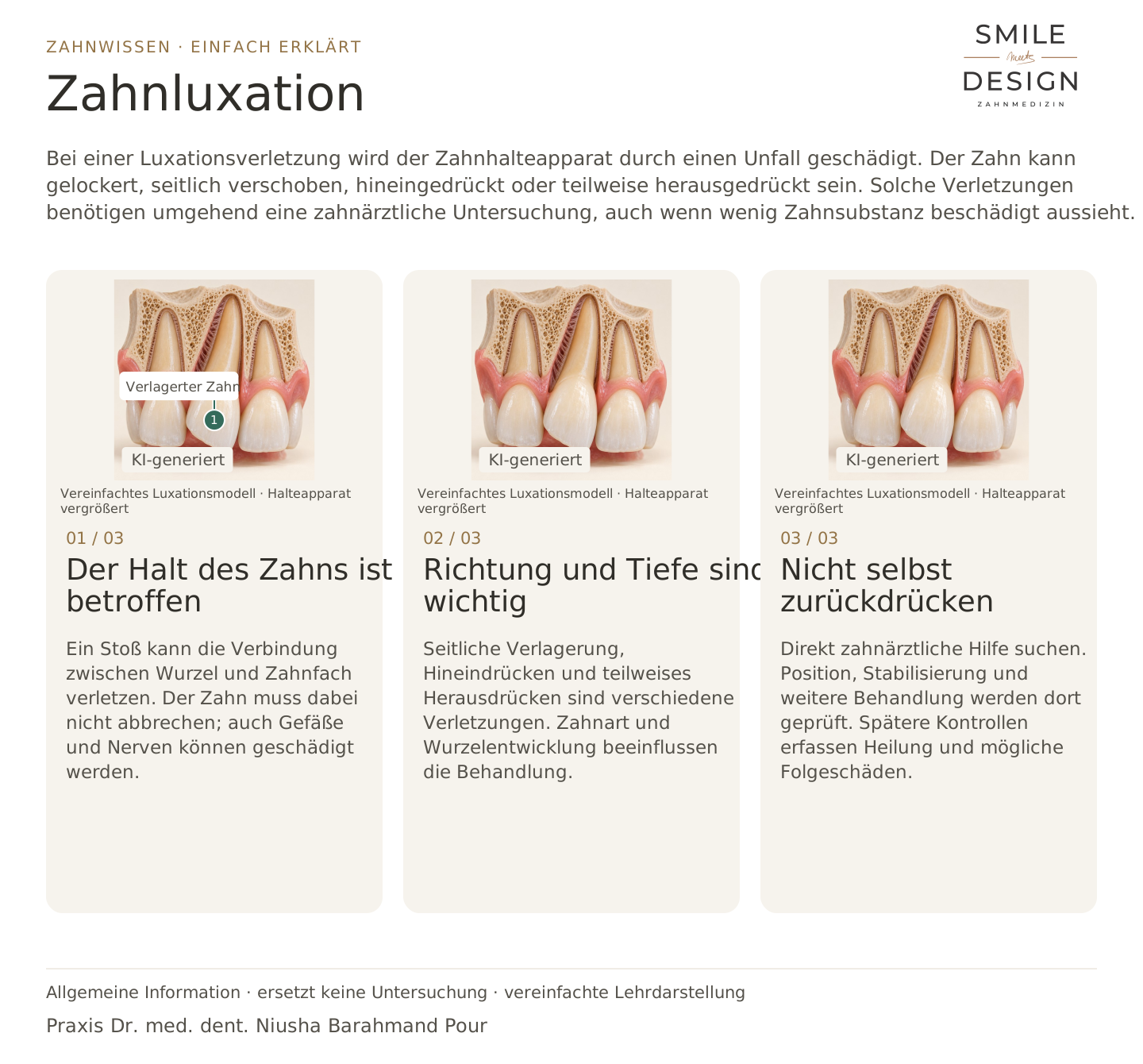
What is injured?
The supporting tissues around the tooth, and possibly the pulp.

A luxation injury damages the tissues supporting a tooth during an accident. The tooth may become loose, move sideways, be pushed in or be partly pushed out. These injuries need immediate dental assessment, even if little tooth tissue appears damaged.
For dental trainees & teams
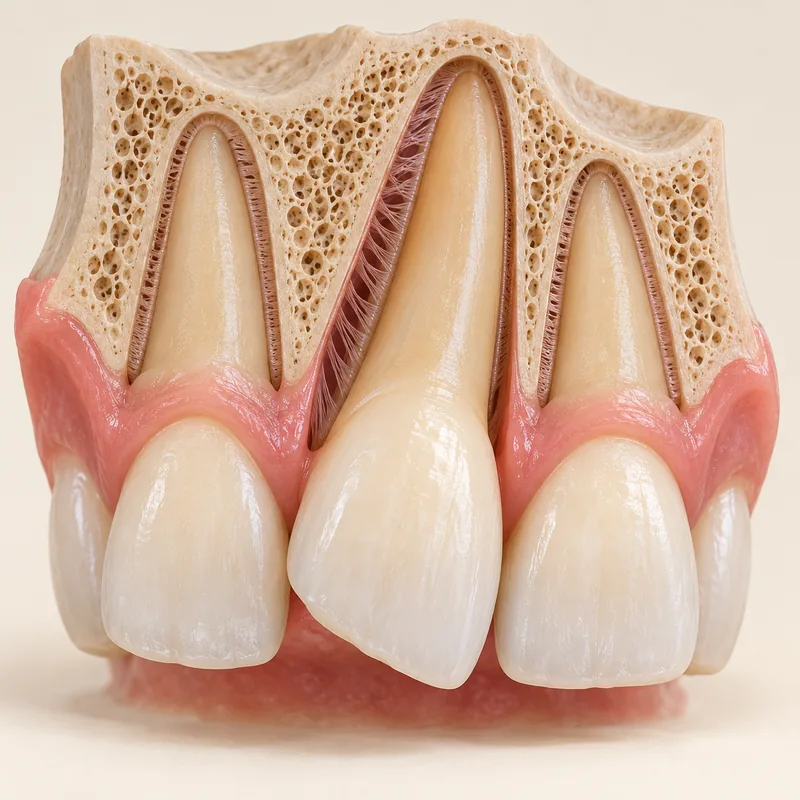
An impact can injure the connection between the root and its socket. The tooth does not have to break; its blood vessels and nerves may also be damaged.
Sideways displacement, intrusion and partial displacement outwards are different injuries. Tooth type and root development affect treatment decisions.
Seek dental help immediately. Position, stabilisation and further treatment are assessed there. Follow-up checks monitor healing and possible later complications.
The supporting tissues around the tooth, and possibly the pulp.
Seek immediate dental help and do not push the tooth back yourself.
Some effects on the pulp and root only become apparent over time.
Three steps. Straight to the point.
Explanations are also shown on screen.

Silent film in German · English explanations in the three views above
Here, luxation refers to an accidental injury to the supporting tissues. Looseness may also have other causes, such as periodontitis.
Yes. A displaced tooth may be locked into the bone. Lack of looseness does not rule out a serious injury.
Changes to the pulp and supporting tissues may develop later. Examination and X-rays when indicated help detect complications early.
No. Treatment differs, partly because the developing permanent tooth lies beneath the baby tooth. Do not try to push or reposition the tooth yourself.
A question to discuss with Dr. med. dent. Niusha Barahmand Pour:
What type of luxation injury is present, and how will its position and healing be monitored?
Symptoms, examination findings and personal wishes form the basis of individual treatment planning.
A displaced tooth after an accident is urgent: call directly or contact an emergency dental service.
Call immediately after a dental injuryFor acute symptoms, call for prompt assessmentBuild on the simple explanation with clinical terms, key distinctions and a knowledge question.
Position, mobility and pulp may be affected differently in luxation injuries. Complete displacement out of the socket is called avulsion.
Editorial research: 23 October 2026. This explanation covers general principles and does not replace a personal examination. Suitable treatment is discussed following individual assessment.