
Which tissue is affected?
The inflammation affects the gums, for example the margin next to a tooth. Whether the tooth's supporting tissues are also damaged must be assessed separately.

Gingivitis means inflammation of the gums. Bacterial plaque is a common trigger. The gums may look red or swollen and bleed more easily. A dental examination shows whether the tissues supporting the teeth are also affected.
For dental trainees & teams
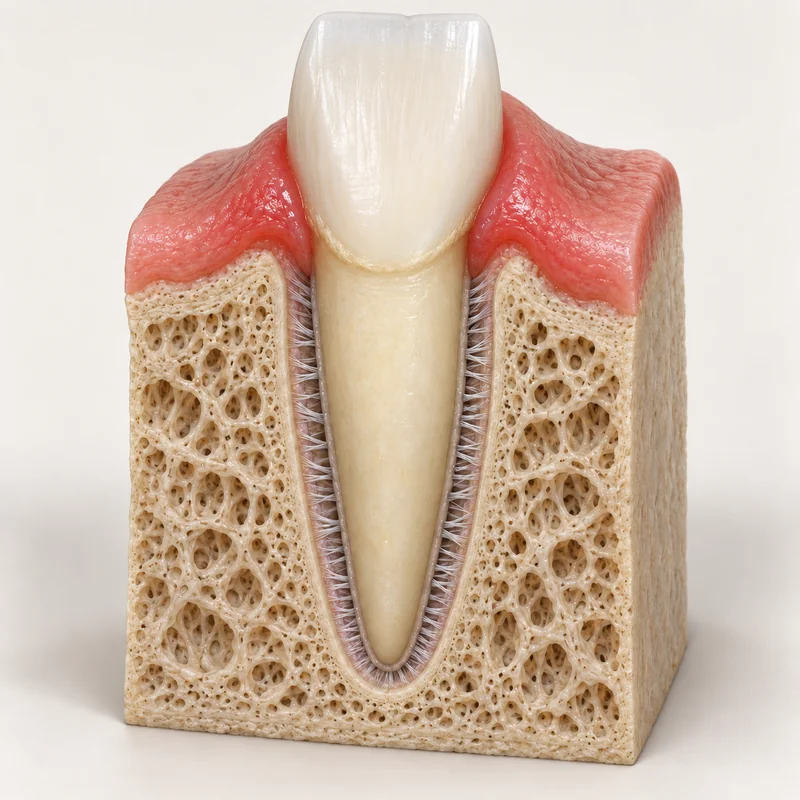
In gingivitis, inflammation affects the gums. Red, swollen or easily bleeding gum margins may be signs of it.
Bacteria live in soft dental plaque. If this biofilm remains at the gumline, the surrounding tissue can respond with inflammation.
Removing plaque and using suitable daily cleaning methods support recovery. Hardened deposits are removed professionally.
The inflammation affects the gums, for example the margin next to a tooth. Whether the tooth's supporting tissues are also damaged must be assessed separately.
Bacterial plaque remaining at the gumline can cause redness, swelling or bleeding. This does not necessarily cause noticeable pain.
Plaque-induced gingivitis can subside with effective plaque control. This includes gentle daily cleaning and professional removal of hardened deposits.
Three steps. Straight to the point.
Explanations are also shown on screen.

Silent film in German · English explanations in the three views above
Gingivitis affects the gums. Periodontitis also damages the tissues that anchor a tooth. An examination is needed to tell them apart.
Yes. Gums can be inflamed without being noticeably painful. Recurring bleeding, redness or swelling should be examined.
No. Gum inflammation can subside. Persistent inflammation can, however, spread to the tissues supporting the teeth.
Thorough, gentle cleaning matters, including between the teeth. Suitable techniques and cleaning aids can be discussed at the practice.
A question to discuss with Dr. med. dent. Niusha Barahmand Pour:
Are only the gums inflamed, or are there signs that the tooth-supporting tissues are affected too?
Healthy gums and preserving teeth for the long term are foundations of treatment planning at her practice.
An appointment can help clarify what is behind irritated gums.
Have your gums examinedChoose an appointment on DoctolibBuild on the simple explanation with clinical terms, key distinctions and a knowledge question.
Gingivitis affects the gums. Periodontitis also damages the tooth's supporting tissues. Bleeding alone cannot distinguish them.
Editorial research: 22 October 2026. This explanation covers general principles and does not replace a personal examination. Suitable treatment is discussed following individual assessment.