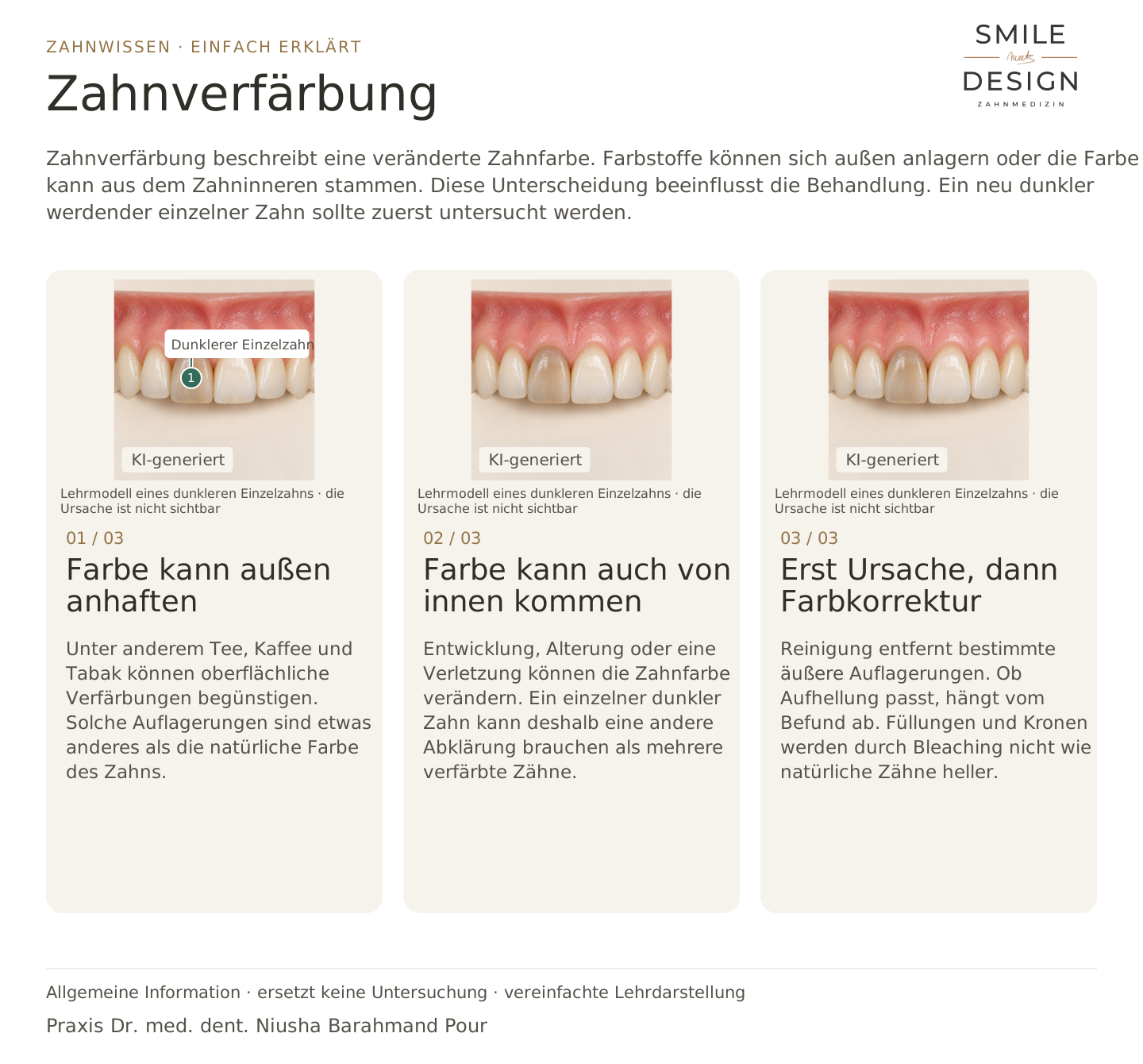
Where can the colour be?
On the surface or within the tooth.

Tooth discolouration describes a change in tooth colour. Pigments may accumulate on the outside, or the colour may come from inside the tooth. This distinction affects treatment. A single tooth that newly becomes darker should first be examined.
For dental trainees & teams
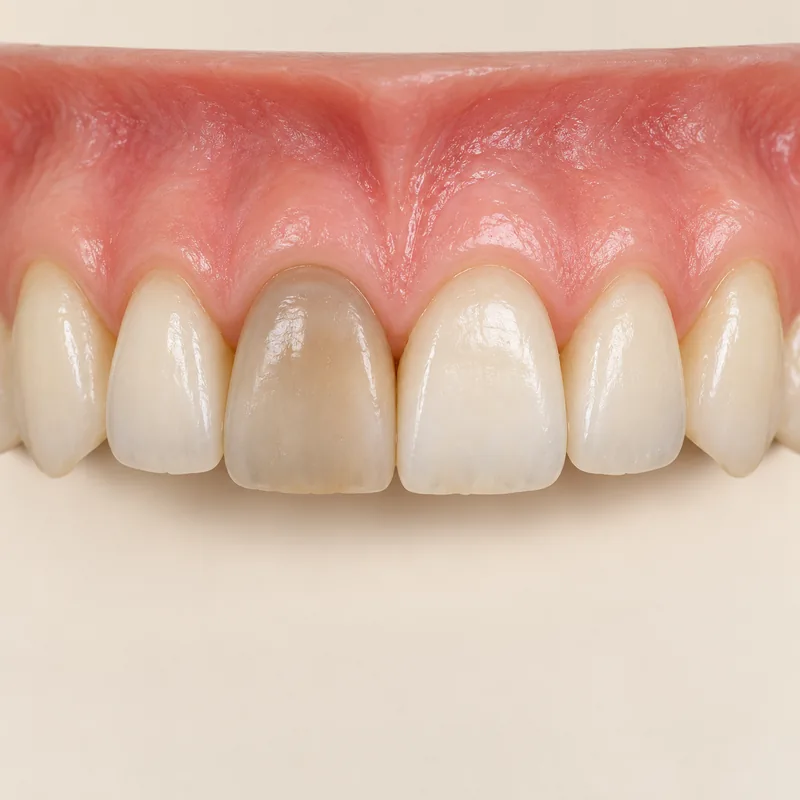
Tea, coffee and tobacco can contribute to surface stains. These deposits are different from the natural colour of the tooth.
Development, ageing or an injury can change tooth colour. One dark tooth may therefore need a different assessment from several stained teeth.
Cleaning removes certain surface deposits. Whether whitening is suitable depends on findings. Fillings and crowns do not whiten like natural teeth during bleaching.
On the surface or within the tooth.
Have the cause and tooth condition examined.
Crowns and fillings do not whiten like natural tooth tissue.
Three steps. Straight to the point.
Explanations are also shown on screen.

Silent film in German · English explanations in the three views above
Dentine and enamel together determine natural tooth colour. Not every yellowish shade is a removable deposit or a sign of disease.
No. Staining, caries and natural colour differences can look similar. Examination establishes what is present.
Changes inside the tooth may affect its colour after injury. Colour alone does not prove whether the pulp is alive or has died.
No. Location, cause and tooth condition determine the options. Changing the colour does not replace treatment of disease.
A question to discuss with Dr. med. dent. Niusha Barahmand Pour:
Are these surface deposits or a change inside the tooth?
Symptoms, examination findings and personal wishes form the basis of individual treatment planning.
A colour change can be assessed before whitening is planned.
Discuss tooth colourChoose an appointment on DoctolibBuild on the simple explanation with clinical terms, key distinctions and a knowledge question.
Professional cleaning and bleaching are different procedures. Intrinsic colour changes also need their cause assessed first.
Editorial research: 23 October 2026. This explanation covers general principles and does not replace a personal examination. Suitable treatment is discussed following individual assessment.