What changes?
Enamel formation during development.

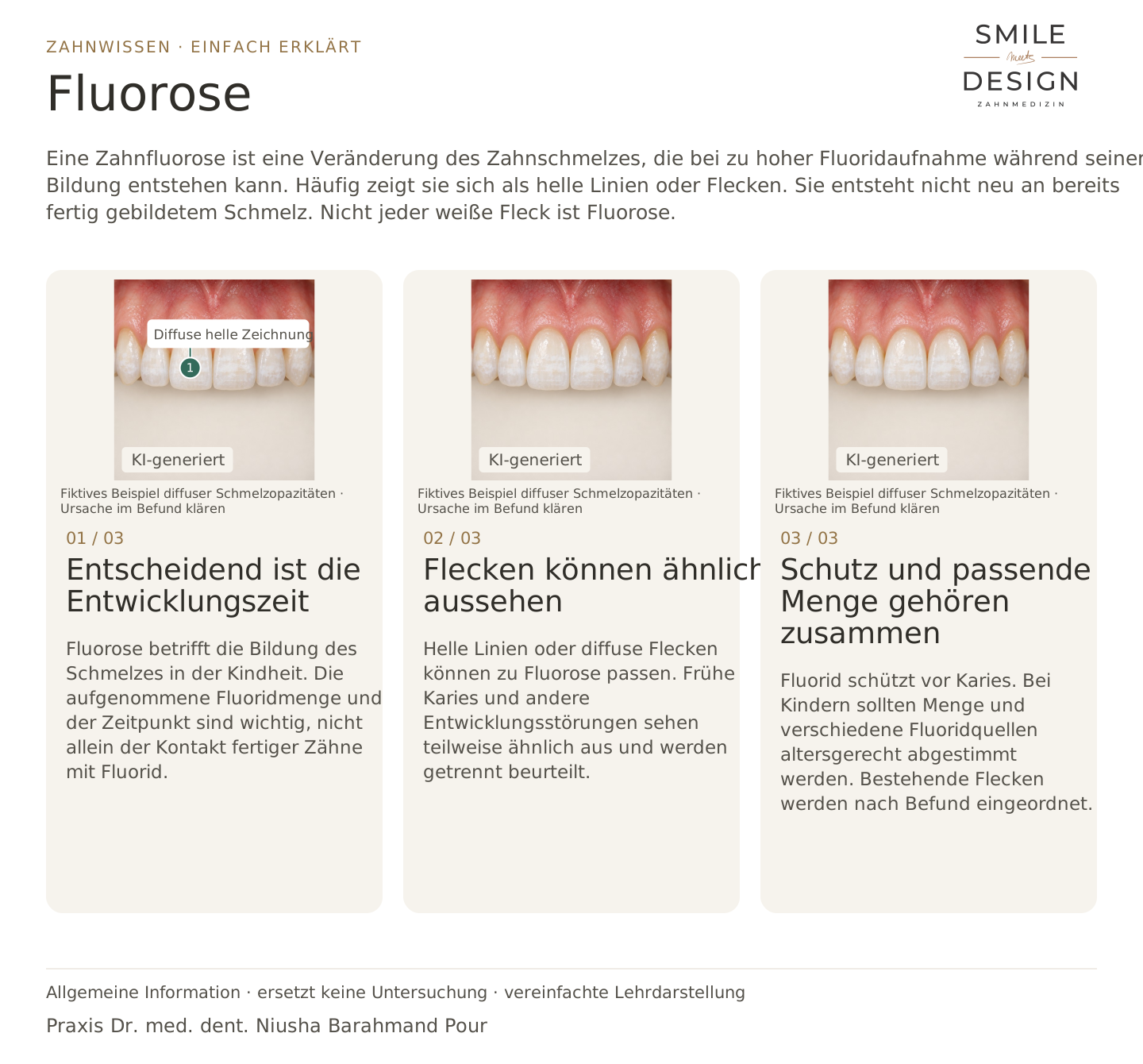
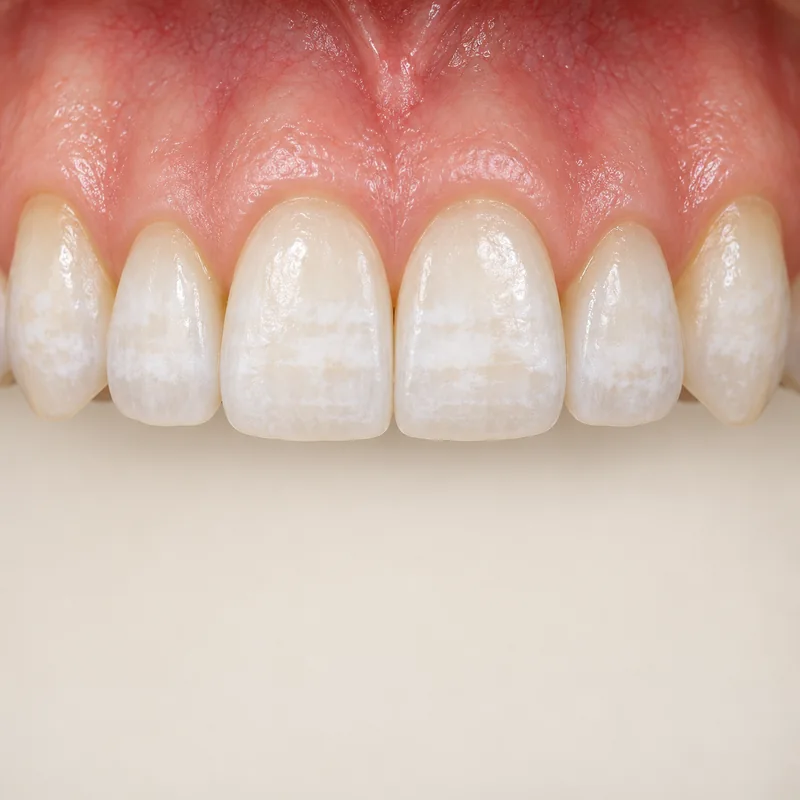
Dental fluorosis is a change in enamel that may develop from excessive fluoride intake while enamel is forming. It often appears as pale lines or patches. It does not newly develop in enamel that has finished forming. Not every white patch is fluorosis.
For dental trainees & teams
Fluorosis affects enamel formation in childhood. Fluoride intake and timing matter, rather than simply the contact of fully formed teeth with fluoride.
Pale lines or diffuse patches may be consistent with fluorosis. Early decay and other developmental defects can look similar and are assessed separately.
Fluoride protects against decay. Children’s amounts and different sources should be coordinated for their age. Existing marks are assessed according to findings.
Enamel formation during development.
Pale diffuse lines or patches, for example; these are not specific.
Coordinate fluoride sources and use according to age.
Three steps. Straight to the point.
Explanations are also shown on screen.

Silent film in German · English explanations in the three views above
White spot initially describes a pale area. Fluorosis is one possible developmental cause; early caries is another.
It cannot newly develop in fully formed enamel. Colour changes noticed later may have other causes.
Avoiding it routinely is not sensible. Age-appropriate use and coordinated fluoride sources in children are what matter.
Mild changes often mainly affect appearance. Whether treatment is appropriate depends on severity, tooth condition and personal wishes.
A question to discuss with Dr. med. dent. Niusha Barahmand Pour:
What is causing the marks, and are my child’s fluoride sources appropriately coordinated?
Symptoms, examination findings and personal wishes form the basis of individual treatment planning.
White areas can have different causes. An examination provides the basis for deciding what to do next.
Have enamel marks assessedChoose an appointment on DoctolibBuild on the simple explanation with clinical terms, key distinctions and a knowledge question.
Fluorosis depends on excessive intake during enamel formation. Local caries prevention on fully formed enamel is a different process.
Editorial research: 23 October 2026. This explanation covers general principles and does not replace a personal examination. Suitable treatment is discussed following individual assessment.