
Dental insights · Tooth preservation
Does an old filling need replacing?
Perhaps you notice a dark filling in the mirror. Perhaps an area feels different from before. It is natural to wonder: can it stay as it is? A helpful answer begins with examining the tooth. Age and appearance are reasons for a conversation, but do not yet determine treatment.
Editorial review date:
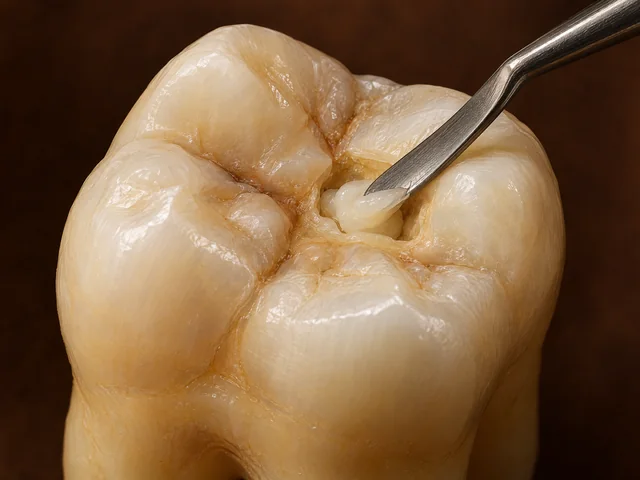 AI-generated
01 How can you tell whether a filling is still sound?
Several aspects are assessed together: the junction between filling and tooth, how securely the material is held, possible fractures, forces when biting and signs of decay. Symptoms also matter. The international FDI criteria expressly distinguish between function, biological condition and appearance. A colour change is therefore different from a confirmed defect. Professional publication on the FDI criteria
For the conversation, describe as precisely as possible what you have noticed. Is it a visible area? Does food get caught there more often? Or has the tooth recently started reacting when you chew? These observations allow a more focused discussion than assuming a filling is simply “too old”.
02 Do fillings have an expiry date?
Fillings can wear or become damaged over time. How long a restoration functions depends on factors including the material and the forces it bears. The US government research institute NIDCR describes different filling materials and notes that fillings do not last indefinitely. This does not, however, establish a standard replacement date for every tooth. NIDCR: Dental fillings
A useful question at your check-up is therefore: “What can you see in this filling, and what does it mean for me?” Ask whether the restoration can continue to be monitored or whether a specific finding supports treatment. Clearly explained findings help more than a blanket age limit.
03 Must old amalgam fillings always be removed?
No. The restriction on new amalgam fillings in the EU is not a call to replace existing intact fillings. The National Association of Statutory Health Insurance Dentists also makes this clear. Whether a particular tooth needs attention is assessed according to its condition. A dark colour alone does not mean a filling medically needs replacing. KZBV: Filling materials and amalgam
If the colour bothers you, you are of course welcome to mention it. That initially concerns your aesthetic wishes. After an examination, you can weigh up suitable options together.
04 What should I raise at the appointment?
Three short questions help make the decision clear:
- What findings are visible in this tooth?
- Is treatment necessary, or would monitoring be appropriate initially?
- If a new restoration is recommended: why does it suit this particular tooth?
Bring your own priorities too: for example, a restoration that is as inconspicuous as possible, or the wish to understand a recommended step more fully first. You do not need to choose the material or identify a defect yourself before the appointment. That is exactly what the examination at the practice is for.
More about fillings and assessing existing amalgam fillings.
Sources and further information
General information based on the professional sources listed below. Your individual situation is assessed during an examination.