What does a filling restore?
It fills a defect to restore the shape and function of the affected tooth area. A direct filling is shaped and hardened at the tooth.

A dental filling replaces missing tooth tissue, for example after decay or a small fracture. It restores the shape and function of the affected area. The material and technique depend on the defect and the forces it bears.
For dental trainees & teams
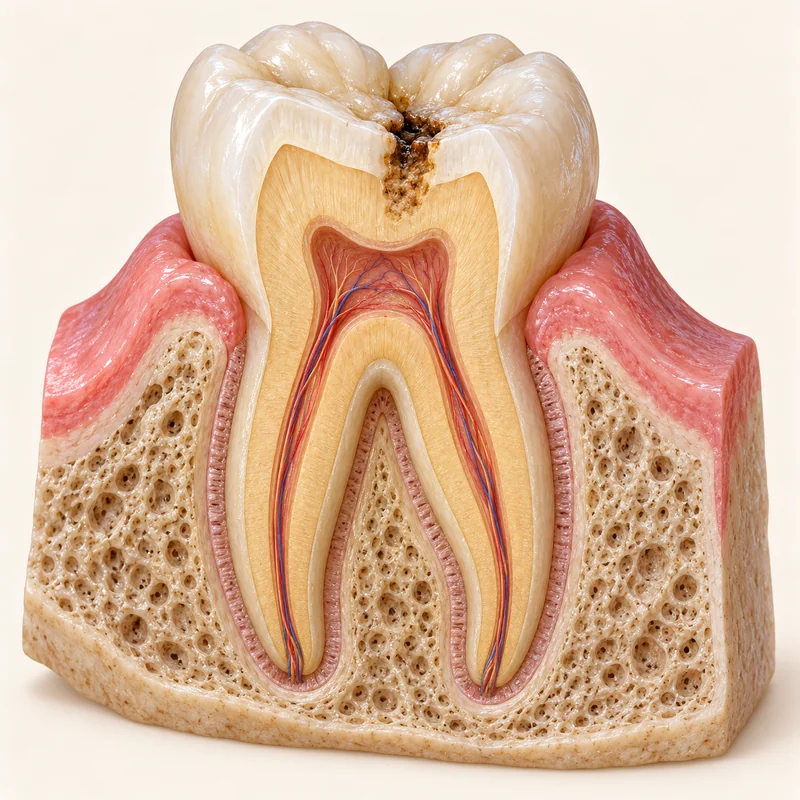
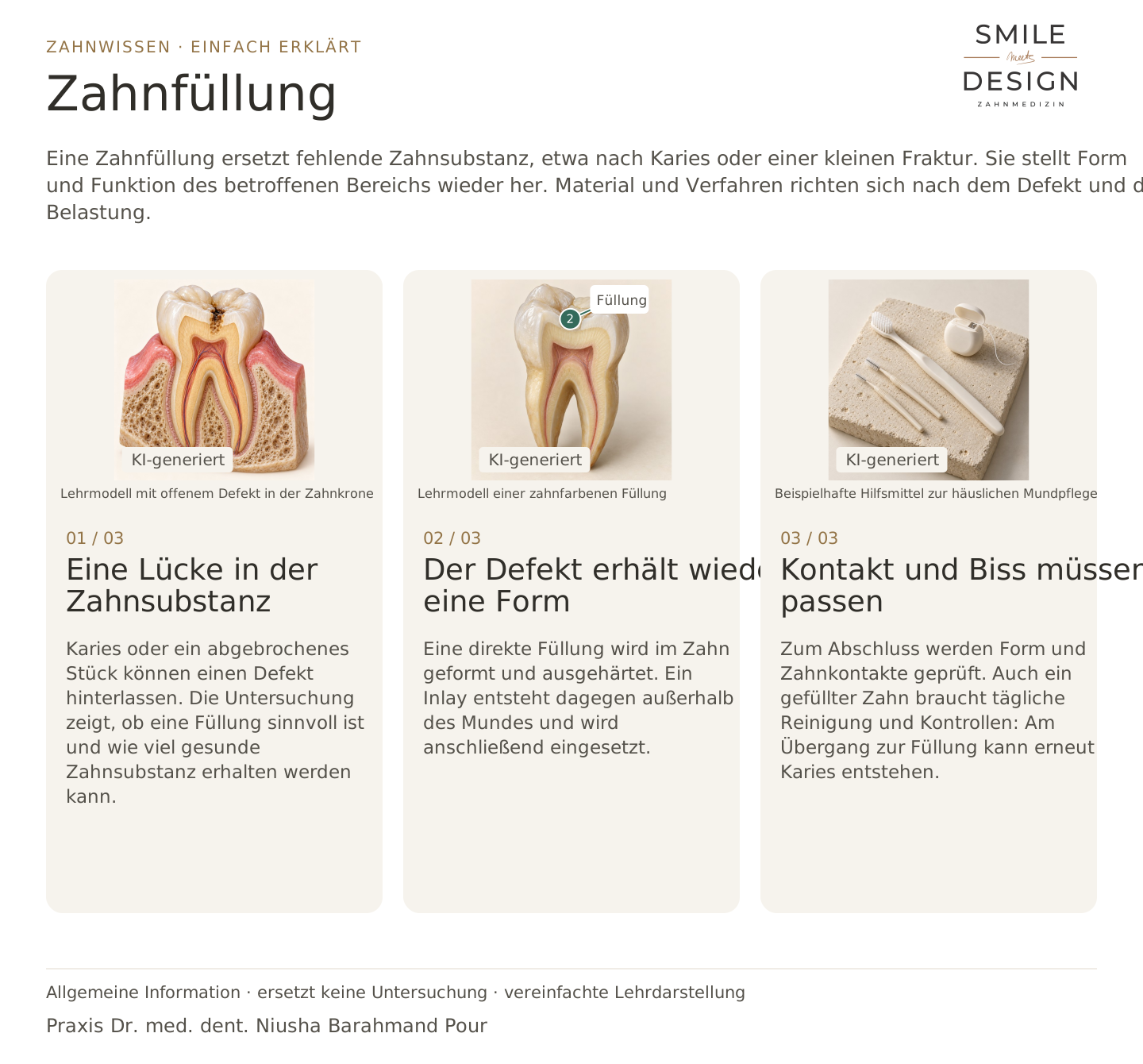
Decay or a broken piece can leave a defect. An examination shows whether a filling is suitable and how much healthy tooth tissue can be preserved.
A direct filling is shaped and hardened in the tooth. An inlay, by contrast, is made outside the mouth and then fitted.
Finally, the shape and tooth contacts are checked. A filled tooth still needs daily cleaning and check-ups: decay can recur at the junction with the filling.
It fills a defect to restore the shape and function of the affected tooth area. A direct filling is shaped and hardened at the tooth.
Missing tissue after decay or a small fracture can be restored this way. Early decay without surface breakdown, however, does not automatically need a filling.
The restoration's shape, contacts with other teeth and bite must fit. The filling margins remain important during cleaning and check-ups afterwards.
Three steps. Straight to the point.
Explanations are also shown on screen.

Silent film in German · English explanations in the three views above
Both replace tooth tissue. Direct fillings are made in the tooth. An inlay is made outside the mouth and then attached.
No. For early changes without surface breakdown, measures such as fluoride application may be suitable. The stage must be assessed at the practice.
“Plombe” is an everyday German term for a dental filling. It does not tell you which material was used.
Age alone does not decide this. The practice assesses defects, symptoms and the condition of the tooth and filling margins, among other factors.
A question to discuss with Dr. med. dent. Niusha Barahmand Pour:
How large is the defect, and which type of filling suits the remaining tooth tissue?
Fillings are part of the general treatment services. The choice is matched to the existing tooth tissue and function.
An unusual area on a tooth or filling can be examined, and a suitable restoration planned together.
Have a tooth or filling checkedChoose an appointment on DoctolibBuild on the simple explanation with clinical terms, key distinctions and a knowledge question.
Caries describes the disease; a cavity is a defect in tooth tissue. A filling replaces missing tissue, but does not automatically eliminate the causes of an increased decay risk.
Editorial research: 22 October 2026. This explanation covers general principles and does not replace a personal examination. Suitable treatment is discussed following individual assessment.