
Dental insights · Aesthetics
Whitening with fillings or crowns: What actually becomes lighter?
Would you like lighter teeth but have a crown or tooth-coloured filling in a visible area? It is worth looking at the whole smile before whitening begins. Whitening does not change natural teeth and dental materials in the same way. For coordinated planning, this distinction matters more than finding the strongest gel.
Editorial review:
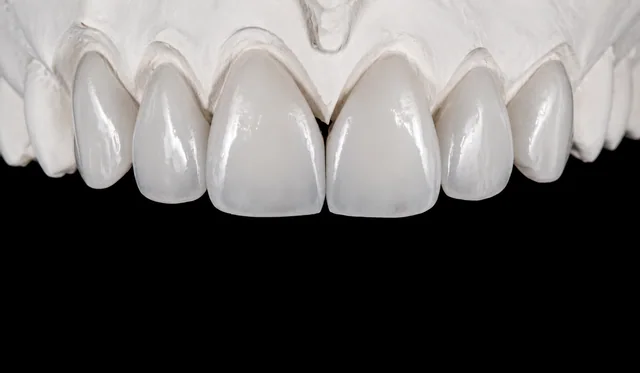
Natural teeth and restorative materials respond differently
Whitening agents can lighten natural tooth substance. An existing ceramic crown or tooth-coloured filling does not become correspondingly lighter. Whitening a neighbouring tooth can therefore reveal a colour difference even though the restoration itself has not changed. The American Dental Association recommends recording existing restorations during the examination and discussing expectations in advance. ADA: Whitening
A simple hypothetical example: a front tooth crown currently matches its neighbours well. If those teeth become considerably lighter, the previously matching crown may look darker by comparison. This does not prove that it has suddenly become stained or damaged. It initially shows that the surrounding colours have changed. This example explains a possible effect; it does not describe a specific case from our practice.
“Tooth-coloured” is not a single colour
For composite fillings, the dentist can combine different shade intensities in layers to match the restoration to the tooth. This explains why an existing filling does not simply take on the same new desired colour as whitened tooth substance. The choice and handling of filling material also depend on the individual tooth and findings. KZBV: What types of dental fillings are available?
Bring your full question to the planning discussion if possible: “I would like an overall lighter colour and want this filling to remain discreet” is more precise than “I would like whitening”. Not remembering which teeth have been restored is no obstacle. That is exactly why the existing situation is examined.
Do all fillings need to be replaced afterwards?
No, this does not mean automatic replacement of every filling. First, we clarify where restorations are visible, the degree of whitening desired and whether a difference would bother you. The Leeds Dental Institute patient information explains that an existing filling may no longer match after whitening and replacement may be considered. It also makes clear that the degree of whitening varies individually and choosing not to whiten is an option. Leeds Teaching Hospitals: Tooth Whitening
This is a good reason to discuss possible subsequent steps and their costs before starting. The aim is not to replace intact restorations pre-emptively, but to reduce the likelihood of an unexpected decision after whitening.
Three questions for coordinated colour planning
- Which visible surfaces are natural teeth, and which are fillings or dental prostheses? Ask to see the relevant areas in a mirror.
- What change do I really want? Subtle whitening and a very light overall colour are different aims.
- What would the plan be if a colour difference becomes visible? Ask for a clear explanation of the options, including the work involved and costs, before deciding.
A crown or filling does not rule out a conversation about whitening. It simply makes colour planning a shared consideration for natural teeth and existing restorations. This helps you assess whether the expected benefit suits the possible overall commitment.
Keeping the whole smile in view.
You can find more information about Teeth whitening, fillings and Restorative dentistry. The right plan starts with the current condition of your teeth.
Get in touchClinical sources
Research and editorial review: 23 September 2026. This information provides general guidance. An individual examination and consultation establish which treatment suits your situation.