
Dental insights · Dental restorations
Caring for fixed restorations: five things that matter
A crown or bridge should become as natural a part of everyday life as possible. When caring for it, though, it is worth getting to know its shape closely: where is the margin? Which spaces are accessible? How do I reach under the bridge tooth? With instructions suited to your restoration, the many possible aids become a manageable routine.
Editorial review date:
 AI-generated
01 Think about the surrounding tissues
Artificial materials cannot develop decay. However, this does not mean that their surroundings need no care. With implants, the tissue around the artificial root can become inflamed. Careful oral hygiene and regular aftercare are therefore part of implant treatment. DGI: Aftercare for dental implants
Do not therefore see care simply as polishing an attractive surface. Ask to be shown which junctions around your crown, bridge or implant restoration need particular attention. A brief look in a mirror during the explanation may help more than a long list of product names.
02 Choose a consistent sequence
Thorough brushing twice a day and daily cleaning between teeth are the foundations of oral care. A consistent sequence helps avoid missing an area. KZBV: Prevention and early detection
Consider which sequence is easy for you to follow: outside surfaces first, then inside surfaces, then chewing surfaces. Deliberately include your restoration in this routine. If you struggle with an area, describe as precisely as possible where the brush cannot reach. “At the back left, under the bridge” is easier to practise together than a general “I cannot do it properly”.
03 Choose the right aid
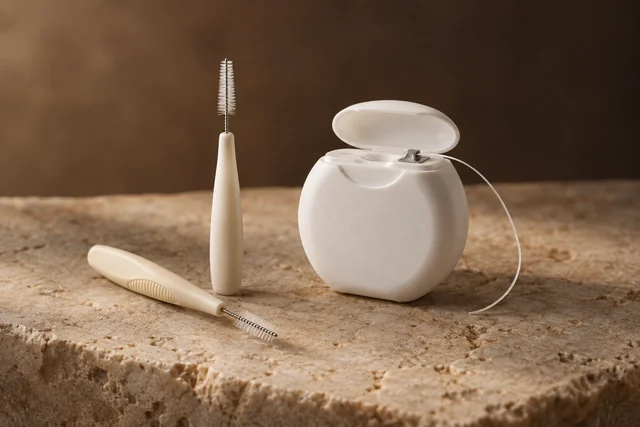
Spaces between teeth vary in width. The German Dental Association recommends interdental brushes particularly for open spaces; floss may be suitable for tight contacts. Their use should be explained individually. BZÄK: Floss and interdental care
A bridge also has areas beneath the replacement tooth. Ask specifically which aid can reach these areas in your particular design. Have its use demonstrated and, if possible, try it yourself. The aim is not to own as many brushes or types of floss as possible. What matters is reaching the intended surfaces effectively and gently.
04 The routine can be adapted
Good instructions must suit your hands, your view and your everyday life. If an aid is difficult to grip or use, say so openly. Individual guidance is especially important around implants; a blanket recommendation for one aid does not account for different situations. DGI: Interdental care around implants
Bring the aids you currently use to your next appointment. Together, you can check what is already working and what could be made easier.
05 Make aftercare part of your plan
The appropriate review interval depends on individual findings. The DGI expressly describes aftercare as an ongoing part of implant treatment. DGI: Dental implants patient brochure
After the conversation, note the agreed appointments and two or three personal care tips. Specific, practical instructions are more valuable in everyday life than a perfect-sounding routine that does not suit you.
More about professional teeth cleaning and Restorative dentistry.
Sources and further information
General information based on the professional sources listed below. Your individual situation is assessed during an examination.