
Dental insights · Did you know?
Natural does not mean snow-white: four myths about tooth colour.
If you are thinking about teeth whitening, it is worth understanding your own tooth colour first. A lighter shade is an aesthetic wish, not a universal requirement for a healthy smile. Darker, yellowish or mottled teeth can have different causes. Four common assumptions help explain these differences.
Editorial review:
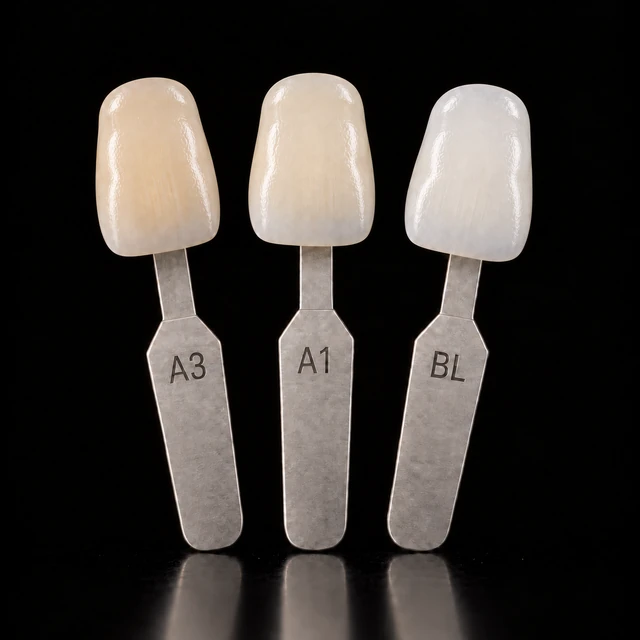 AI-generated
Yellowish teeth are always poorly brushed
Natural tooth colour varies from person to person. The patient magazine of the North Rhine Association of Statutory Health Insurance Dentists describes both lighter and darker natural starting shades and changes over a lifetime. Colour alone therefore does not reveal how carefully someone looks after their teeth. KZV Nordrhein: ZahnZeit, natural tooth colours
A tooth also consists of several layers: enamel on the outside and dentine underneath. KZBV: Structure of teeth As the outer enamel layer becomes thinner over the years, the more yellowish dentine may show through more strongly. Pigments from coffee or tea, for example, can also accumulate on the surface. Natural underlying colour and external staining are therefore different things. ADA: Causes of changes in tooth colour
White automatically means healthy
Colour does not replace an examination. The American National Institute of Dental and Craniofacial Research explains that early decay can appear as a whitish spot when enamel loses minerals. This does not mean that every light spot is decay. A new or unusual area should be assessed rather than judged by its brightness alone. NIDCR: Tooth Decay
Careful observations help the conversation: Has the area always been there? Have you only just noticed it? Does it affect one tooth or several? These details are more useful than trying to diagnose yourself by comparing pictures.
Hard scrubbing and lemon make teeth naturally white
“Natural” describes where a substance comes from, not whether it is suitable for teeth. Acidic home remedies such as lemon juice can attack enamel with prolonged contact. Strongly abrasive applications can also wear away the surface. Less enamel can, in turn, make the yellowish dentine underneath more visible. The American Dental Association warns against precisely this confusion between cleaning and abrasion. ADA: Natural Teeth Whitening – Fact vs. Fiction
If you are interested in a particular whitening product, bring its name or packaging to the appointment. This allows us to discuss the specific product rather than treating different products and home remedies as equivalent.
Every darker area can be whitened in the same way
Discolouration can have various causes, including external pigments, changes after an injury or certain medicines. Accordingly, not all discolouration responds equally to whitening. If a single tooth has become darker, establishing the cause comes first, rather than a general promise of whitening. ADA: Teeth Whitening
Start by describing what bothers you: the overall underlying colour, individual spots or a difference between neighbouring teeth. The answer helps guide the consultation. You can wish for a lighter shade while also accepting natural differences. What matters is that a change suits your dental situation and personal wishes – not a prescribed level of whiteness.
Describe what you have noticed.
An overall underlying colour, individual spots and a darker tooth are different concerns. Our teeth whitening page offers an initial guide; we assess the cause of anything unusual during an examination.
Get in touchProfessional sources
Research and editorial review: 23 September 2026. This information provides general guidance. Which treatment suits your situation is established through an individual examination and consultation.