
Dental insights · Preserving teeth
Keeping teeth straight: Why a retainer follows correction.
Your teeth have been straightened and active treatment is complete. Yet a tray or a small bonded wire may remain part of treatment. This retainer is intended to stabilise the tooth positions achieved. It is worth knowing, before the last aligner or removal of braces, what the next phase involves and who will support you.
Editorial review:
 AI-generated
Why teeth do not automatically stay in their new positions
After teeth straightening, the surrounding tissues need time to adapt to the new positions. Teeth can shift again, particularly early on. This risk remains later too. The British Orthodontic Society therefore recommends planning long-term stabilisation after active treatment. BOS: What follows braces
A retainer is therefore not a sign that the previous treatment failed. It is part of planning to maintain the result achieved. For your expectations, it is important to distinguish between “the teeth have been moved” and “the new positions need to be maintained”.
Removable or fixed?
A removable retainer is worn according to a personal schedule. A fixed retainer is typically bonded to the inner surfaces of the front teeth and stays there. Both types need attention: consistent wear matters for removable retainers; a fixed retainer needs careful cleaning and checks of its attachment. The suitable option or combination is chosen individually. BOS: Differences between retainer types
Ask to see the chosen retainer in a mirror. Ask how you might recognise a change and which areas need particular care when cleaning. A “small wire behind the teeth” should not remain an unseen part of treatment that you know nothing about.
How long must a retainer be worn?
There is no date that suits everyone from which teeth are guaranteed to remain stable. Long-term, sometimes lifelong wear may be necessary. You receive an individual plan for removable retainers; do not reduce or stop wearing them on your own initiative. BOS: Patient information on retainers
It is helpful to ask for a short written summary. “Regularly” can mean different things in everyday life. A clear agreement tells you specifically when to wear the retainer, when the next check is due and who to contact if it is lost.
Care and checks are part of the process
A retainer check does not replace examination of the other teeth. Dental check-ups remain important after active correction ends. Ask to be shown how to clean a removable retainer appropriately for its material. Hot water can alter plastic; use the method specifically recommended. Queen Victoria Hospital: Care of your retainers
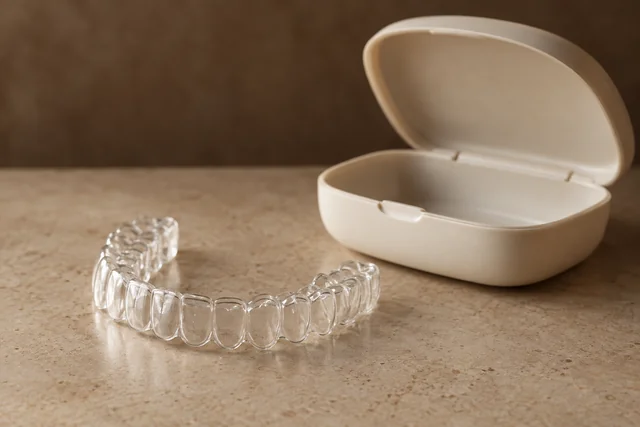
A rigid storage case helps protect a retainer when it is removed. Bring it to the agreed check-ups. If it is lost or something breaks, contact the practice promptly rather than waiting for the next routine visit. BOS: Storage, checks and damage
Four points for completing your teeth straightening
- Which retainer option is planned for me?
- What is my specific wear and check-up schedule?
- What care suits my retainer?
- Who can help if something changes, and how are possible replacement costs handled?
Once these questions are answered, active treatment does not end with an unclear instruction. You know how to fit the next phase into your everyday life and when you need support.
The time afterwards belongs in the discussion too.
Our aligner page provides further information about teeth straightening. Ask for an explanation of subsequent stabilisation before your treatment is completed.
Get in touchClinical sources
Research and editorial review: 23 September 2026. This information provides general guidance. An individual examination and consultation establish which treatment suits your situation.