What is a retainer meant to maintain?
It aims to stabilise achieved tooth positions rather than continue actively moving the teeth. Without stabilisation, teeth can shift again after straightening.

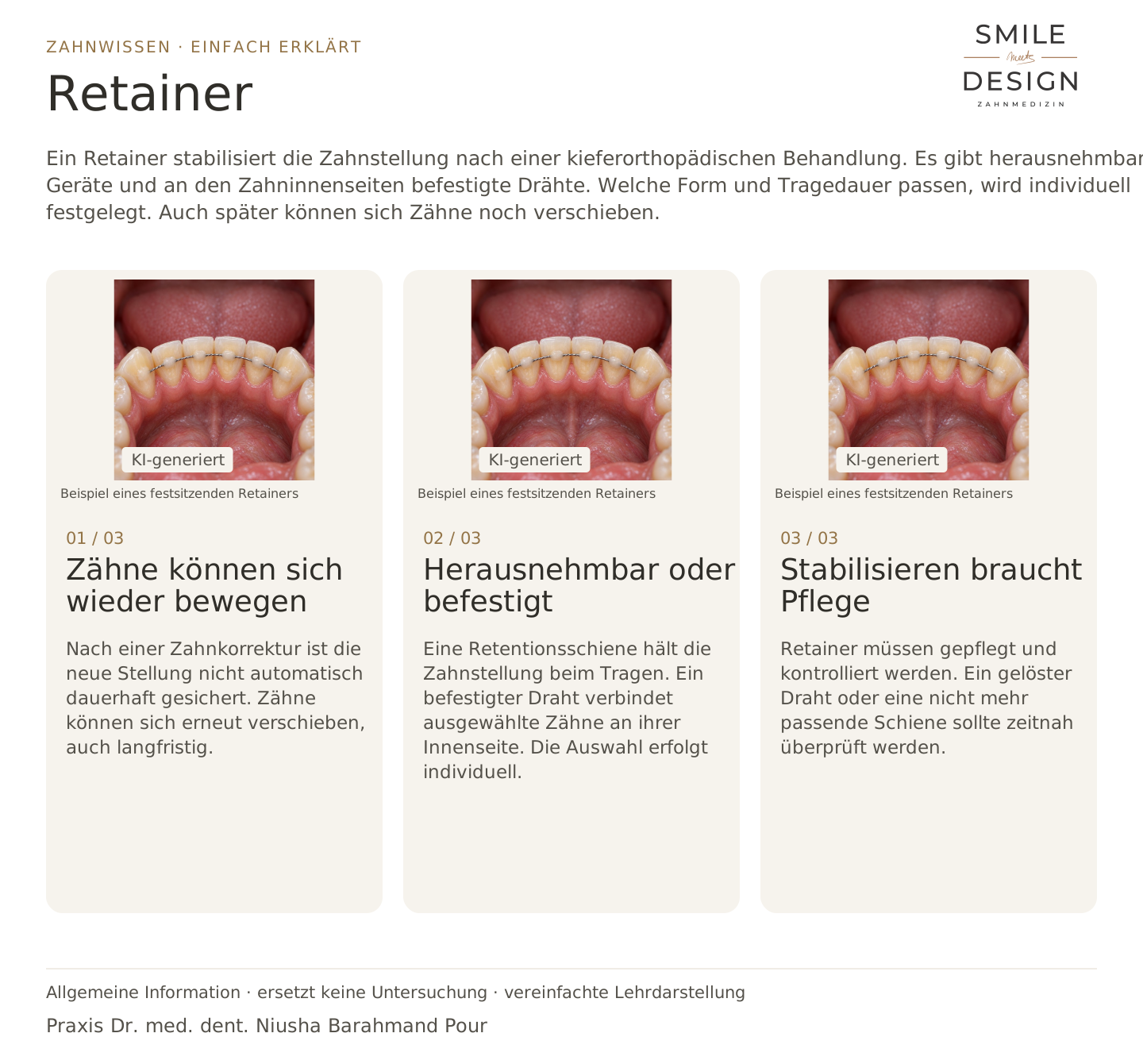
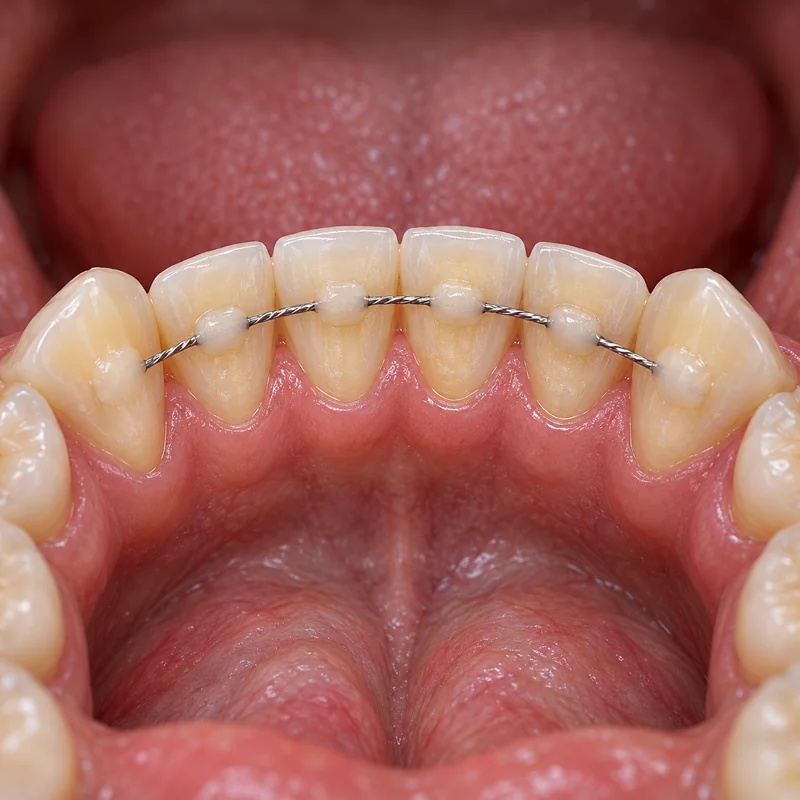
A retainer stabilises tooth positions after orthodontic treatment. There are removable appliances and wires fixed to the inner tooth surfaces. The suitable type and duration of wear are decided individually. Teeth can still move later in life.
For dental trainees & teams
After straightening, the new positions are not automatically secured for life. Teeth can shift again, even in the long term.
A removable retainer holds tooth positions while it is worn. A fixed wire connects selected teeth along their inner surfaces. The choice is made individually.
Retainers need cleaning and checks. A loose wire or an appliance that no longer fits should be checked promptly.
It aims to stabilise achieved tooth positions rather than continue actively moving the teeth. Without stabilisation, teeth can shift again after straightening.
After orthodontic treatment, a removable retainer or a fixed wire may be suitable. The type and duration of wear depend on the individual treatment.
Cleaning and checks remain important after tooth straightening. A loose wire or an appliance that no longer fits should be checked promptly.
Three steps. Straight to the point.
Explanations are also shown on screen.

Silent film in German · English explanations in the three views above
A retainer stabilises tooth positions. A grinding splint serves a different treatment aim, such as protection from wear. Not every appliance fulfils both roles.
Long-term stabilisation is often useful. The exact wearing schedule and check-ups depend on the individual treatment.
An aligner moves teeth step by step. A retainer aims to maintain the positions achieved. Similar appearance does not mean the same purpose.
Contact the treating practice promptly. Do not glue or bend it yourself; the affected teeth may move.
A question to discuss with Dr. med. dent. Niusha Barahmand Pour:
Does my retainer still fit properly, and how can I clean the retained teeth effectively?
Dr. Barahmand Pour considers tooth position, function and aesthetic preferences in the context of dental health.
A suitable appointment to check an existing retainer or discuss its care can be arranged personally.
Arrange a retainer checkArrange an appointment with the practiceBuild on the simple explanation with clinical terms, key distinctions and a knowledge question.
An aligner is intended for planned tooth movements. A retainer aims to maintain the positions achieved. Similar shape does not mean the same purpose.
Editorial research: 22 October 2026. This explanation covers general principles and does not replace a personal examination. Suitable treatment is discussed following individual assessment.