
Dental insights · Preserving teeth
Root canal treatment: when can your own tooth be preserved?
When root canal treatment is mentioned, another question often comes first: does the tooth now have to come out? The aim of root canal treatment is precisely to keep a tooth that can be preserved in use. Whether this is possible and appropriate in an individual case is examined beforehand. The name of the treatment alone says nothing about your personal starting situation.
Editorial review:
 AI-generated
01 What is actually treated?
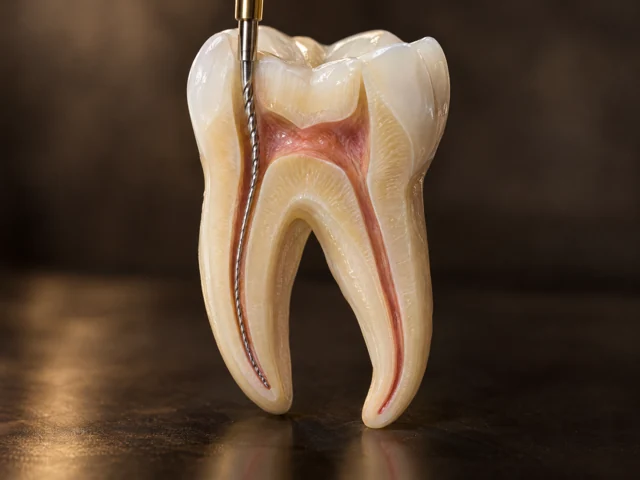
Inside a tooth is the pulp, a tissue containing nerves and blood vessels. It can become diseased through deep decay or injury, for example. If this tissue can no longer recover or has already died, root canal treatment may be an option. This treats the diseased tissue inside the tooth; the natural root is intended to be preserved. DGET: Patient information on root canal treatment
The decision therefore involves more than how much a tooth currently hurts. The German Society of Endodontology and Dental Traumatology explains that preserving a tooth may be possible even with considerable symptoms. An examination must establish their cause and which treatment may be suitable. DGET: Patient questions
02 How does root canal treatment generally work?
After the examination and discussion, the tooth is numbed with local anaesthetic if needed. Through an access opening, the root canals are prepared, cleaned and then filled. The canals are often very fine and may be curved. This explains why the work involved and appointment planning can differ from tooth to tooth. The KZBV describes the process as several coordinated treatment steps. KZBV: The root canal treatment process
You do not need to know the individual instruments. It is more helpful to know before starting which steps are planned, how the tooth will be protected between appointments and whom you can contact with questions. Also say if the treatment worries you. This lets the discussion focus on what you need at that moment.
03 Can every tooth be preserved?
Not every tooth. The chances of preservation depend on factors including the remaining tooth substance, the condition of the supporting tissues and possible cracks. Whether the tooth can be suitably restored for the long term after treatment is equally important. Careful planning therefore includes both the inside of the tooth and its later reconstruction. DGET: Options and limitations
04 Which questions help with the decision?
Ask for an explanation specific to your tooth:
- What supports preserving it in my case?
- Which factors make treatment more difficult?
- What restoration is planned afterwards?
- How will progress be monitored?
A root filling and subsequent restoration of the tooth crown belong in a coordinated plan. The suitable solution is discussed individually. This does not imply a guarantee of success. You should, however, be able to understand why treatment is recommended and what expectations are realistic in your situation.
Our page on Root canal treatment provides further information for your personal discussion.
Sources and further information
General information based on the clinical sources listed below. Individual assessment takes place during an examination.