What is an abutment?
The prosthetic connecting component between the implant body and dental restoration.

An abutment is the connecting component on a dental implant. In many implant systems, it joins the implant body anchored in bone to the visible dental restoration. Its shape and connection must suit the planned restoration.
For dental trainees & teams
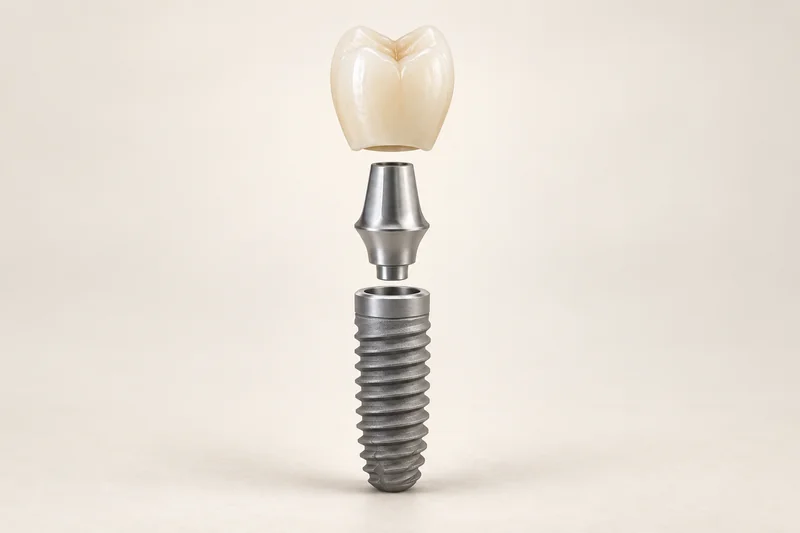
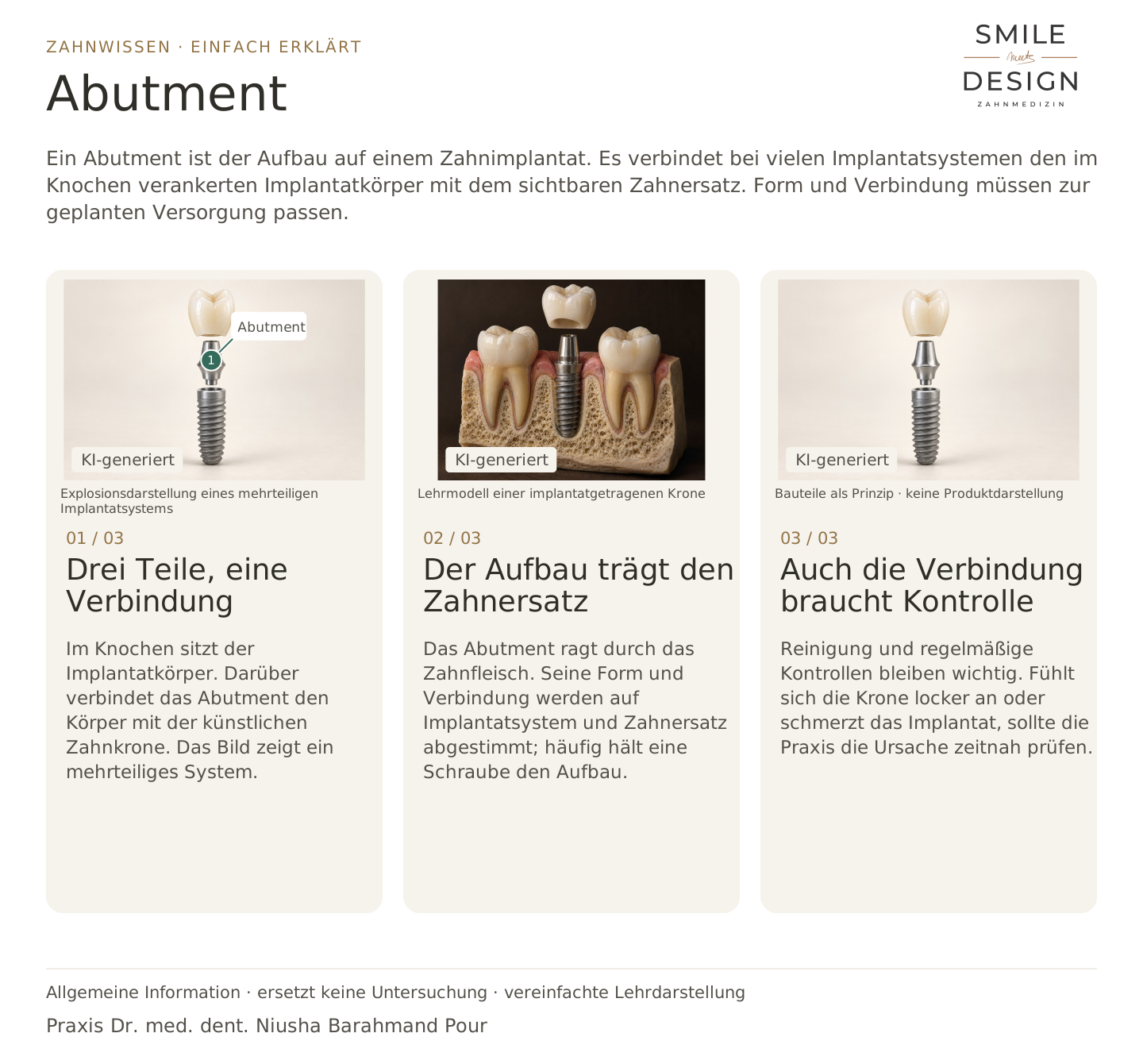
The implant body sits in the bone. Above it, the abutment connects the body to the artificial crown. The image shows a multi-part system.
The abutment extends through the gum. Its shape and connection are matched to the implant system and restoration; a screw often secures it.
Cleaning and regular checks remain important. If the crown feels loose or the implant area hurts, the practice should assess the cause promptly.
The prosthetic connecting component between the implant body and dental restoration.
It provides the appropriate connection, for example between an artificial tooth root and a crown.
Its connection, fit and clean junctions are part of the long-term care of the implant restoration.
Three steps. Straight to the point.
Explanations are also shown on screen.

Silent film in German · English explanations in the three views above
The implant body sits in bone, the abutment forms the connection and the crown replaces the visible part of the tooth. The precise design depends on the system.
No. The implant body in the bone serves as the artificial root. The abutment sits above it and connects it to the restoration.
Not necessarily. A connecting screw may be loose, for example; other causes are also possible. Have it checked promptly and do not try to tighten it yourself.
Yes. Deposits can also collect around the implant and abutment. The practice demonstrates suitable cleaning aids and sets review intervals individually.
A question to discuss with Dr. med. dent. Niusha Barahmand Pour:
How are the implant, abutment and restoration connected in my case, and how should I clean the junctions?
Treatment planning at her practice considers healthy structures and a functioning bite together.
An examination can help clarify a loose restoration or questions about its care.
Have an implant restoration checkedChoose an appointment on DoctolibBuild on the simple explanation with clinical terms, key distinctions and a knowledge question.
In many systems, a screw secures the abutment; the screw itself is not the entire connecting prosthetic component.
Editorial research: 23 October 2026. This explanation covers general principles and does not replace a personal examination. Suitable treatment is discussed following individual assessment.