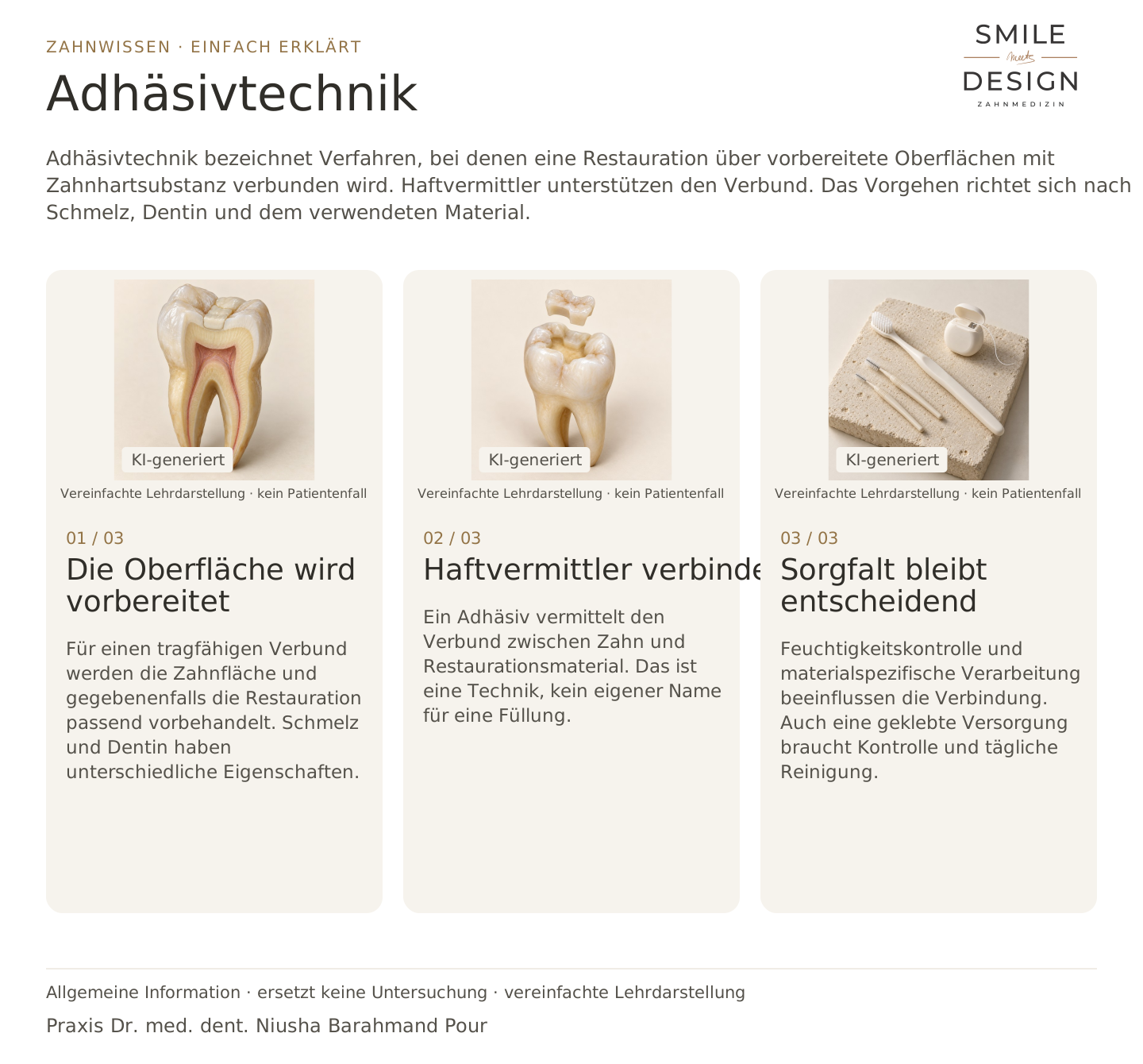
What is joined?
Hard tooth tissue and restorative material, for example in a composite filling or a suitable ceramic restoration.

Adhesive bonding joins a restoration to hard tooth tissue through prepared surfaces. Bonding agents help create the connection. The approach depends on the enamel, dentine and restorative material involved.
For dental trainees & teams
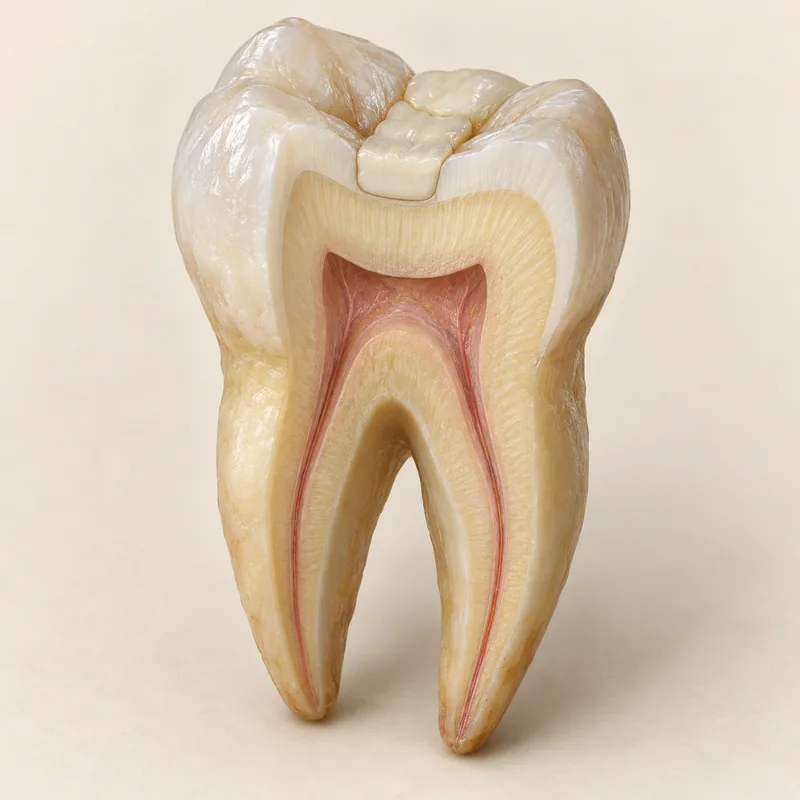
The tooth surface and, where needed, the restoration are prepared for a durable bond. Enamel and dentine have different properties.
An adhesive helps join the tooth and restorative material. Bonding describes a technique, not a separate type of filling.
Moisture control and material-specific handling affect the bond. Bonded restorations still need reviews and daily cleaning.
Hard tooth tissue and restorative material, for example in a composite filling or a suitable ceramic restoration.
Different surfaces need specific steps for the bond to work.
Appropriate materials, controlled moisture and careful handling according to the particular system.
Three steps. Straight to the point.
Explanations are also shown on screen.

Silent film in German · English explanations in the three views above
An adhesive is a bonding agent. Composite is a restorative material; both can be used in the same restoration.
No. Composite is a material; adhesive bonding describes how a connection is created.
No. Preparation and fixing depend on tooth surfaces, material and restoration design.
No. Margins and other tooth surfaces still need cleaning and checking.
A question to discuss with Dr. med. dent. Niusha Barahmand Pour:
How can my existing tooth tissue be preserved during the planned restoration?
At the practice, the findings, personal wishes and possible next steps are discussed through a consultation and examination.
The suitable restoration depends on the defect and tooth tissue that can be preserved.
Discuss preserving your toothChoose an appointment on DoctolibBuild on the simple explanation with clinical terms, key distinctions and a knowledge question.
The bonding technique and the material of the finished restoration are not the same thing.
Editorial research: 23 October 2026. This explanation covers general principles and does not replace a personal examination. Suitable treatment is discussed following individual assessment.