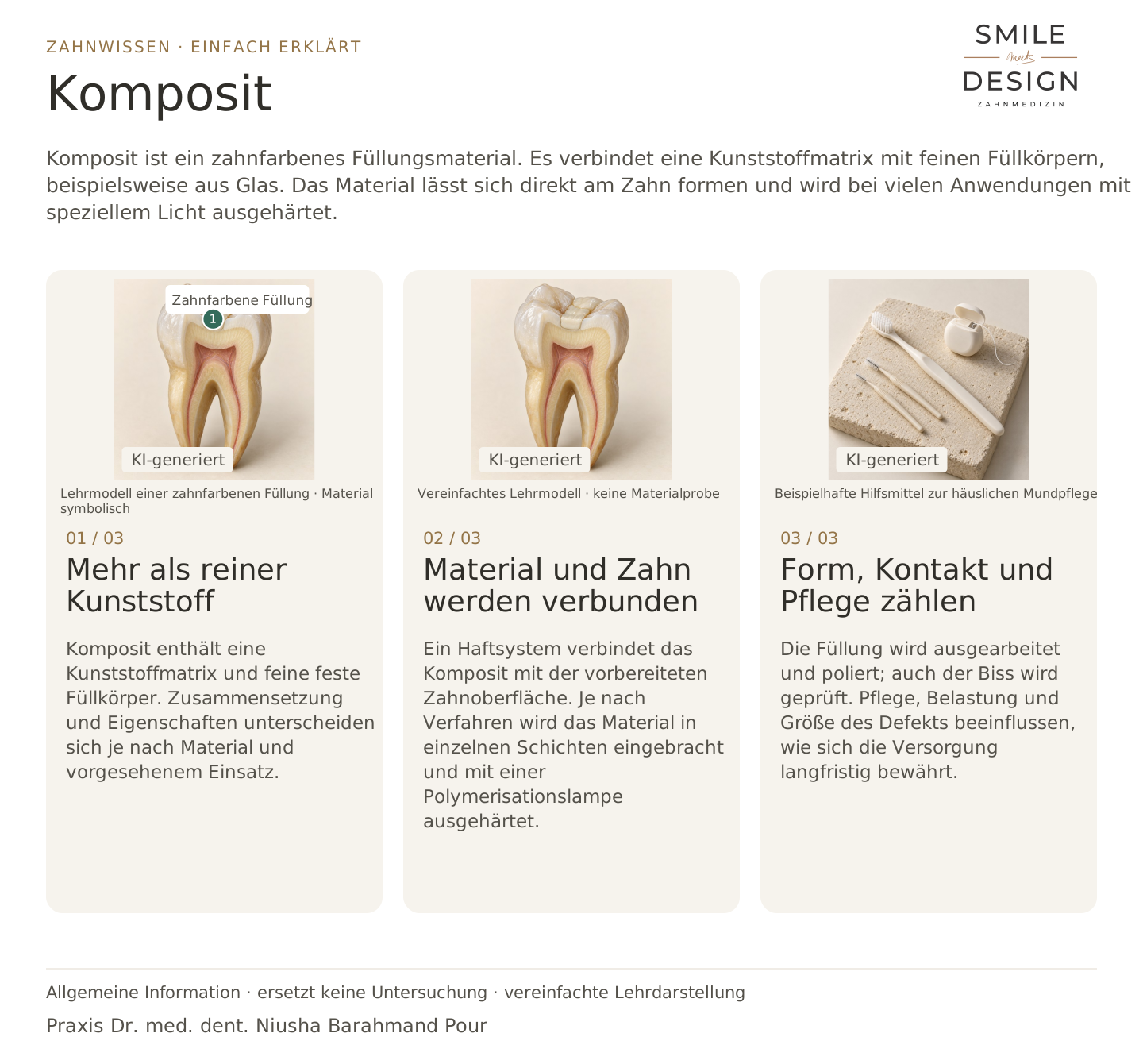
What is the material made of?
A resin matrix binds fine solid filler particles, such as glass. Composite therefore belongs to a different material group from ceramic, even though both can be tooth-coloured.

Composite is a tooth-coloured filling material. It combines a resin matrix with fine filler particles, such as glass. The material can be shaped directly at the tooth and, in many applications, is hardened using a special light.
For dental trainees & teams
Composite contains a resin matrix and fine solid filler particles. Composition and properties vary according to the material and intended use.
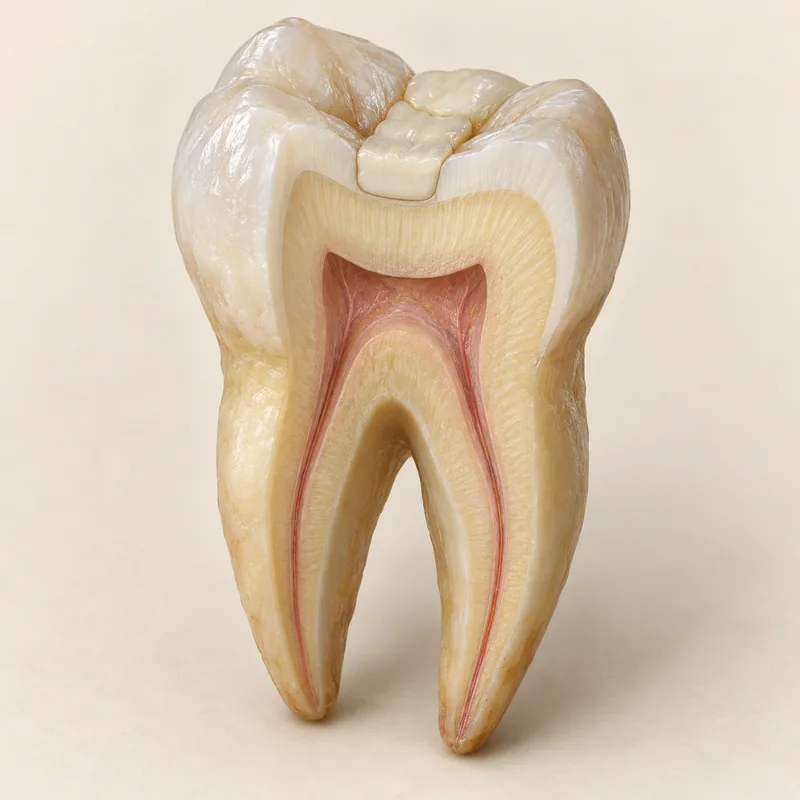
An adhesive system bonds composite to the prepared tooth surface. Depending on the technique, the material is placed in layers and hardened with a curing light.
The filling is finished and polished, and the bite is checked. Care, chewing forces and defect size influence how the restoration performs over time.
A resin matrix binds fine solid filler particles, such as glass. Composite therefore belongs to a different material group from ceramic, even though both can be tooth-coloured.
An adhesive system bonds the material to the prepared tooth surface. Depending on the technique, it is placed in layers and hardened with a special light.
Factors include the defect size, remaining tooth tissue, forces on the tooth and suitable handling. Repair may be possible for limited damage, but needs assessment.
Three steps. Straight to the point.
Explanations are also shown on screen.

Silent film in German · English explanations in the three views above
Similar tooth colour does not make them the same material. Composite has a resin matrix; ceramics are inorganic, non-metallic materials.
No. Composite contains a resin matrix with filler particles. Ceramic is a different group of materials. Both can be tooth-coloured.
No. It also has applications in larger defects. The remaining tissue, forces on the tooth and suitable handling are among the deciding factors.
A limited defect can be added to or repaired under suitable conditions. An examination is needed to establish whether this is sufficient.
A question to discuss with Dr. med. dent. Niusha Barahmand Pour:
Can the defect be restored or repaired with composite, and what would support that choice in my case?
In her planning, Dr. Barahmand Pour considers shape, function and existing tooth tissue together. Her profile also lists further training in adhesive restorations for front teeth.
We discuss whether composite suits a tooth in the context of its shape, the forces it bears and the findings.
Discuss a filling restorationChoose an appointment on DoctolibBuild on the simple explanation with clinical terms, key distinctions and a knowledge question.
The adhesive provides the bond. The composite replaces tooth tissue. Light curing is a processing step, not a filling material in its own right.
Editorial research: 22 October 2026. This explanation covers general principles and does not replace a personal examination. Suitable treatment is discussed following individual assessment.