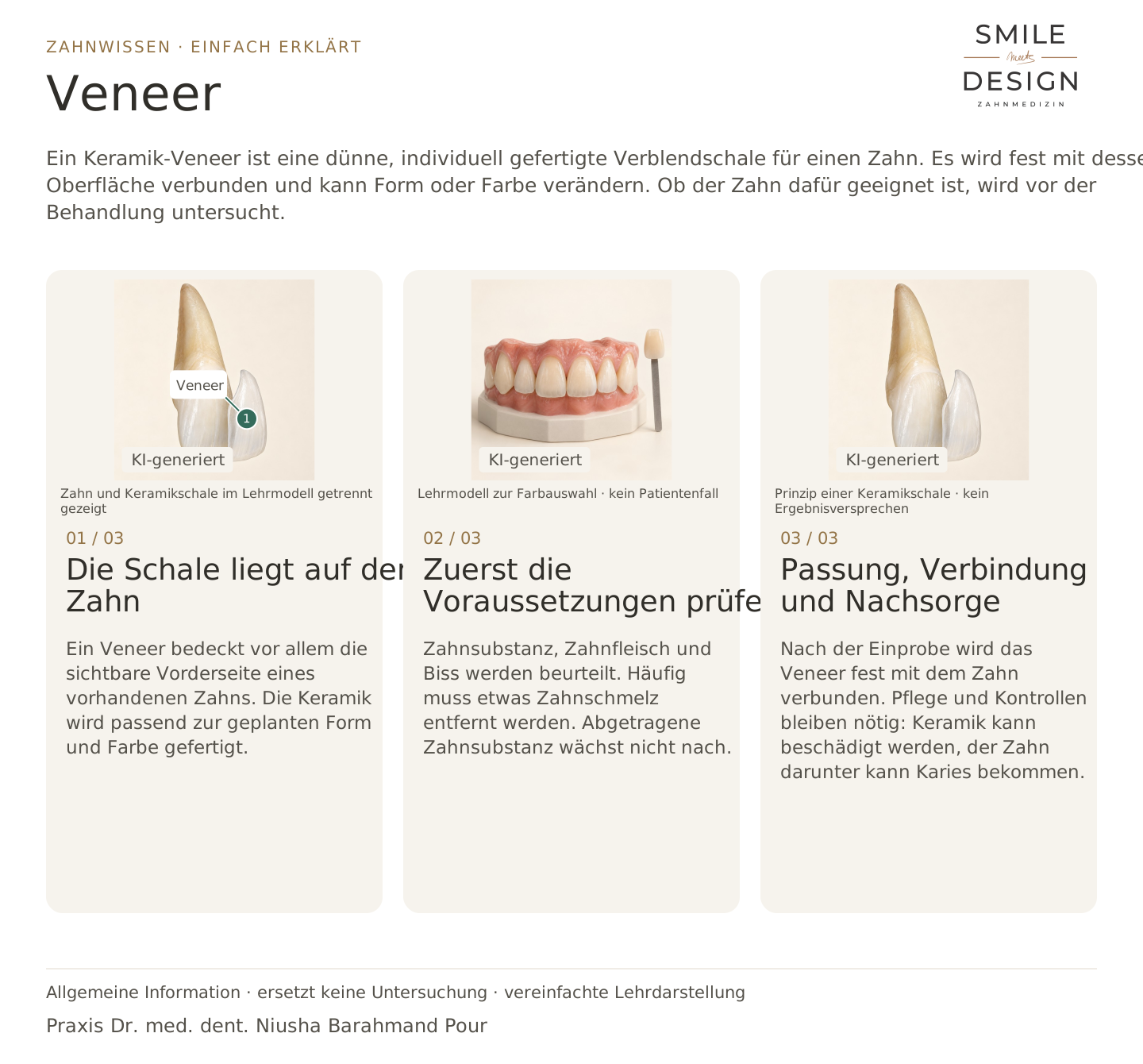
What is a ceramic veneer?
A thin shell bonded to an existing tooth, mainly shaping its visible surface.

A ceramic veneer is a thin, custom-made shell for a tooth. It is bonded firmly to the surface and can change its shape or colour. The tooth is examined before treatment to assess suitability.
For dental trainees & teams
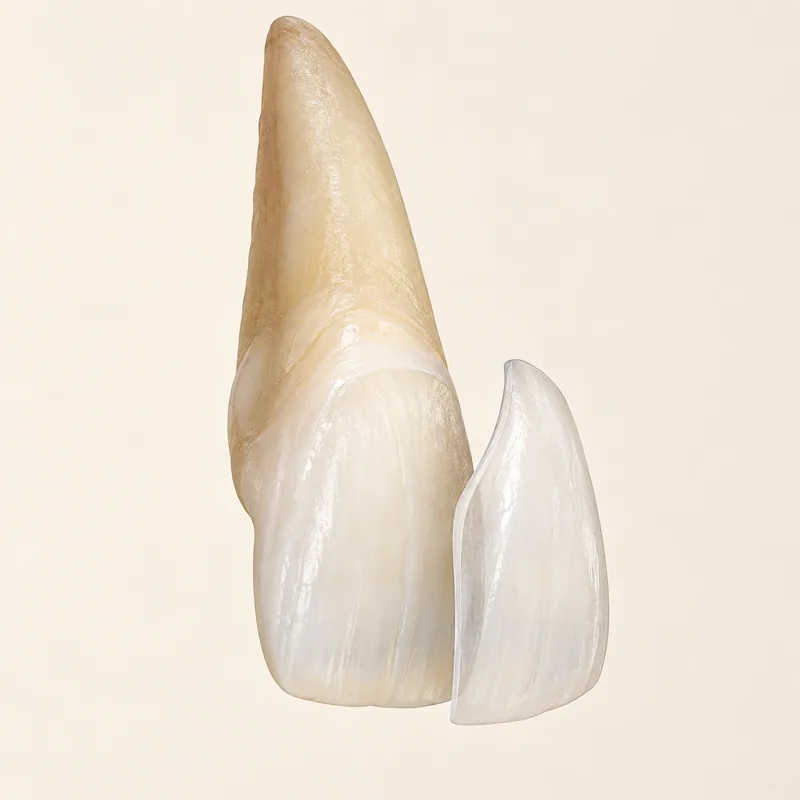
A veneer mainly covers the visible front surface of an existing tooth. The ceramic is made to match the planned shape and colour.
Tooth structure, gums and bite are assessed. Some enamel often needs to be removed. Removed tooth structure does not grow back.
After a trial fitting, the veneer is firmly bonded to the tooth. Care and checks remain necessary: ceramic can be damaged, and the tooth underneath can develop decay.
A thin shell bonded to an existing tooth, mainly shaping its visible surface.
People seeking suitable changes in shape or colour who have appropriate tooth structure. Gums, decay risk and bite are examined first.
Planning and any tooth preparation are followed by fabrication, trial fitting and bonding. Care and check-ups help protect the tooth and restoration.
Three steps. Straight to the point.
Explanations are also shown on screen.

Silent film in German · English explanations in the three views above
A veneer changes the surface of an existing tooth. It replaces neither a missing root nor an entire missing tooth.
Yes. The veneer is attached to the existing tooth. Preparation involving removal of tooth structure may be needed; the amount depends on the starting situation and plan.
A fixed lifespan cannot be promised. Biting forces, care, tooth condition and bonding all play a part. A damaged or loose veneer may need repair or replacement.
Yes. Clenching or grinding can place greater stress on the restoration. This is considered alongside tooth contacts and tooth structure during examination and aftercare planning.
A question to discuss with Dr. med. dent. Niusha Barahmand Pour:
Which changes in shape and colour are possible for my teeth, and how much preparation would they need?
Aesthetic wishes are considered together with tooth structure, gums and bite at her practice.
Shape, colour and the condition of your teeth are central to the consultation.
Discuss veneers in personChoose an appointment on DoctolibBuild on the simple explanation with clinical terms, key distinctions and a knowledge question.
The ceramic shell is the restoration; the adhesive bonding system connects it to the tooth structure.
Editorial research: 23 October 2026. This explanation covers general principles and does not replace a personal examination. Suitable treatment is discussed following individual assessment.