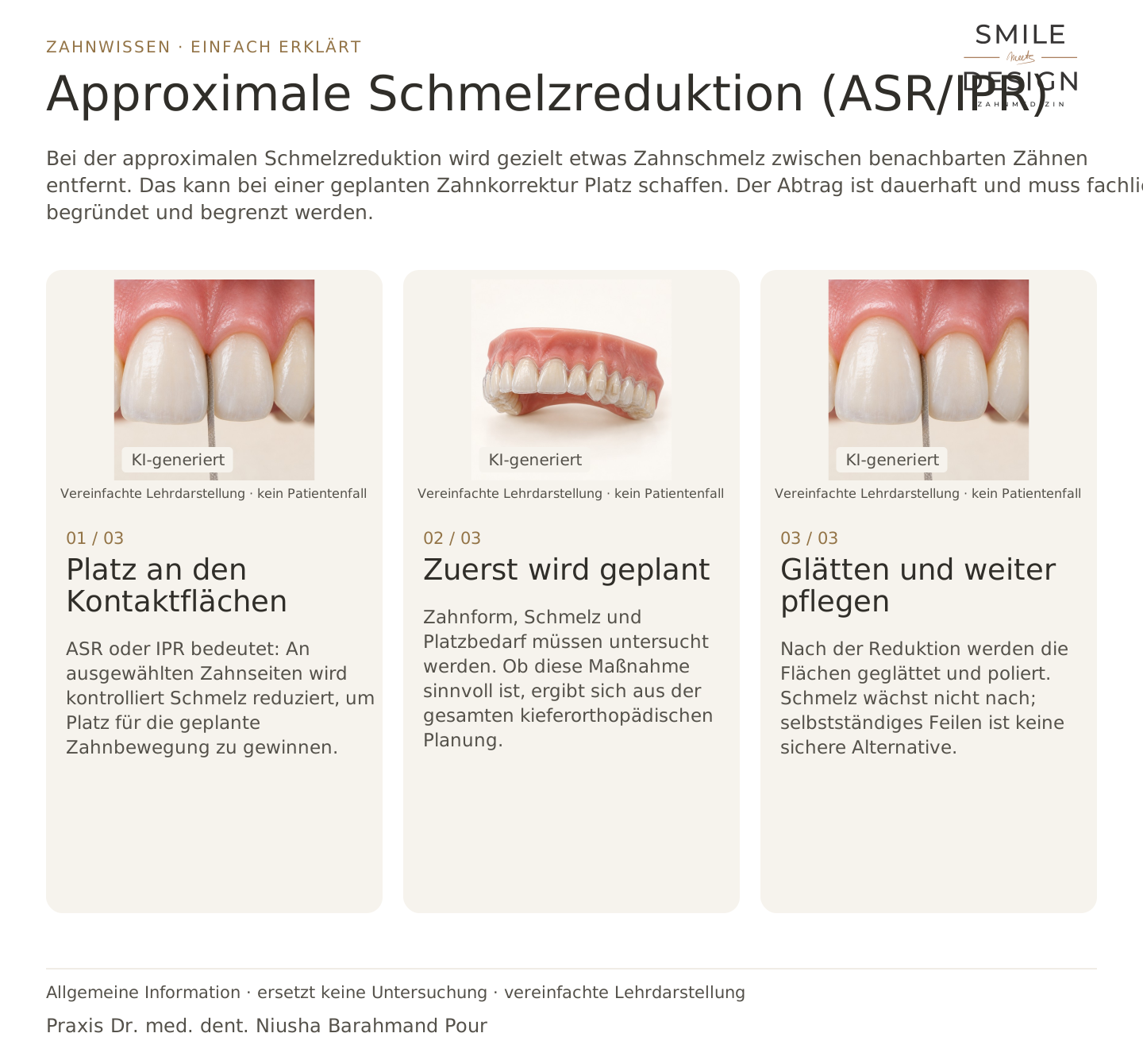
What is IPR for?
It can create space for planned tooth movement and change contact shapes.

Interproximal reduction removes a controlled amount of enamel between neighbouring teeth. This can create space during planned orthodontic treatment. The removal is permanent and must be carefully justified and limited.
For dental trainees & teams
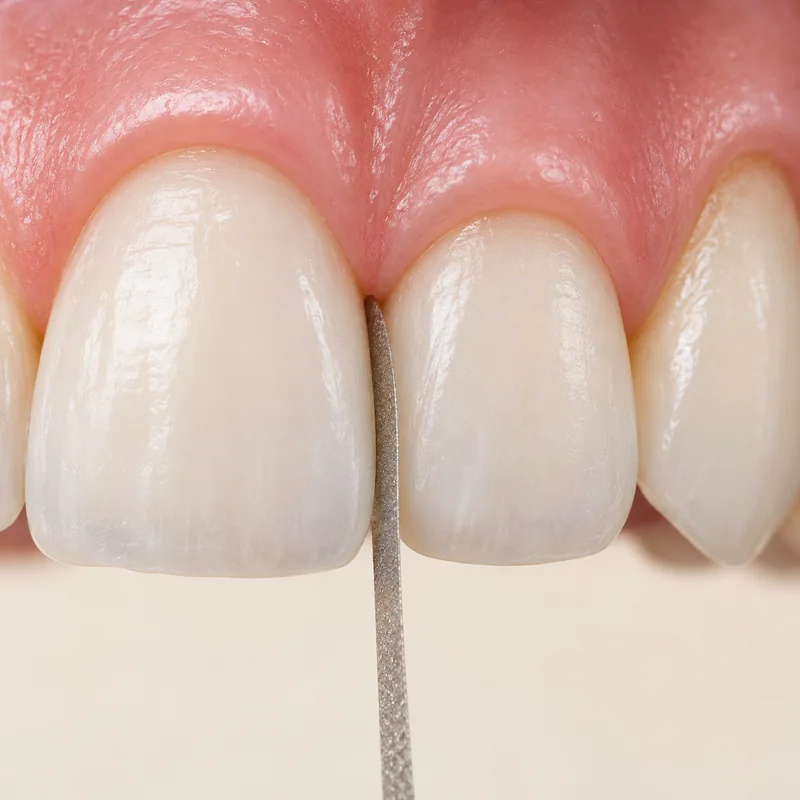
IPR means reducing enamel on selected sides of teeth in a controlled way to create space for planned tooth movement.
Tooth shape, enamel and space requirements need assessment. Whether IPR is suitable depends on the overall orthodontic plan.
After reduction, the surfaces are smoothed and polished. Enamel does not grow back; filing teeth yourself is not a safe alternative.
It can create space for planned tooth movement and change contact shapes.
When examination and orthodontic planning justify limited enamel removal.
Planning, controlled reduction, smoothing and polishing. It requires appropriately trained professionals.
Three steps. Straight to the point.
Explanations are also shown on screen.

Silent film in German · English explanations in the three views above
IPR treats selected contact surfaces to create space. Crown preparation shapes a tooth for a covering restoration.
No. It is one possible planning step, not a routine part of every course of orthodontic treatment.
No. Benefits, extent and risks are therefore discussed beforehand.
Temporary sensitivity is possible. Persistent symptoms should be discussed with the treatment team.
A question to discuss with Dr. med. dent. Niusha Barahmand Pour:
Why would IPR be useful in my plan, and how will my enamel be protected?
At the practice, the findings, personal wishes and possible next steps are discussed through a consultation and examination.
Space requirements can be discussed in person before orthodontic treatment.
Discuss orthodontic treatmentChoose an appointment on DoctolibBuild on the simple explanation with clinical terms, key distinctions and a knowledge question.
IPR creates limited space by removing enamel; an attachment is a bonded shape that helps guide tooth movement.
Editorial research: 23 October 2026. This explanation covers general principles and does not replace a personal examination. Suitable treatment is discussed following individual assessment.