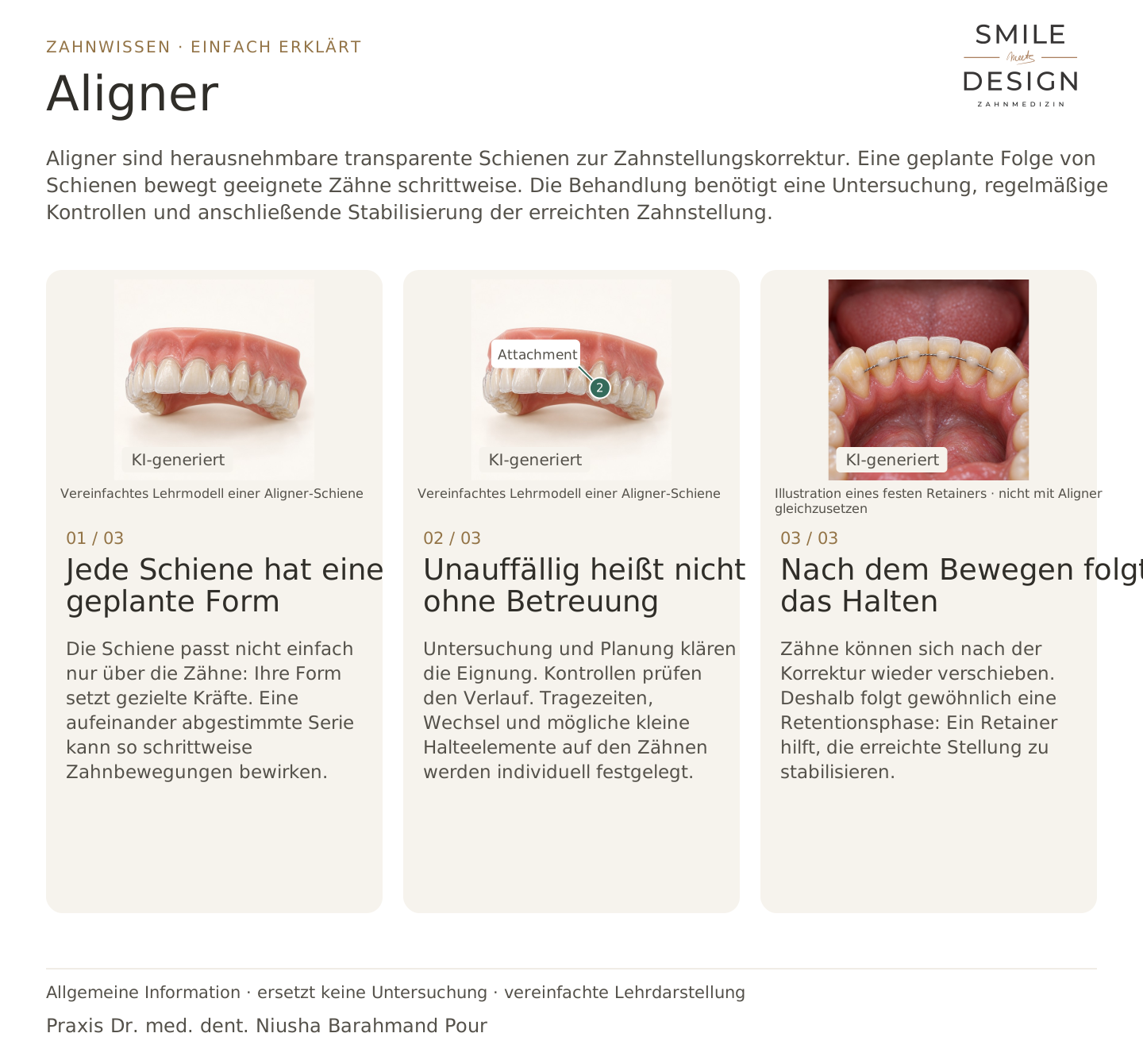
How do the trays move teeth?
The shape of each tray in a planned series applies targeted forces. This allows suitable tooth movements to take place gradually.

Aligners are removable clear trays used to correct tooth position. A planned series moves suitable teeth step by step. Treatment requires an examination, regular reviews and subsequent stabilisation of the new tooth positions.
For dental trainees & teams
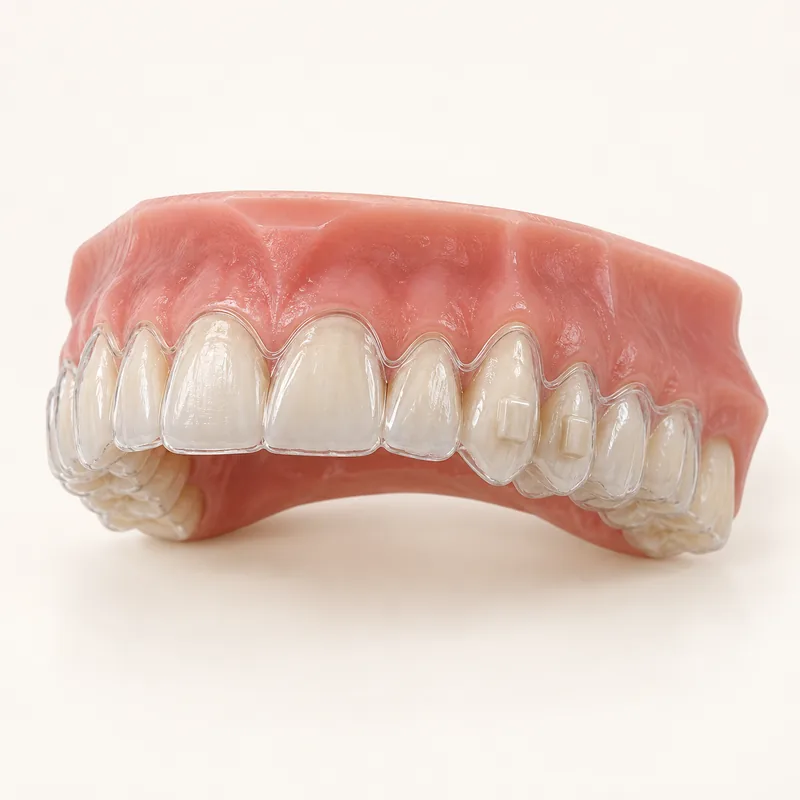
An aligner does more than simply fit over the teeth: its shape applies targeted forces. A coordinated series can gradually produce planned tooth movements.
Examination and planning establish suitability. Reviews check progress. Wear time, changes of aligner and any small attachments on the teeth are planned individually.
Teeth can move again after correction. Treatment is therefore usually followed by a retention phase: a retainer helps stabilise the new positions.
The shape of each tray in a planned series applies targeted forces. This allows suitable tooth movements to take place gradually.
Suitability depends on tooth positions, the jaw and the movements needed. An examination establishes whether aligners are sufficient or other or additional methods are necessary.
Planning and reviews determine wear time, changes and any attachments, among other things. Active movement is usually followed by retention to stabilise the result.
Three steps. Straight to the point.
Explanations are also shown on screen.

Silent film in German · English explanations in the three views above
An active aligner is intended to move teeth in a planned way. A retainer is intended to maintain their new positions. A similar appearance does not mean the same purpose.
No. Which movements are possible and appropriate depends on the teeth, jaw and initial findings. Some situations require other or additional methods.
They may be attachments: tooth-coloured shapes bonded to the teeth to help the aligner apply forces more precisely. Whether they are needed depends on the planned movement.
Changes follow the treatment plan and reviews. Speeding up the schedule on your own can interfere with the planned progress.
A question to discuss with Dr. med. dent. Niusha Barahmand Pour:
Which tooth movements would be appropriate in my situation, and how would the positions be stabilised afterwards?
Her approach also considers tooth alignment in relation to restorative planning. Whether aligners are suitable is assessed from the findings.
We can discuss your wishes for your tooth alignment and the possibilities of aligner treatment in person.
Book an aligner consultationChoose an appointment on DoctolibBuild on the simple explanation with clinical terms, key distinctions and a knowledge question.
The active phase aims to change tooth position. Retention aims to stabilise the result. A tray from the active series is not automatically suitable as a long-term retainer.
Editorial research: 22 October 2026. This explanation covers general principles and does not replace a personal examination. Suitable treatment is discussed following individual assessment.