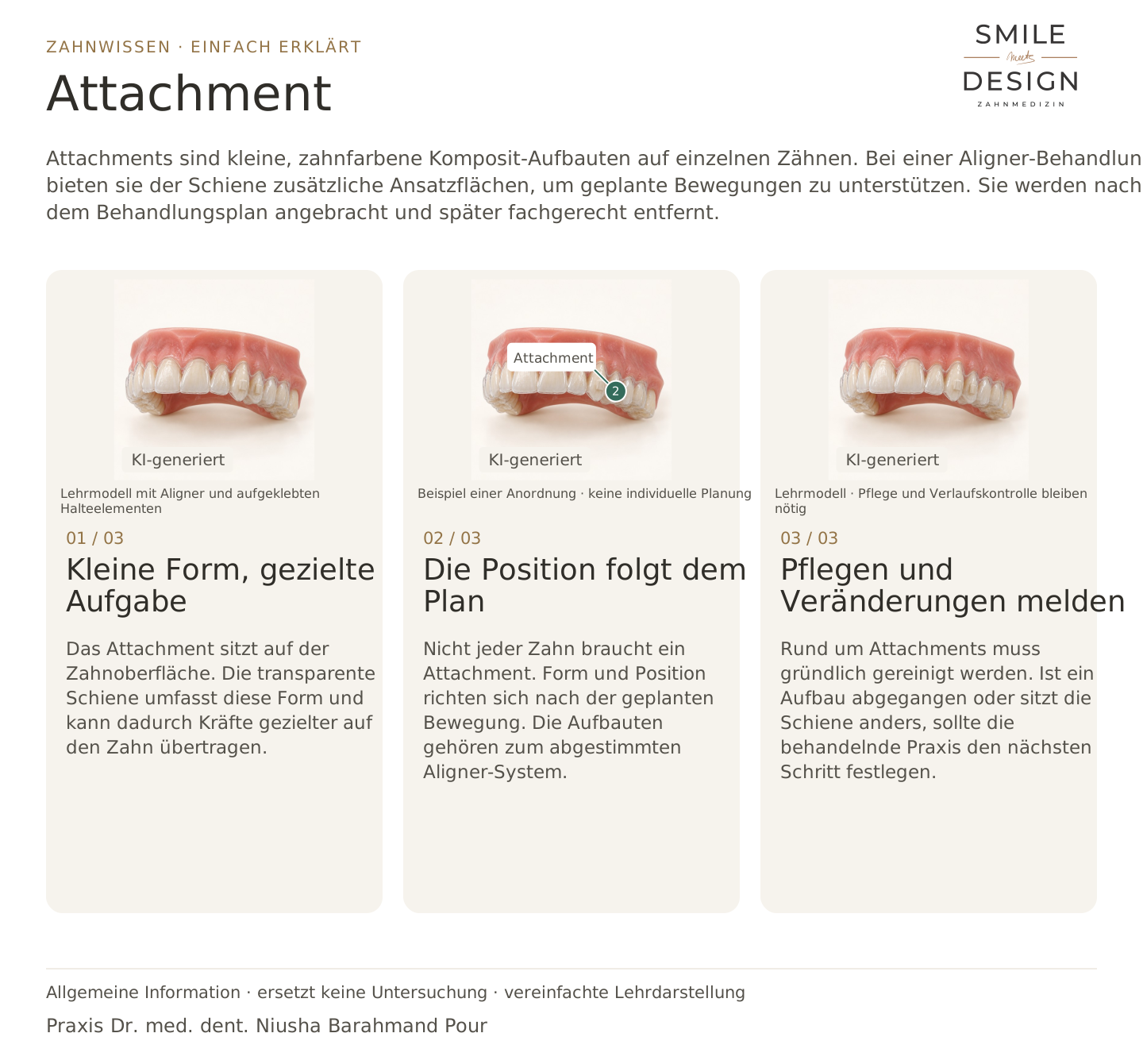
What is an attachment?
A small, tooth-coloured composite shape bonded to a tooth during aligner treatment.

Attachments are small, tooth-coloured composite shapes bonded to individual teeth. During aligner treatment, they give the tray extra surfaces to grip and help support planned movements. They are fitted according to the treatment plan and later professionally removed.
For dental trainees & teams
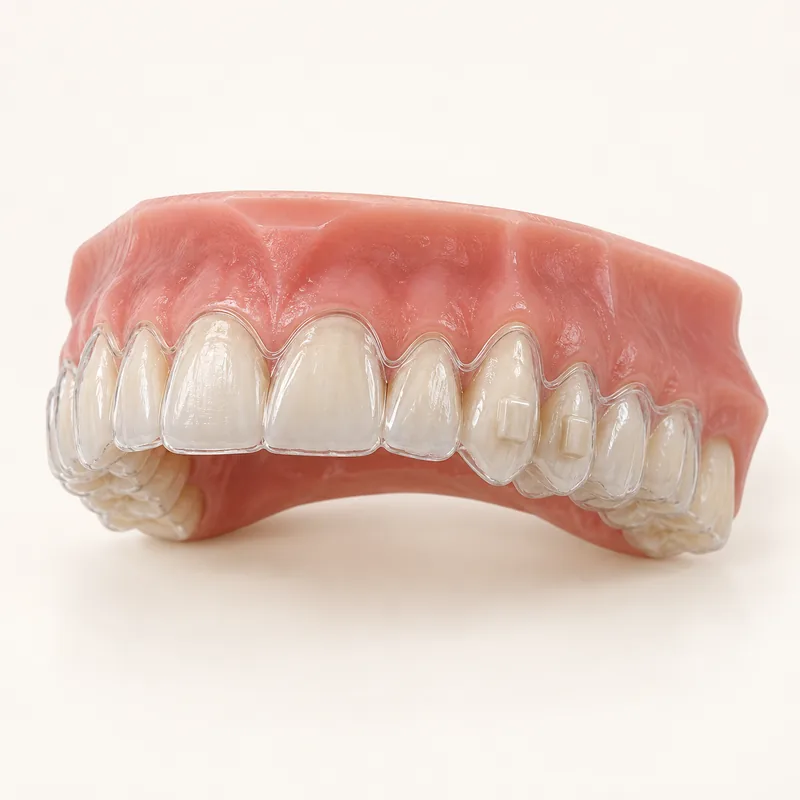
The attachment sits on the tooth surface. The clear tray fits around this shape, allowing it to transmit forces to the tooth more precisely.
Not every tooth needs an attachment. Its shape and position depend on the planned movement. The attachments form part of the coordinated aligner system.
The areas around attachments need thorough cleaning. If an attachment comes off or the aligner fits differently, the treating practice should decide the next step.
A small, tooth-coloured composite shape bonded to a tooth during aligner treatment.
It provides an extra gripping surface for the tray and supports planned tooth movements.
Clean thoroughly and tell the treating practice if an attachment comes off. Do not reattach it yourself; the ongoing aligner plan needs checking.
Three steps. Straight to the point.
Explanations are also shown on screen.

Silent film in German · English explanations in the three views above
An attachment is a small composite shape that an aligner grips. A bracket is a component that holds the wire of fixed braces.
They are tooth-coloured but can be visible depending on their position, shape and the light. Complete invisibility cannot be promised with aligner treatment.
No. Position and shape are part of treatment planning. The treating practice should decide whether and when it needs replacing and how to continue wearing the aligners.
They are usually professionally removed after their planned use. Subsequent stabilisation of tooth positions follows a separate retention plan.
A question to discuss with Dr. med. dent. Niusha Barahmand Pour:
Which attachments does my treatment plan include, and what should I watch for when cleaning and checking the aligner fit?
At her practice, tooth alignment is considered in relation to the findings and the broader treatment plan.
Questions about aligner planning can be discussed together in relation to your tooth positions.
Book an aligner consultationChoose an appointment on DoctolibBuild on the simple explanation with clinical terms, key distinctions and a knowledge question.
An attachment supports active aligner treatment. A retainer maintains the result afterwards and has a different role.
Editorial research: 23 October 2026. This explanation covers general principles and does not replace a personal examination. Suitable treatment is discussed following individual assessment.