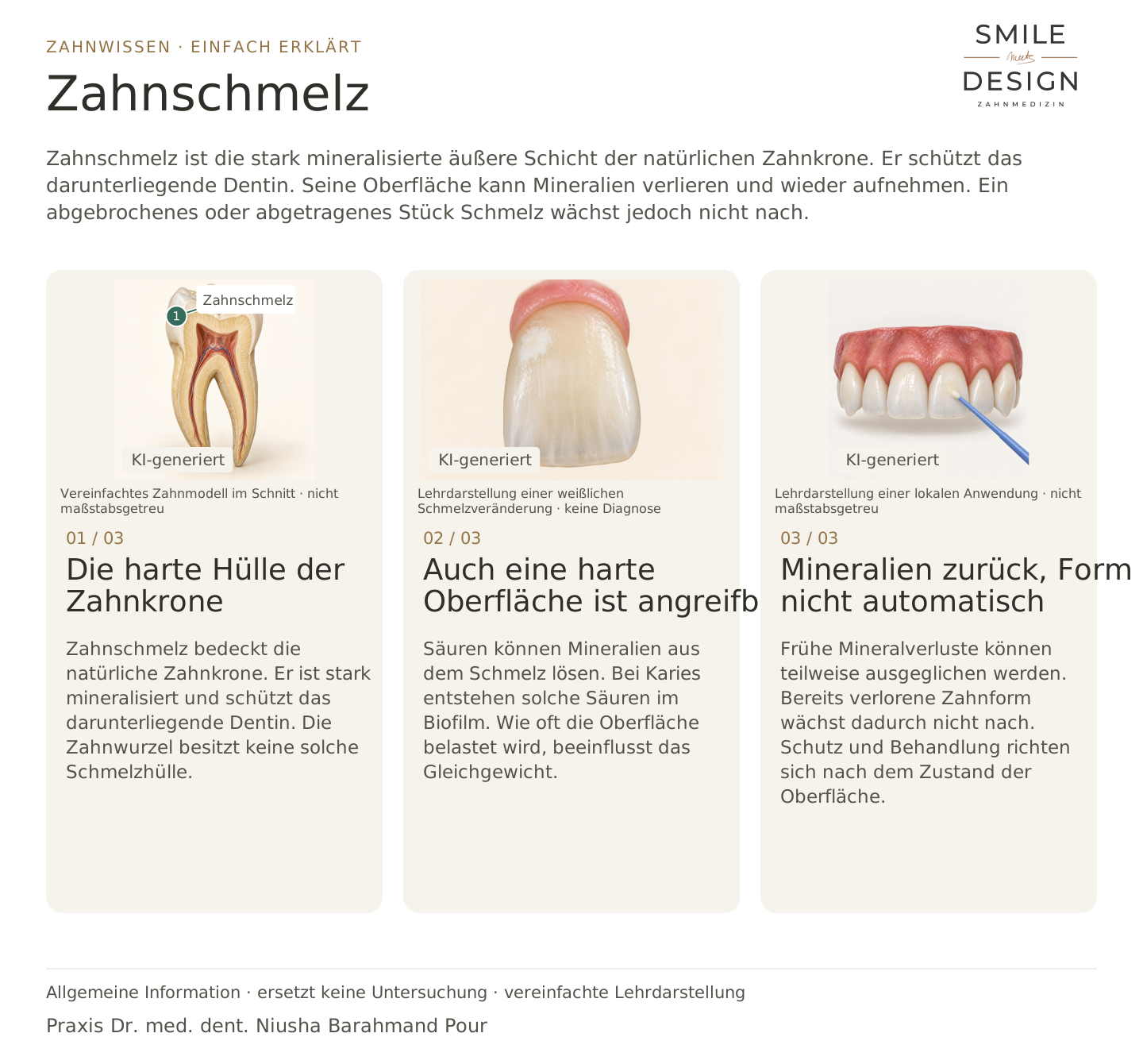
Where is the protective layer?
Enamel covers the natural tooth crown and protects the dentine beneath. The root instead has an outer layer of cementum.

Enamel is the highly mineralised outer layer of a natural tooth's crown. It protects the dentine beneath. Its surface can lose and regain minerals. However, a chipped or worn-away piece of enamel does not grow back.
For dental trainees & teams
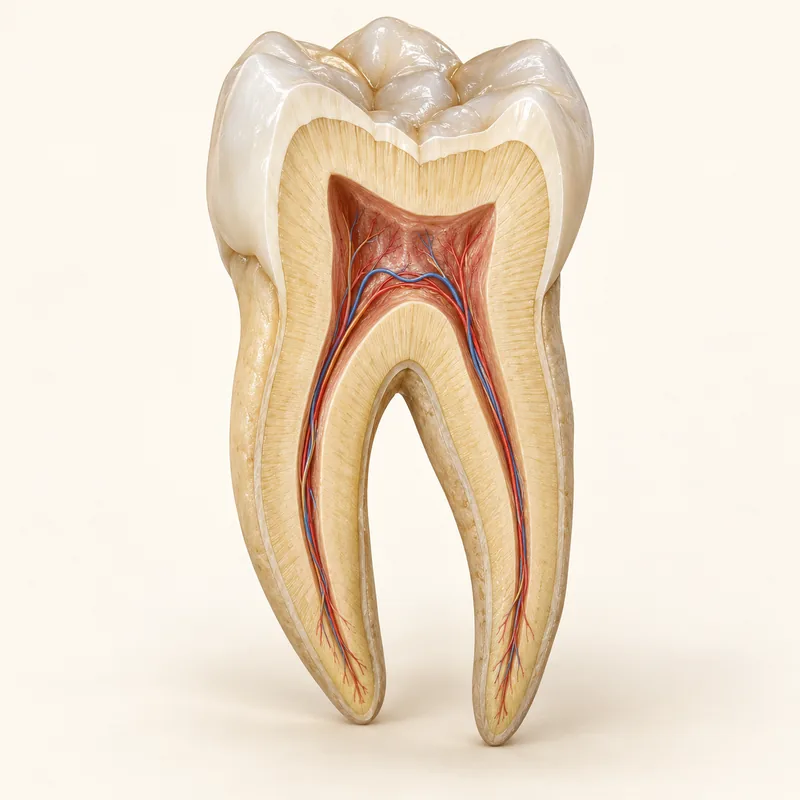
Enamel covers the natural crown. It is highly mineralised and protects the dentine beneath. The tooth root does not have this enamel shell.
Acids can dissolve minerals from enamel. In decay, these acids are produced in the biofilm. How often the surface is exposed influences the balance.
Early mineral loss can be partly reversed. Lost tooth shape does not grow back through this process. Protection and treatment depend on the surface's condition.
Enamel covers the natural tooth crown and protects the dentine beneath. The root instead has an outer layer of cementum.
Even the hard enamel surface can lose minerals. Repeated acid exposure shifts the balance between mineral loss and replacement.
Early mineral loss can be partly reversed. A chipped or worn-away piece of enamel, however, does not grow back.
Three steps. Straight to the point.
Explanations are also shown on screen.

Silent film in German · English explanations in the three views above
Enamel is the outer shell of the tooth crown. Dentine lies beneath it and forms most of the tooth, including the root.
No. The outside of the root is covered by cementum, with dentine beneath. Enamel is found on the natural tooth crown.
Lost pieces of enamel do not grow back. Returning minerals to early lesions is different from rebuilding missing tooth shape.
No. Acids can dissolve minerals. Saliva and suitable fluoride-containing care support the balance and protect the tooth surface.
A question to discuss with Dr. med. dent. Niusha Barahmand Pour:
Has only the mineral balance changed here, or has tooth tissue already been lost?
Healthy tooth structures are a foundation for function and aesthetic planning at the practice.
If you notice changes to your tooth surfaces or have questions about enamel, we are happy to advise.
Discuss your tooth surfacesChoose an appointment on DoctolibBuild on the simple explanation with clinical terms, key distinctions and a knowledge question.
Minerals can return to remaining enamel. This does not rebuild a lost piece of enamel into a new tooth shape.
Editorial research: 22 October 2026. This explanation covers general principles and does not replace a personal examination. Suitable treatment is discussed following individual assessment.