Purpose?
Record interdental plaque.

The approximal plaque index, or API, describes the proportion of examined interdental sites with visible plaque, often after disclosing. It supports a focused oral-care discussion; it does not diagnose caries or periodontitis.
For training & practice ↓
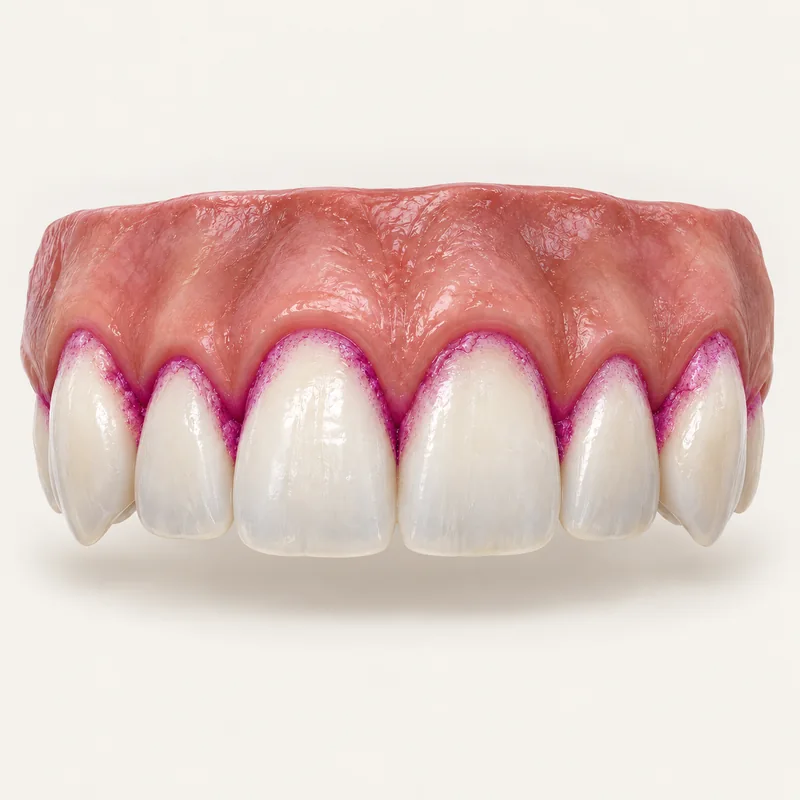
Disclosed plaque highlights areas that brushing or interdental cleaning may miss.
Examined sites are recorded as plaque-present or plaque-free, allowing a percentage to be calculated.
Suitable aids and their use can be discussed. Later measurements need comparable conditions for interpretation.
Disclosed plaque highlights areas that brushing or interdental cleaning may miss.
Examined sites are recorded as plaque-present or plaque-free, allowing a percentage to be calculated.
Suitable aids and their use can be discussed. Later measurements need comparable conditions for interpretation.
Record interdental plaque.
Not a standalone disease diagnosis.
Discuss targeted oral care.
Three steps. No audio.
Each scene can also be selected manually.

Silent educational film with German on-screen text and simplified teaching images. Not a patient case or a promised treatment outcome. The full English explanation is available as text.
The API records plaque at examined interdental sites. A bleeding index records a different gingival observation.
No. Pocket depth requires a different examination.
No. It records plaque, not established tooth damage.
Plaque changes with oral care. Timing and examination conditions also matter when comparing results.
Editorially suggested question to discuss with Dr Niusha Barahmand Pour:
Which aids suit my interdental spaces?
Ask which interdental aids fit and how to use them if cleaning is difficult.
Discuss interdental cleaningAppointment selection at DoctolibThe API records plaque at examined interdental sites. A bleeding index records a different gingival observation.
Editorial research: . General information, not an individual diagnosis or treatment recommendation. Teaching illustrations are simplified and do not depict a patient case.