What are brackets?
Attachments forming part of fixed braces.

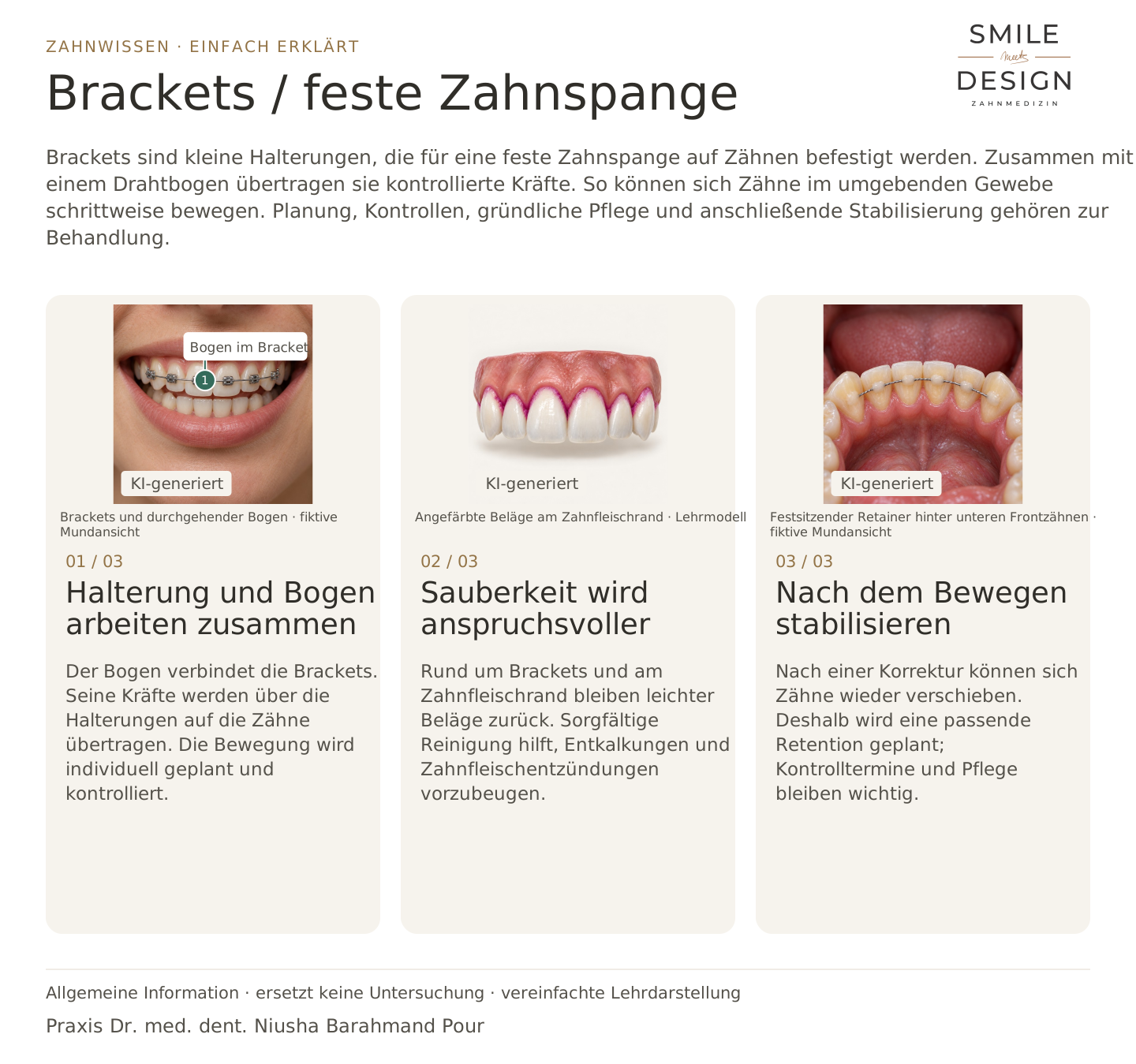
Brackets are small attachments fixed to teeth as part of braces. Together with an archwire they transmit controlled forces, allowing teeth to move gradually within the surrounding tissues. Planning, check-ups, careful cleaning and stabilisation afterwards are part of treatment.
For dental trainees & teams
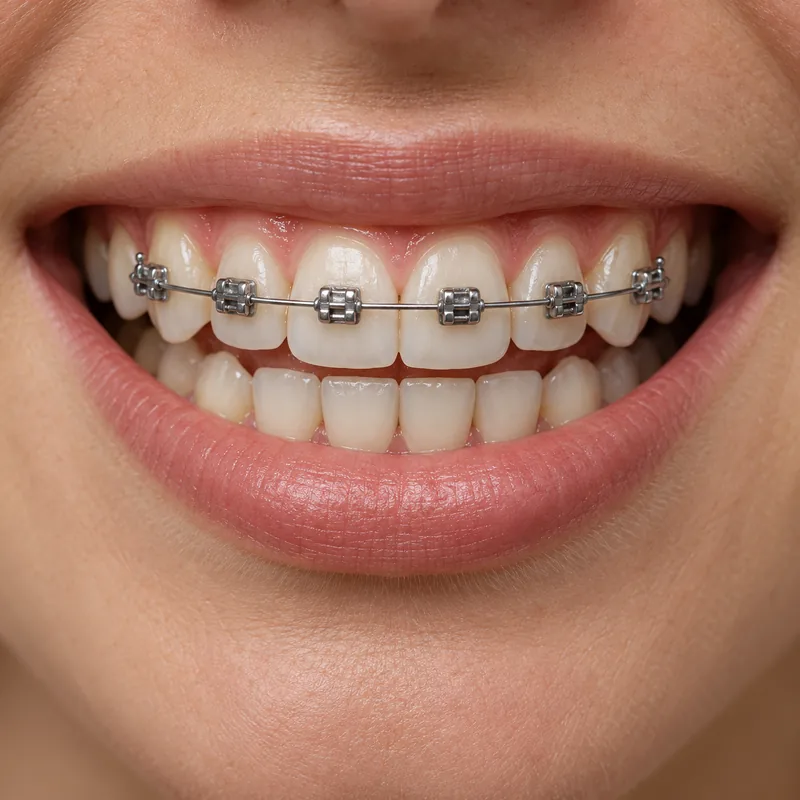
The archwire connects the brackets. Forces pass through these attachments to the teeth. Movement is planned and monitored individually.
Plaque can collect around brackets and near the gum line. Thorough cleaning helps prevent enamel demineralisation and gum inflammation.
Teeth can move again after correction. Suitable retention is therefore planned, while check-ups and good cleaning remain important.
Attachments forming part of fixed braces.
Planning, fitting, regular adjustments and retention afterwards.
Thorough cleaning and advice for loose or irritating parts.
Three steps. Straight to the point.
Explanations are also shown on screen.

Silent film in German · English explanations in the three views above
Brackets usually form part of active tooth movement. A retainer stabilises teeth afterwards. A bonded retainer is therefore not a complete brace continuing active treatment.
No. Adults can also have orthodontic care when suitable. Teeth, gums, bone and treatment goals must first be assessed.
Temporary pressure and tender teeth may follow fitting or adjustment. Persistent severe pain, sores or loose parts should be discussed with the treating practice.
Not in every case. Required movements, starting conditions, cooperation and cleaning ability inform the choice. No appliance is superior for every situation.
A question to discuss with Dr. med. dent. Niusha Barahmand Pour:
Which goals make sense for my tooth position, and would they require ongoing specialist orthodontic care?
Symptoms, examination findings and personal wishes form the basis of individual treatment planning.
A discussion can clarify which correction fits the findings.
Discuss tooth positionChoose an appointment on DoctolibBuild on the simple explanation with clinical terms, key distinctions and a knowledge question.
Controlled tooth movement involves remodelling in the supporting tissues and bone. More force does not automatically mean faster or better treatment.
Editorial research: 23 October 2026. This explanation covers general principles and does not replace a personal examination. Suitable treatment is discussed following individual assessment.