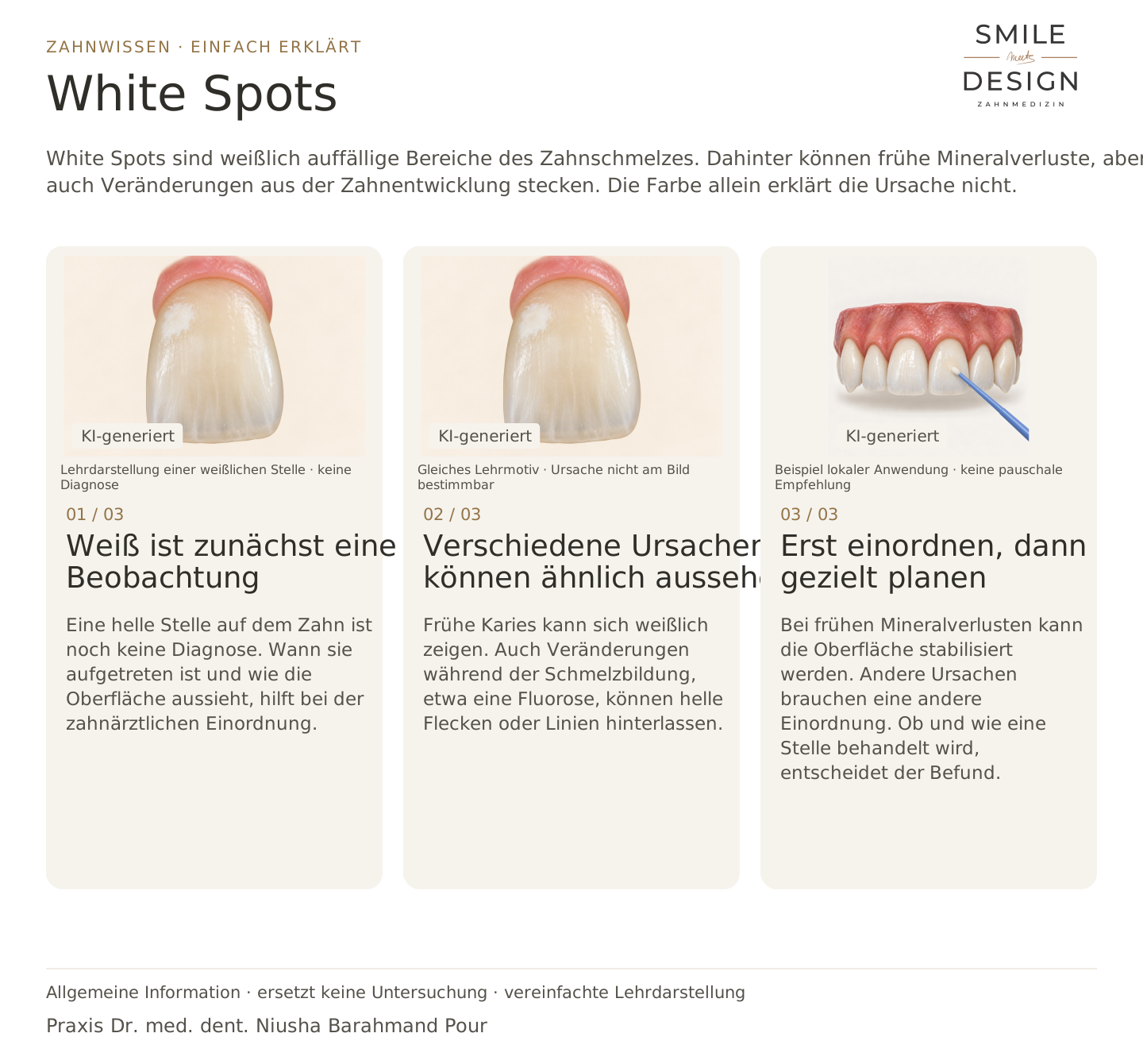
What does white spot mean?
A visibly whitish area in the enamel, initially without a confirmed explanation of its cause.

White spots are visibly whitish areas of enamel. They may result from early mineral loss or from changes during tooth development. Colour alone does not explain the cause.
For dental trainees & teams
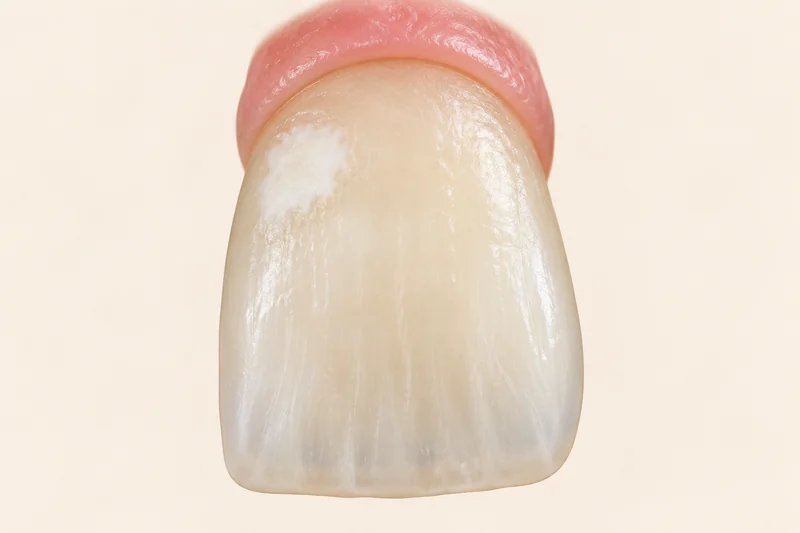
A light area on a tooth is not yet a diagnosis. When it appeared and what the surface looks like help the dentist assess it.
Early decay can appear whitish. Changes during enamel formation, such as fluorosis, can also leave light spots or lines.
With early mineral loss, the surface can be stabilised. Other causes require a different assessment. The findings determine whether and how an area is treated.
A visibly whitish area in the enamel, initially without a confirmed explanation of its cause.
For example, through early mineral loss or changes during tooth development.
Because the cause and condition of the surface determine whether protection, monitoring or treatment is appropriate.
Three steps. Straight to the point.
Explanations are also shown on screen.

Silent film in German · English explanations in the three views above
White spot describes the appearance. Early decay is one possible cause; fluorosis, in contrast, develops during tooth formation.
No. In early decay, the surface may still be intact. White spots can also have other causes.
Fluorosis develops while teeth are forming. Newly noticed spots on fully formed teeth should therefore not be classified as fluorosis on appearance alone.
Not reliably. Cleaning helps remove deposits, but does not explain the cause of an enamel change. This should be assessed before cosmetic treatment.
A question to discuss with Dr. med. dent. Niusha Barahmand Pour:
What is causing the light area, and is the first priority its stability or its appearance?
The practice's approach connects aesthetic wishes with tooth health; treatment is planned only after the relevant conditions have been assessed.
White spots can be assessed in person before any treatment is planned.
Discuss white areas on your teethChoose an appointment on DoctolibBuild on the simple explanation with clinical terms, key distinctions and a knowledge question.
A whitish area is a description, not a confirmed cause. Not every white area represents active decay.
Editorial research: 23 October 2026. This explanation covers general principles and does not replace a personal examination. Suitable treatment is discussed following individual assessment.