Which structures work together?
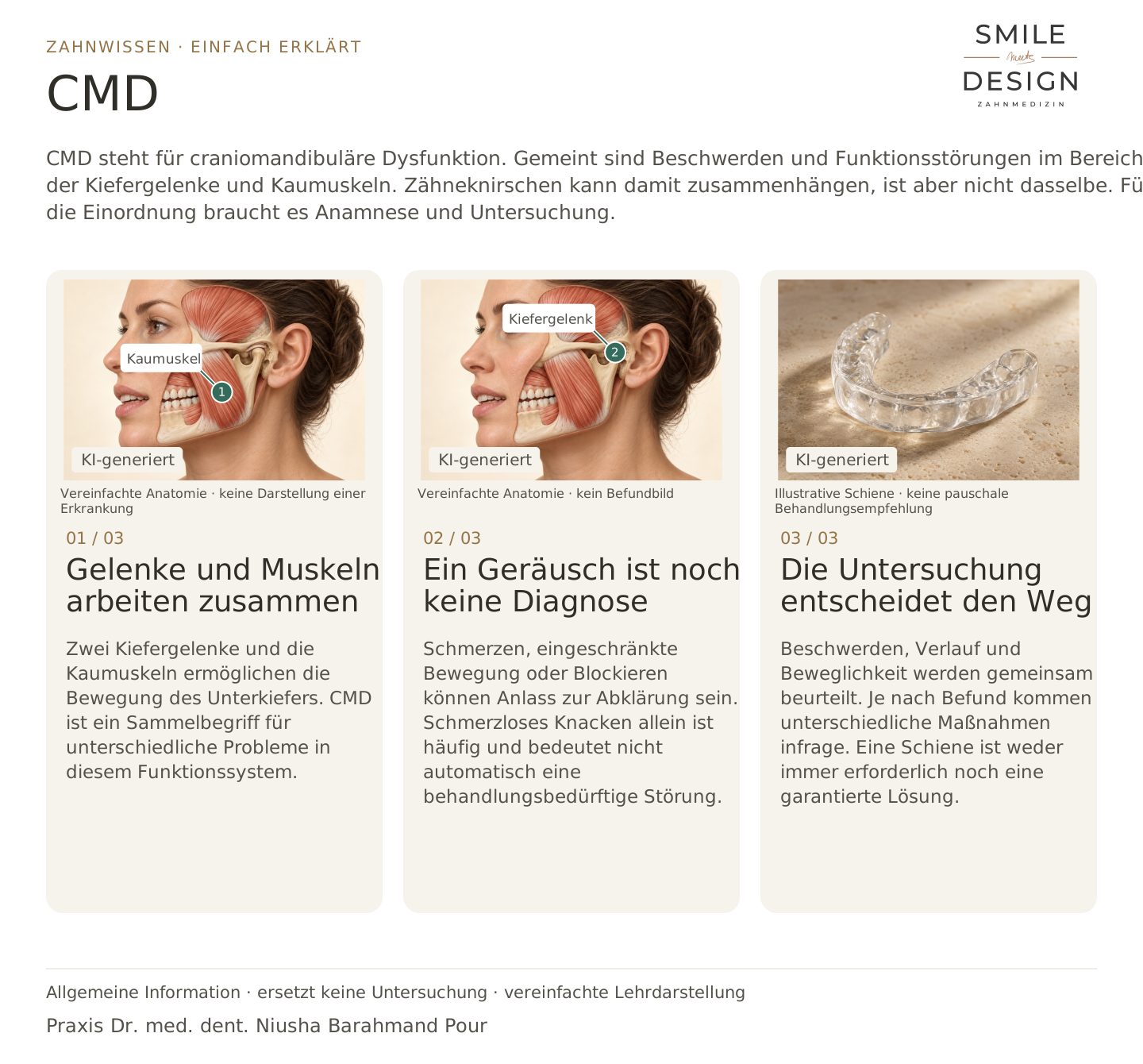
The jaw joints and chewing muscles work together to move the lower jaw. CMD covers different symptoms and functional disorders within this system.

CMD stands for craniomandibular dysfunction. It refers to symptoms and functional disorders involving the jaw joints and chewing muscles. Teeth grinding can be associated with it, but is not the same thing. Assessment requires a medical history and examination.
For dental trainees & teams
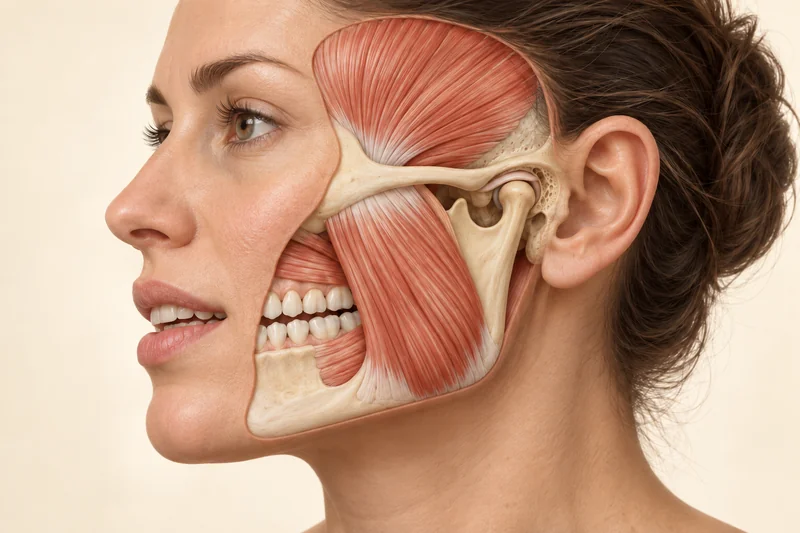
Two jaw joints and the chewing muscles allow the lower jaw to move. CMD is an umbrella term for different problems within this functional system.
Pain, restricted movement or locking can be reasons for assessment. Painless clicking alone is common and does not automatically indicate a disorder requiring treatment.
Symptoms, their course and jaw movement are assessed together. Different measures may be appropriate depending on the findings. A splint is neither always necessary nor a guaranteed solution.
The jaw joints and chewing muscles work together to move the lower jaw. CMD covers different symptoms and functional disorders within this system.
Painless clicking alone does not automatically mean a disorder needing treatment. Pain, locking or restricted movement are reasons for assessment.
Symptoms, their course and movement are examined together. Measures depend on the findings; a splint is not always necessary.
Three steps. Straight to the point.
Explanations are also shown on screen.

Silent film in German · English explanations in the three views above
CMD concerns symptoms and functional problems. Bruxism is chewing-muscle activity, such as clenching or grinding. The terms are not synonyms.
No. Bruxism describes chewing-muscle activity such as clenching or grinding. CMD describes symptoms or functional disorders; the two can occur together.
No. Different factors can contribute to CMD. Tooth contacts alone do not reliably explain symptoms or automatically justify changing the bite.
Note when and where symptoms occur, what makes them worse and whether movement is restricted. This information alone is not enough for a diagnosis.
A question to discuss with Dr. med. dent. Niusha Barahmand Pour:
Which findings could explain my symptoms, and which initial measures would suit them?
Function is part of her planning alongside tooth preservation and appearance. The starting points are your concerns and a careful examination.
You can discuss discomfort when chewing, opening your mouth or moving your jaw at an appointment.
Arrange an assessment of jaw symptomsChoose an appointment on DoctolibBuild on the simple explanation with clinical terms, key distinctions and a knowledge question.
A joint sound is a finding, not a complete diagnosis. Assessment considers pain, function, the course of symptoms and other possible causes, among other factors.
Editorial research: 22 October 2026. This explanation covers general principles and does not replace a personal examination. Suitable treatment is discussed following individual assessment.