Usually which lip?
The lower lip.

Actinic cheilitis is a change of the lip vermilion caused by long-term UV exposure, usually affecting the lower lip. It can be a precursor to lip cancer. Persistent rough, scaly or ulcerated areas need professional examination.
For training & practice ↓
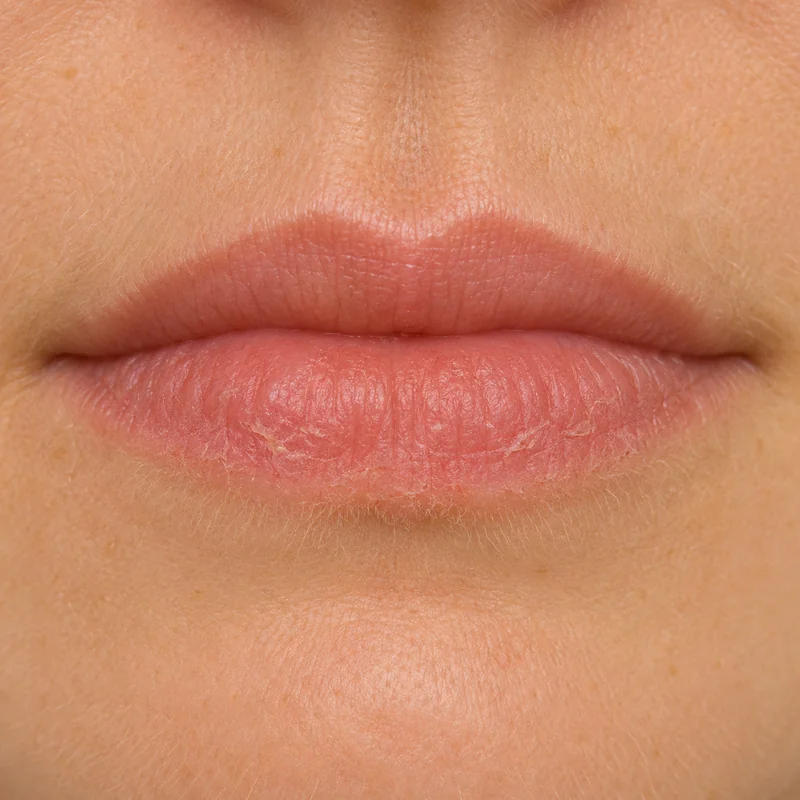
Dryness, scaling or a blurred border between lip and skin may be clues. Similar symptoms can have other causes.
Medical or dental assessment guides the next steps. Before choosing treatment, the German S3 guideline recommends a biopsy to confirm the condition and exclude invasive carcinoma.
Lip sun protection, shade and a wide-brimmed hat reduce further UV exposure. Treatment and follow-up depend on the extent and tissue findings.
The lower lip.
No; it may be a precancerous condition.
Continue sun protection and agreed reviews.
Three steps. No audio.
Each scene can also be selected manually.

Silent educational film with German on-screen text and simplified teaching images. Not a patient case or a promised treatment outcome. The full English explanation is available as text.
Actinic cheilitis relates to long-term sun exposure. Cold sores are a viral infection with a different course. A photograph cannot reliably distinguish them.
No. Irritation and other forms of cheilitis can look similar. Persistent change still merits assessment.
For a non-healing ulcer, enlarging nodule or focally painful change. Do not delay by trying successive care products.
Care products cannot replace diagnosis or necessary treatment. Sun protection remains important afterwards. If clinical findings suggest no or incomplete treatment response, histological reassessment is recommended.
You can bring this question to your appointment:
Is a biopsy needed, and how will treatment and follow-up be planned?
An examination can clarify the finding and any need for referral.
Arrange an assessmentAppointment selection at DoctolibActinic cheilitis relates to long-term sun exposure. Cold sores are a viral infection with a different course. A photograph cannot reliably distinguish them.
Editorial research: . General information, not an individual diagnosis or treatment recommendation. Teaching illustrations are simplified and do not depict a patient case.