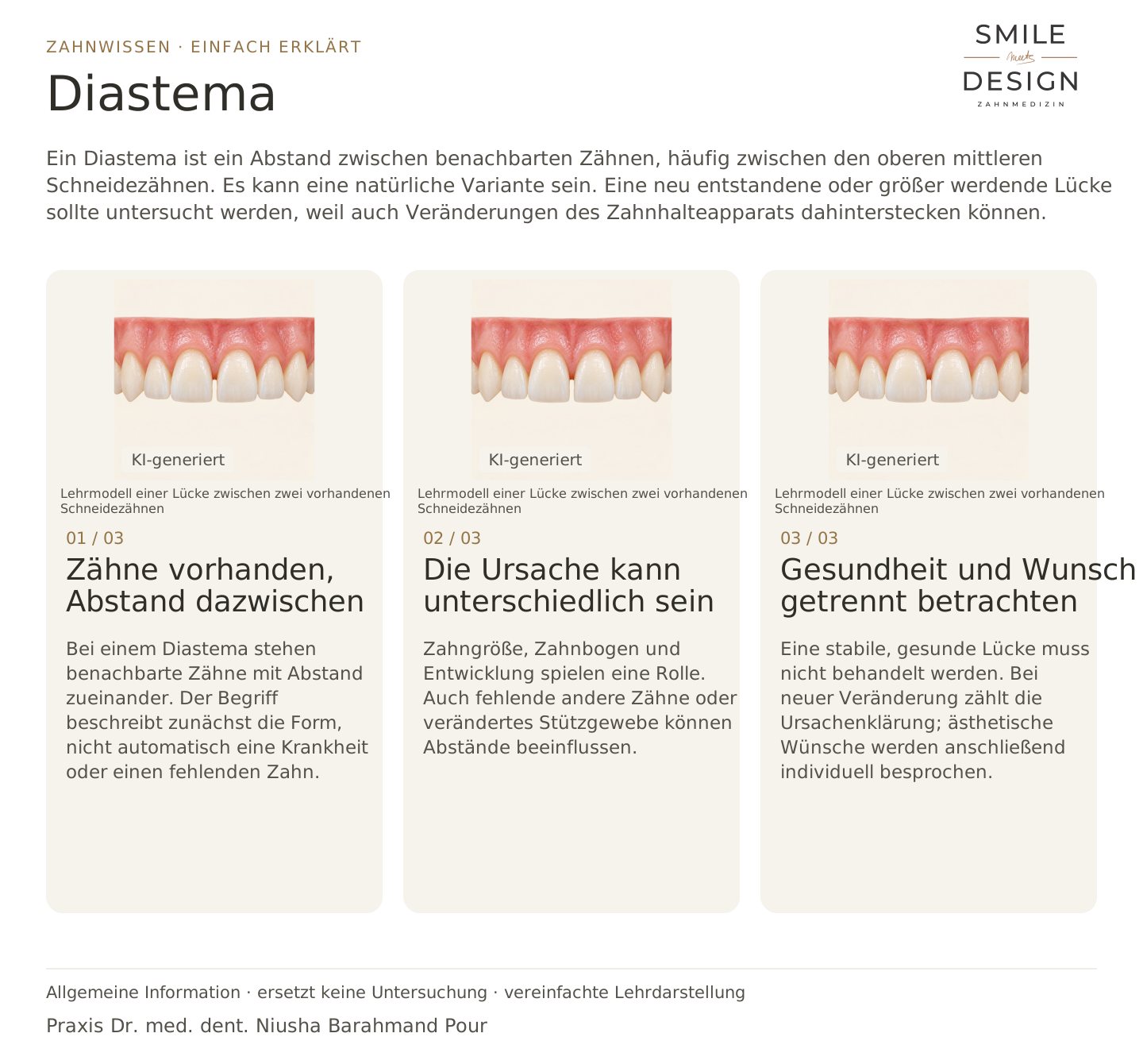
What is a diastema?
A space between neighbouring teeth.

A diastema is a space between neighbouring teeth, often the upper central incisors. It may be a natural variation. A new or widening gap should be examined because changes to the supporting tissues may also be responsible.
For dental trainees & teams
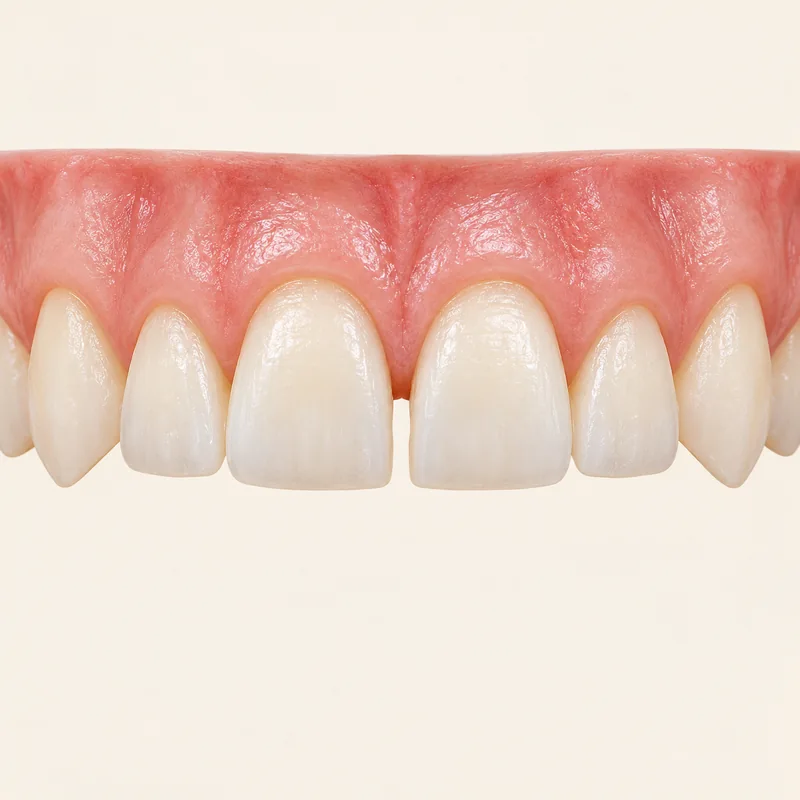
In a diastema, neighbouring teeth stand apart. The term initially describes their arrangement, not automatically a disease or a missing tooth.
Tooth size, the dental arch and development play a role. Missing teeth elsewhere or changes to the supporting tissues may also influence spacing.
A stable, healthy gap does not have to be treated. New changes first need assessment of the cause; aesthetic wishes can then be discussed individually.
A space between neighbouring teeth.
Not automatically, if teeth and supporting tissues are healthy and stable.
Especially with a new or widening gap, looseness or bleeding.
Three steps. Straight to the point.
Explanations are also shown on screen.

Silent film in German · English explanations in the three views above
A diastema is a space between existing neighbouring teeth. A gap caused by tooth loss involves a missing tooth, which is a different starting point.
Yes. Spacing can change as baby teeth are replaced. Developmental stage and the presence of permanent tooth germs help with assessment.
Not routinely. Its position alone does not justify a procedure. The cause of the gap and the overall treatment plan matter.
It should be examined, especially with looseness or bleeding gums. Do not try to close it yourself with elastic bands.
A question to discuss with Dr. med. dent. Niusha Barahmand Pour:
Is my gap a stable variation, or is there a cause that should be treated first?
Symptoms, examination findings and personal wishes form the basis of individual treatment planning.
Whether observation or a change is appropriate depends on findings and personal wishes.
Discuss a gap between teethChoose an appointment on DoctolibBuild on the simple explanation with clinical terms, key distinctions and a knowledge question.
A diastema is a descriptive finding. Treatment decisions depend on cause, function, stability and personal wishes.
Editorial research: 23 October 2026. This explanation covers general principles and does not replace a personal examination. Suitable treatment is discussed following individual assessment.