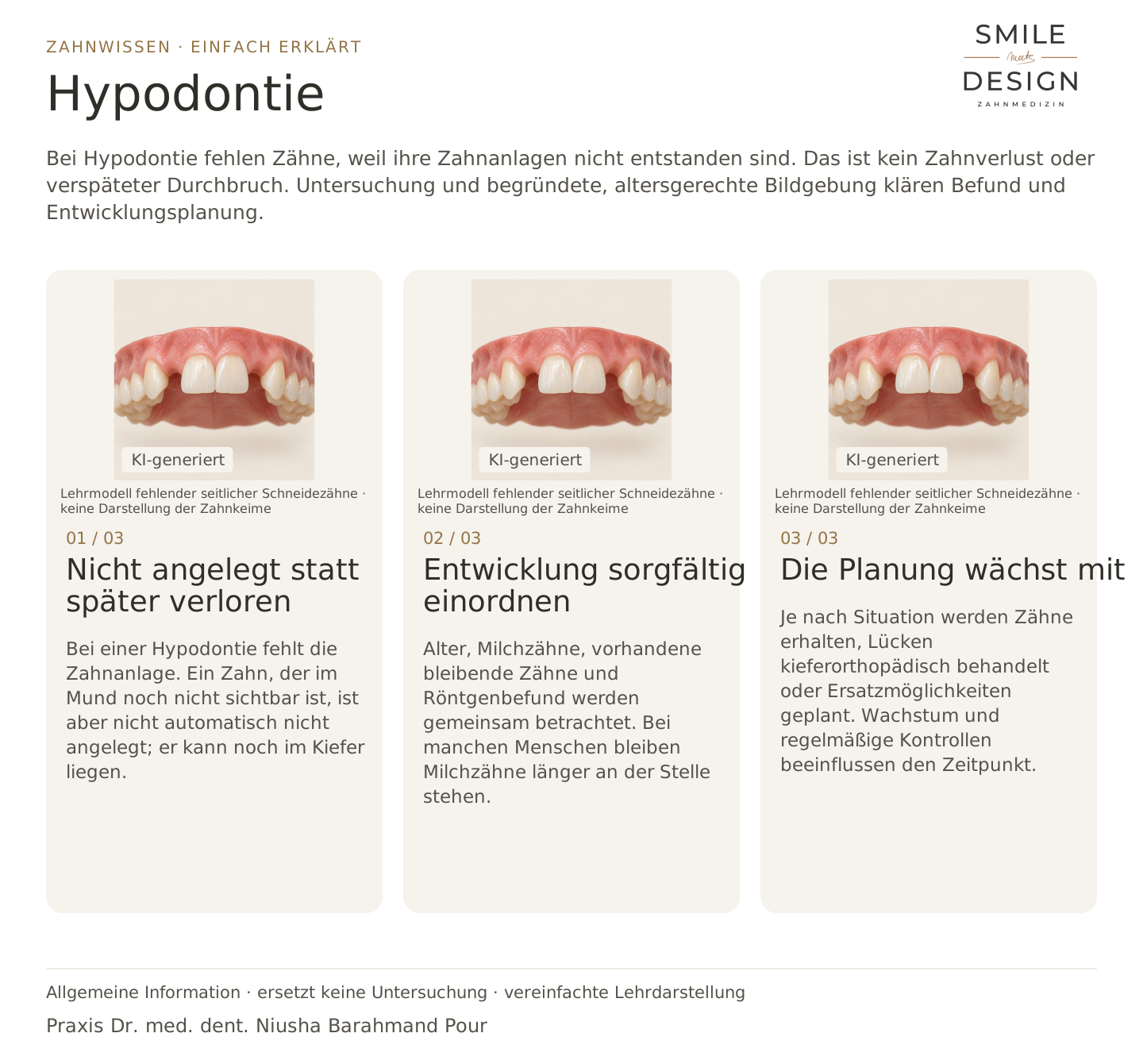
What is absent?
The developing germ of one or more teeth.

In hypodontia, teeth are absent because their tooth germs did not form. This differs from tooth loss or delayed eruption. Examination and justified, age-appropriate imaging guide diagnosis and planning during development.
For dental trainees & teams
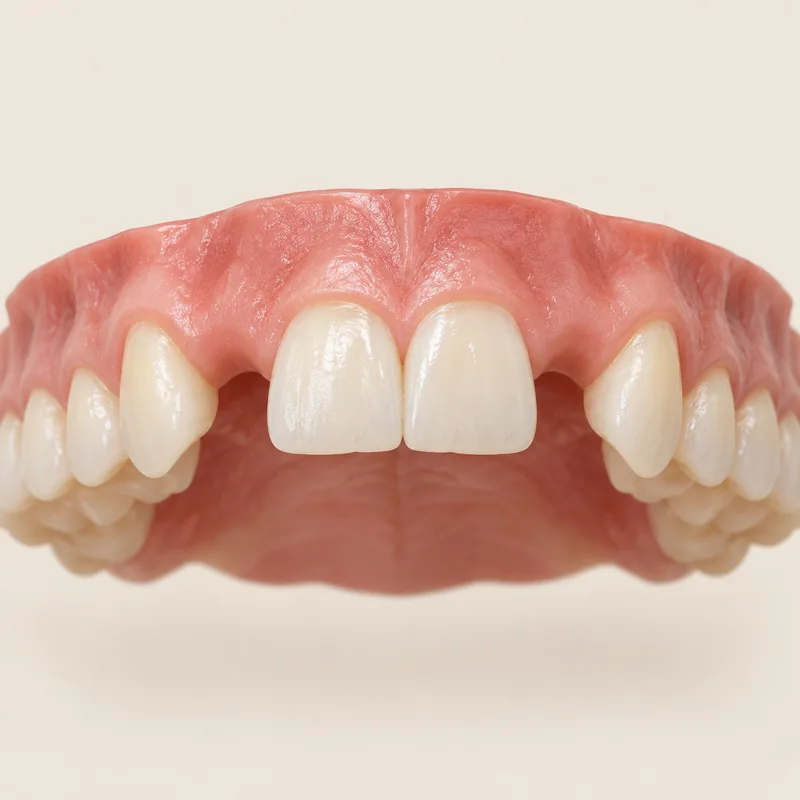
In hypodontia, the tooth germ is absent. However, a tooth not yet visible in the mouth is not automatically missing developmentally; it may still be within the jaw.
Age, baby teeth, existing permanent teeth and X-ray findings are considered together. In some people, baby teeth remain in that position for longer.
Depending on the situation, teeth may be retained, spaces treated orthodontically or replacement options planned. Growth and regular review affect timing.
The developing germ of one or more teeth.
Through developmental history, examination and justified imaging.
Over the long term, accounting for growth, existing teeth and function.
Three steps. Straight to the point.
Explanations are also shown on screen.

Silent film in German · English explanations in the three views above
In hypodontia, the tooth germ is absent. An unerupted retained tooth formed but has not completed normal eruption.
No. Eruption may be delayed, the tooth may lie displaced within the jaw, or it may have been lost earlier. These causes are distinguished.
Not routinely. Its condition, root, loading and the long-term plan determine whether it can initially be retained.
This cannot be promised generally. Growth, bone availability and the overall plan must be considered; implants are generally not a standard solution during growth.
A question to discuss with Dr. med. dent. Niusha Barahmand Pour:
Which tooth germs are actually absent, and what is the long-term plan for growth and restoration?
Symptoms, examination findings and personal wishes form the basis of individual treatment planning.
Developmentally absent teeth need a plan suited to the stage of growth.
Discuss tooth developmentChoose an appointment on DoctolibBuild on the simple explanation with clinical terms, key distinctions and a knowledge question.
Developmentally absent wisdom teeth are usually not counted in this classification. Not visible, not erupted and never formed mean different things.
Editorial research: 23 October 2026. This explanation covers general principles and does not replace a personal examination. Suitable treatment is discussed following individual assessment.