Possible sign?
Clicking or restricted movement.

The disc is a small connective-tissue pad inside the jaw joint. Disc displacement means its relationship to the condyle has changed. A sound alone neither establishes this diagnosis nor proves treatment is needed.
For training & practice ↓
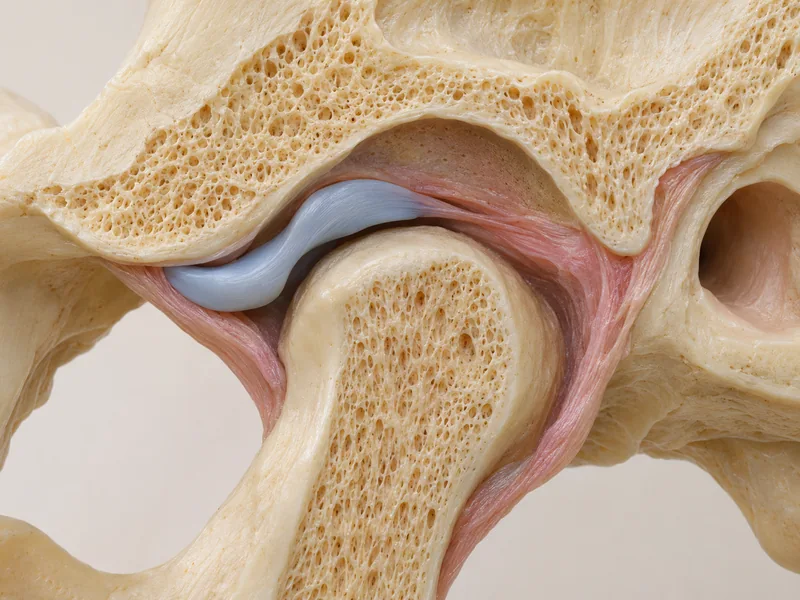
The disc contributes to movement between the mandible and skull. It is not a displaced tooth.
Some displaced discs regain their relationship to the condyle during opening; others do not. Restricted movement may occur.
Pain, locking and range of movement matter more than sound alone. History, examination and sometimes imaging clarify the findings.
Clicking or restricted movement.
Symptoms and examination.
Do not attempt forceful manipulation.
Three steps. No audio.
Each scene can also be selected manually.

Silent educational film with German on-screen text and simplified teaching images. Not a patient case or a promised treatment outcome. The full English explanation is available below.
The disc contributes to movement between the mandible and skull. It is not a displaced tooth.
Some displaced discs regain their relationship to the condyle during opening; others do not. Restricted movement may occur.
Pain, locking and range of movement matter more than sound alone. History, examination and sometimes imaging clarify the findings.
Disc displacement concerns the joint pad. Dislocation concerns the position of the condyle.
Painless clicking is common and generally does not require treatment on its own.
No. Dislocation concerns the condyle outside its normal movement position; it is a different finding.
New locking or pain needs prompt assessment; marked symptoms or inability to eat or drink warrant urgent care.
Editorially suggested question to discuss with Dr Niusha Barahmand Pour:
Is my joint sound associated with a functional limitation?
Recurring jaw symptoms can be examined in context.
Arrange assessment of jaw symptomsAppointment selection at DoctolibDisc displacement concerns the joint pad. Dislocation concerns the position of the condyle.
Editorial research: . General information, not an individual diagnosis or treatment recommendation. Teaching illustrations are simplified and do not depict a patient case.