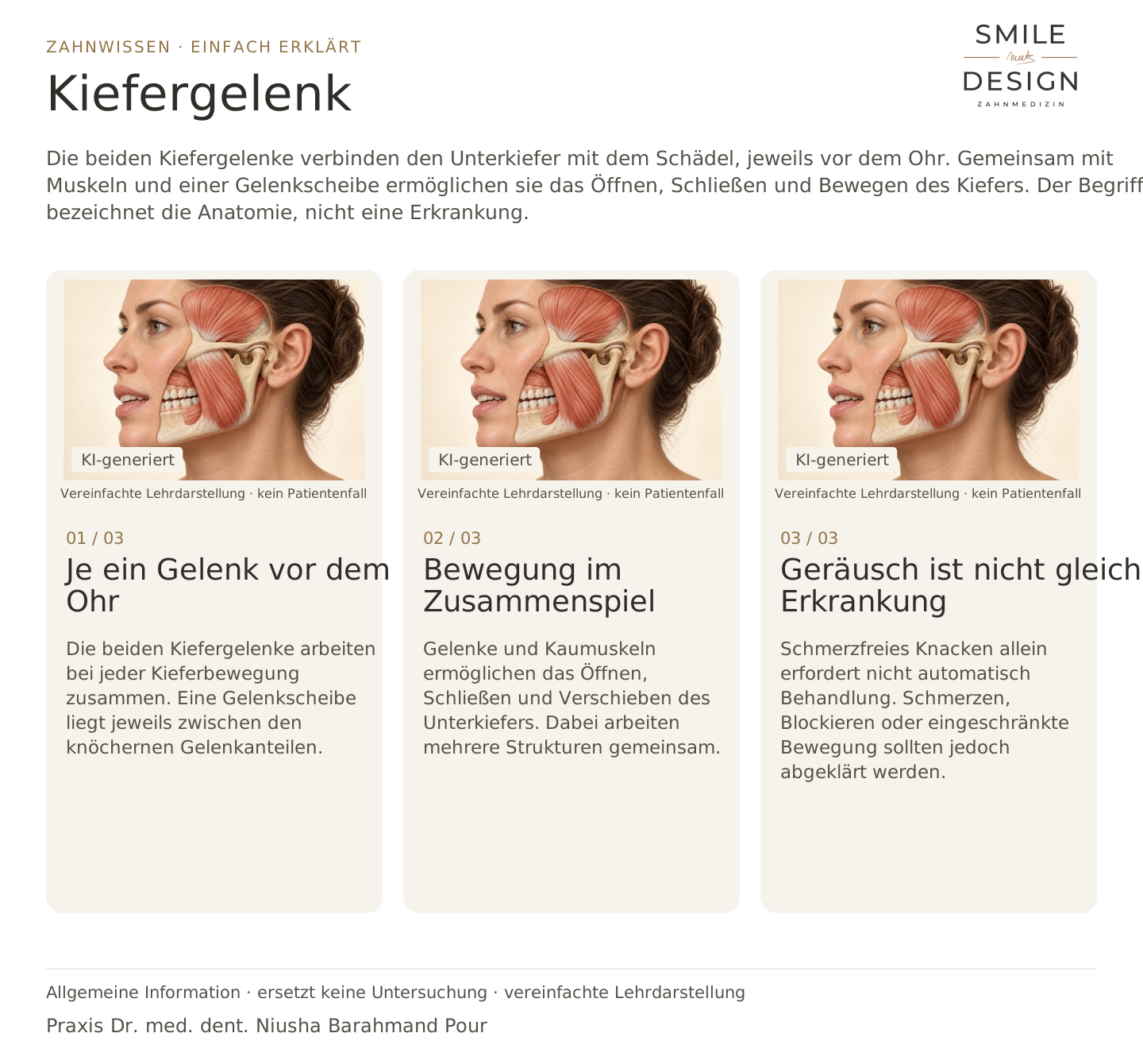
Where are the joints?
On the right and left in front of the ears, between the lower jaw and skull.

The two temporomandibular joints connect the lower jaw to the skull, one in front of each ear. Together with muscles and a joint disc, they allow the jaw to open, close and move. The term describes anatomy, not a disease.
For dental trainees & teams
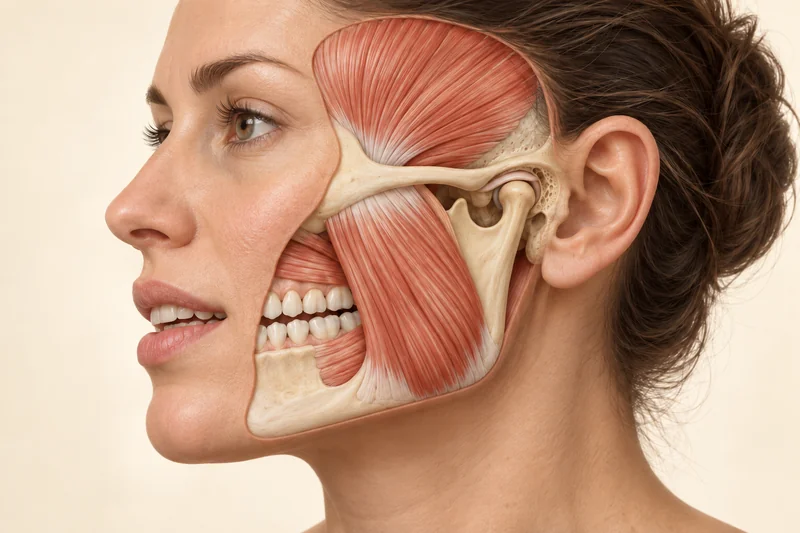
Both temporomandibular joints work together whenever the jaw moves. A joint disc lies between the bony parts of each joint.
The joints and chewing muscles enable the lower jaw to open, close and move. Several structures work together.
Painless clicking alone does not automatically need treatment. Pain, locking or restricted movement should be assessed.
On the right and left in front of the ears, between the lower jaw and skull.
Together with muscles, they allow the jaw to open, close and move.
With pain, locking, altered or restricted movement. A sound alone is not a diagnosis.
Three steps. Straight to the point.
Explanations are also shown on screen.

Silent film in German · English explanations in the three views above
The joint is part of normal anatomy. TMD describes a group of disorders that can affect the joints and/or chewing muscles.
No. TMJ is an anatomical structure. TMD covers different symptoms and functional disorders in the jaw area.
Not automatically. Pain, locking or restricted movement are particular reasons for examination.
Not reliably. History, symptoms and functional findings need to be considered together.
A question to discuss with Dr. med. dent. Niusha Barahmand Pour:
Which findings suggest that my symptoms involve the joint or muscles?
At the practice, the findings, personal wishes and possible next steps are discussed through a consultation and examination.
An examination can help clarify jaw pain or restricted movement.
Have jaw symptoms assessedChoose an appointment on DoctolibBuild on the simple explanation with clinical terms, key distinctions and a knowledge question.
A joint sound alone reveals neither the precise cause nor whether treatment is required.
Editorial research: 23 October 2026. This explanation covers general principles and does not replace a personal examination. Suitable treatment is discussed following individual assessment.