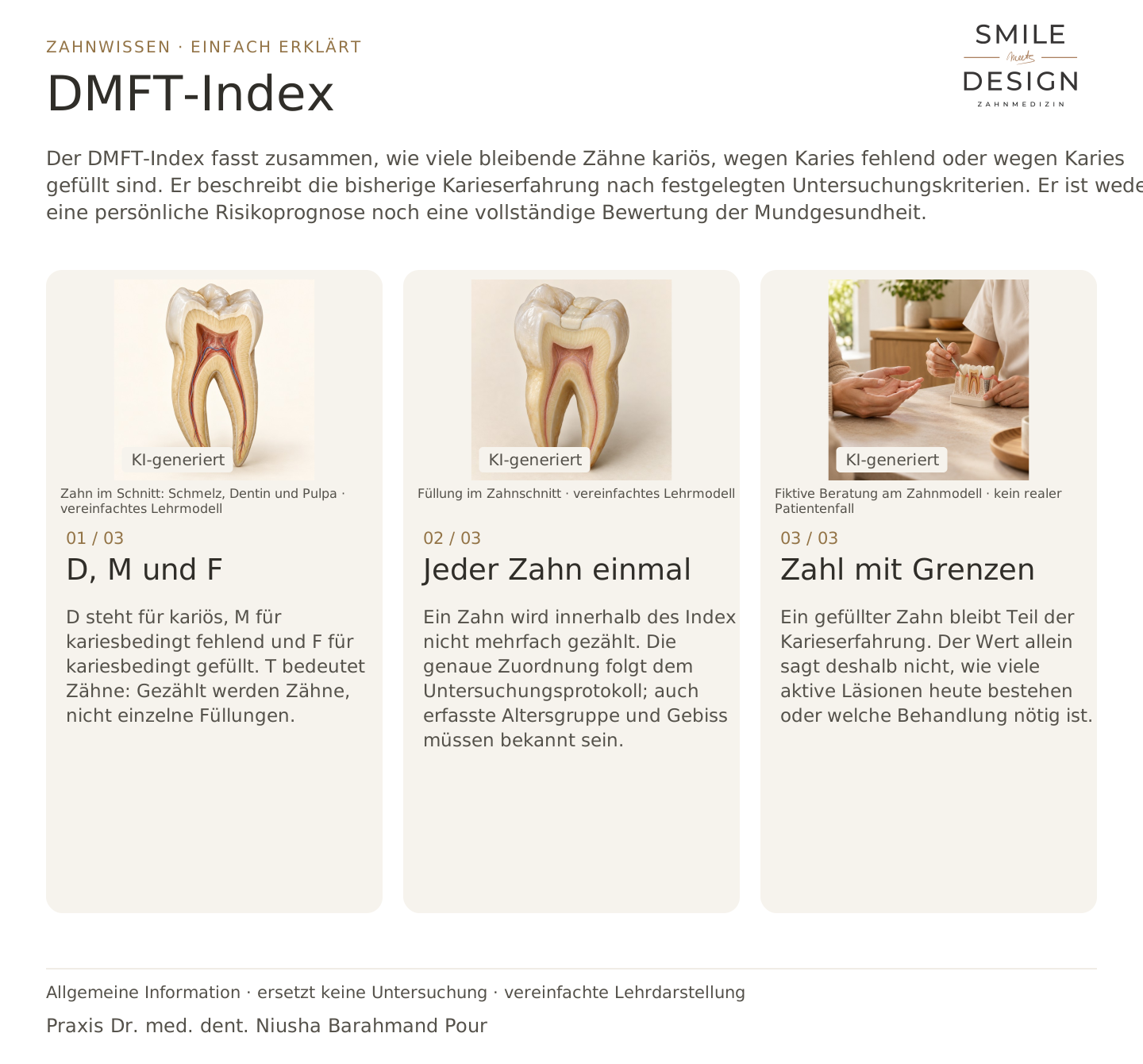
What is counted?
Decayed teeth and teeth missing or filled because of decay, under defined rules.

The DMFT index counts permanent teeth that are decayed, missing because of decay or filled because of decay. It describes experience of dental caries using defined examination criteria. It is neither a personal risk prediction nor a complete measure of oral health.
For dental trainees & teams
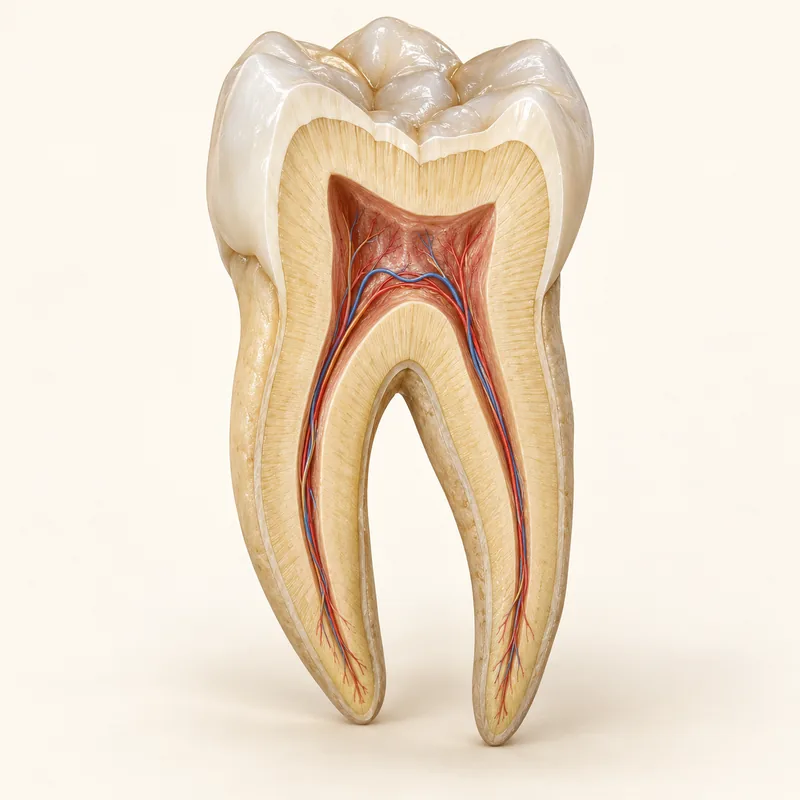
D means decayed, M missing because of decay and F filled because of decay. T stands for teeth: the count is of teeth, not individual fillings.
A tooth is not counted several times within the index. Classification follows the examination protocol; the age group and dentition being assessed also matter.
A filled tooth remains part of the caries experience. The total alone does not reveal how many active lesions exist today or what treatment is needed.
Decayed teeth and teeth missing or filled because of decay, under defined rules.
Primarily for comparing groups and describing experience of caries.
Age, dentition, survey period, methods and the individual components.
Three steps. Straight to the point.
Explanations are also shown on screen.

Silent film in German · English explanations in the three views above
DMFT counts affected teeth. DMFS counts affected tooth surfaces, describing their distribution in more detail.
No. Previously restored teeth and teeth lost because of decay also contribute.
It refers to primary teeth. Primary and permanent dentitions are analysed separately.
Age, included teeth and examination rules can differ. Comparisons require an appropriate context.
A question to discuss with Dr. med. dent. Niusha Barahmand Pour:
Which current findings matter for my preventive care, independently of earlier fillings?
At the practice, findings, personal wishes and possible next steps are discussed through a consultation and examination.
Looking at current tooth surfaces matters more for personal prevention than a total alone.
Discuss preventive careChoose an appointment on DoctolibBuild on the simple explanation with clinical terms, key distinctions and a knowledge question.
A DMFT total can remain unchanged after successful care: a treated tooth may move from D to F without leaving the total.
Editorial research: 23 October 2026. This explanation covers general principles and does not replace a personal examination. Suitable treatment is discussed following individual assessment.