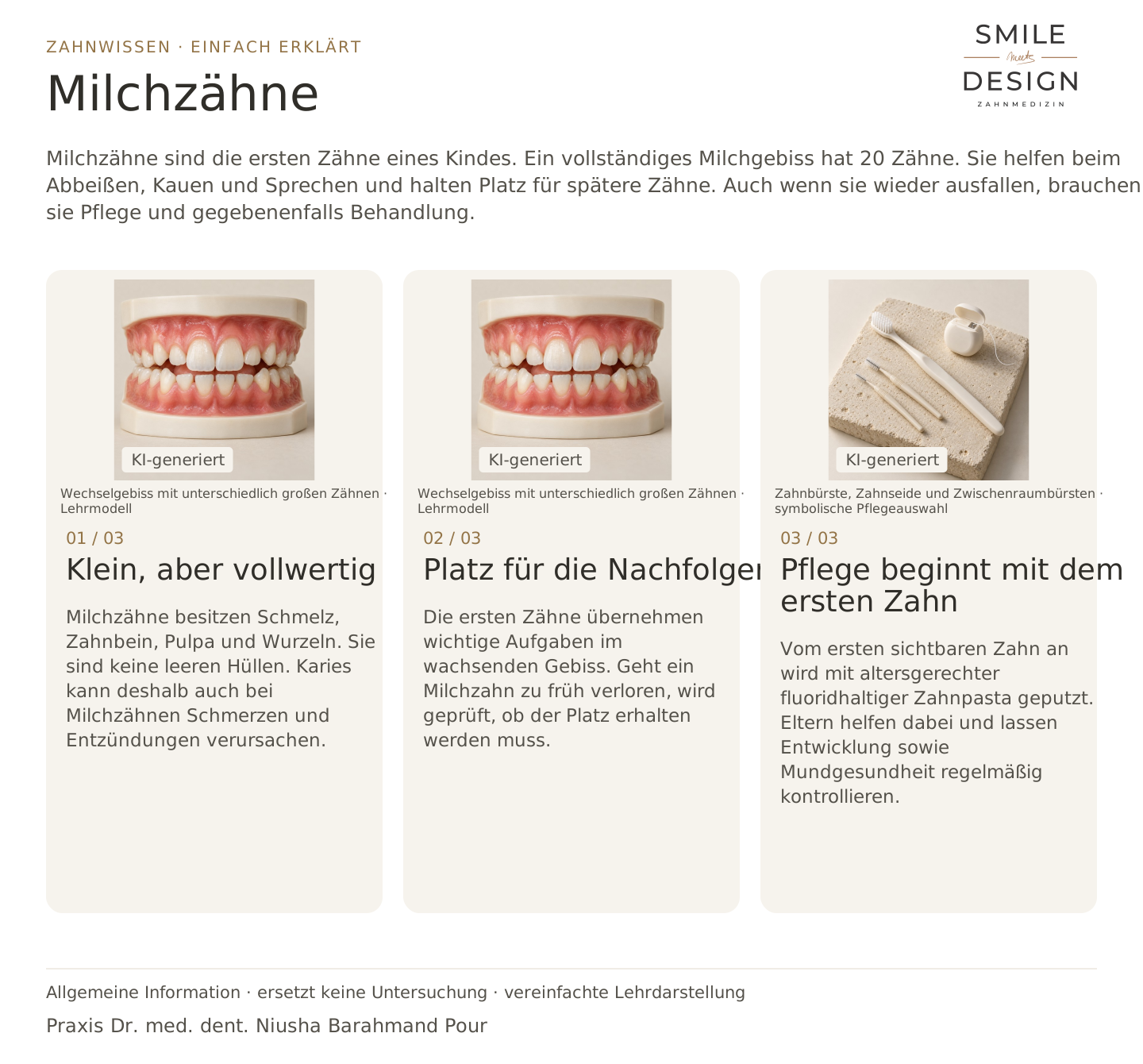
How many baby teeth are there?
A complete primary dentition contains 20 teeth.

Baby teeth are a child’s first set of teeth. A complete primary dentition has 20 teeth. They help with biting, chewing and speech and hold space for later teeth. Although they will fall out, they need care and treatment when indicated.
For dental trainees & teams
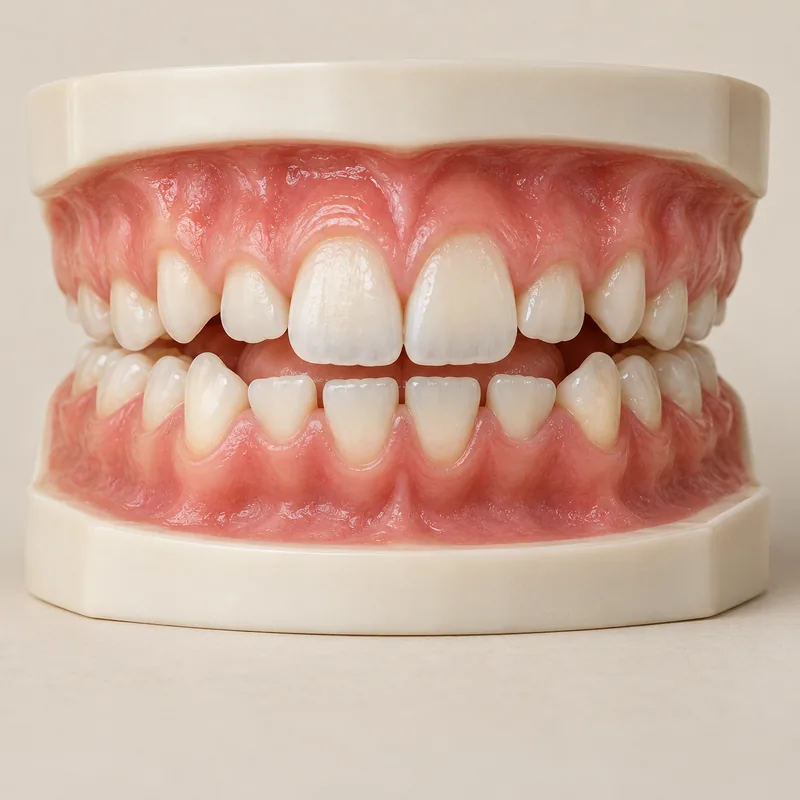
Baby teeth have enamel, dentine, pulp and roots. They are not empty shells. Tooth decay can therefore cause pain and inflammation in baby teeth too.
The first teeth have important roles in the developing dentition. If one is lost too early, the need to preserve the space is assessed.
Brush from the first visible tooth with age-appropriate fluoride toothpaste. Parents help with brushing and arrange regular checks of development and oral health.
A complete primary dentition contains 20 teeth.
For chewing, speech and the development of the dentition.
Parent-assisted brushing, age-appropriate fluoride and regular check-ups.
Three steps. Straight to the point.
Explanations are also shown on screen.

Silent film in German · English explanations in the three views above
The first large permanent molars erupt behind the baby teeth. No baby tooth falls out first, so these new teeth can be easy to overlook.
Yes. Their roots gradually resorb during normal tooth replacement. A naturally shed baby tooth can therefore look as if it never had a root.
A cavity needs assessment. Prevention and treatment depend on depth, activity, symptoms and time until replacement. Simply waiting for the tooth to fall out can be harmful.
Usually at about two to three years of age. Individual variation is normal; development is assessed during check-ups.
A question to discuss with Dr. med. dent. Niusha Barahmand Pour:
How can we support baby-tooth care, and which developments should be observed at future check-ups?
Symptoms, examination findings and personal wishes form the basis of individual treatment planning.
Questions about caring for and developing the first teeth can be discussed early.
Discuss children’s teethChoose an appointment on DoctolibBuild on the simple explanation with clinical terms, key distinctions and a knowledge question.
Baby molars are later replaced by premolars. Permanent molars are additional teeth that erupt further back.
Editorial research: 23 October 2026. This explanation covers general principles and does not replace a personal examination. Suitable treatment is discussed following individual assessment.