What does it do?
It supports mechanical brushing movements.

An electric toothbrush uses a motor to move its bristles. It can make consistent brushing movements easier. Which surfaces are reached and how much pressure is applied still depend on the user.
For dental trainees & teams
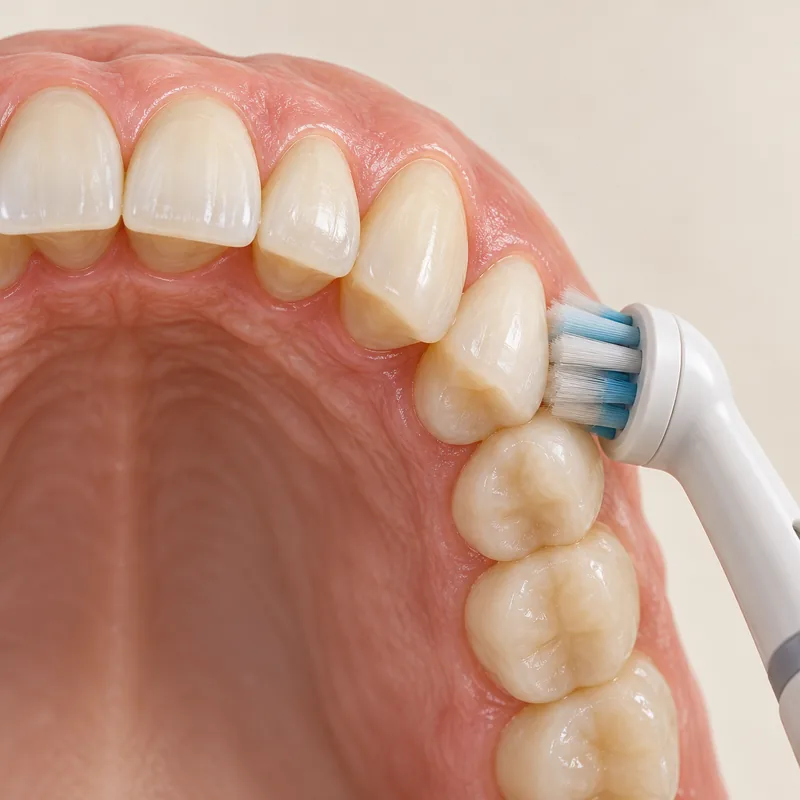
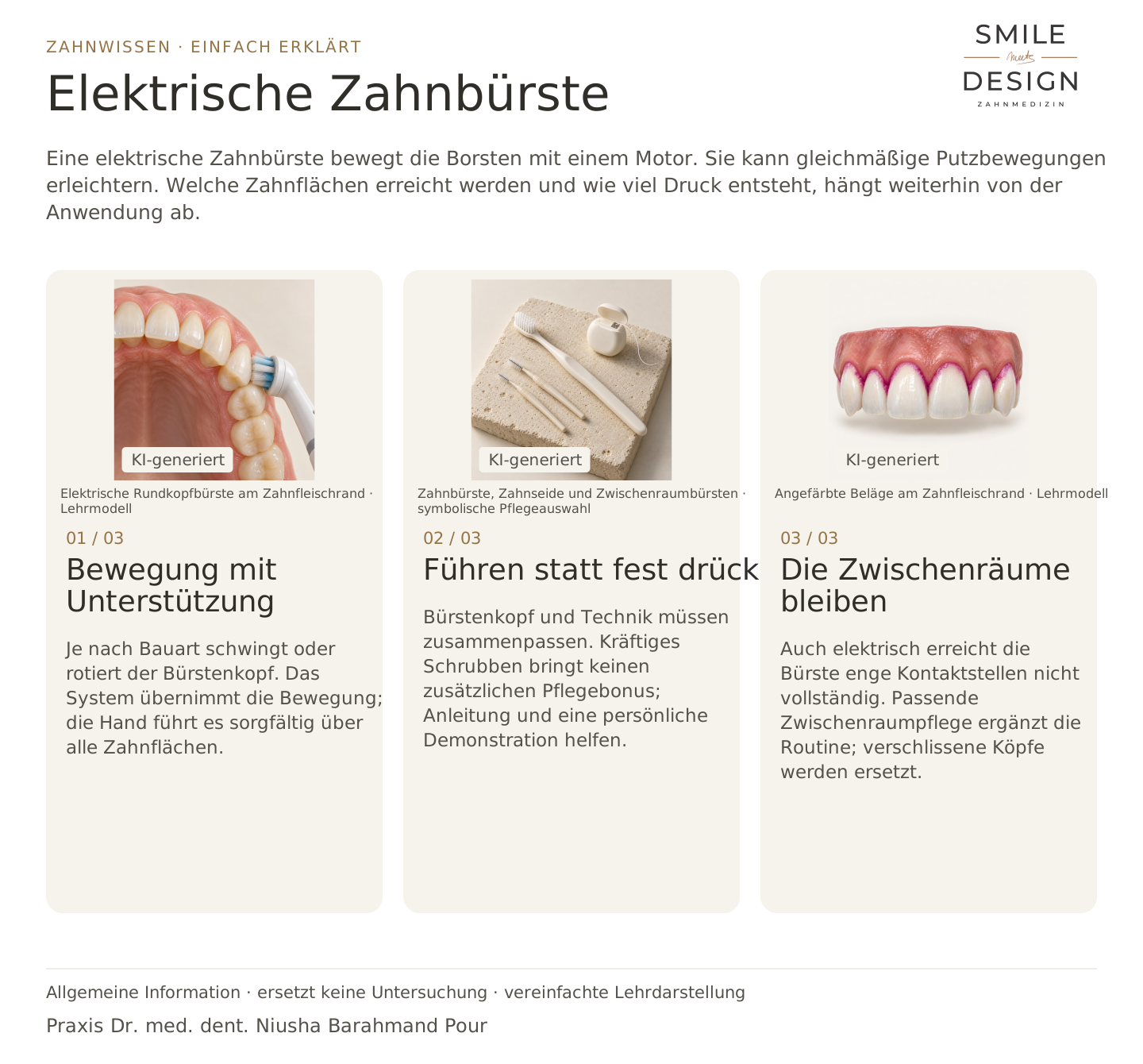
Depending on its design, the head oscillates or rotates. The device supplies movement while the hand guides it across every tooth surface.
The head and the technique need to work together. Hard scrubbing is not a care bonus; instructions and an individual demonstration can help.
Even a powered brush does not fully clean tight contact areas. Appropriate interdental care complements brushing; worn heads need replacing.
It supports mechanical brushing movements.
People who find a thorough routine easier with this support.
A suitable head, gentle pressure, full coverage and interdental care.
Three steps. Straight to the point.
Explanations are also shown on screen.

Silent film in German · English explanations in the three views above
The motor moves the bristles. It does not automatically find every missed surface or replace a suitable routine.
Both types can be used effectively. Some people find it easier to establish thorough care with a powered brush.
They use different movements. Guidance depends on the model, not just its name.
No. Cleaning between teeth remains a separate task.
A question to discuss with Dr. med. dent. Niusha Barahmand Pour:
Am I reaching difficult areas with my brush without applying too much pressure?
Individual findings are the basis for discussing appropriate next steps.
Bringing the brush to an appointment makes a practical demonstration easier.
Discuss brushing habitsChoose an appointment on DoctolibBuild on the simple explanation with clinical terms, key distinctions and a knowledge question.
A technical feature is useful only if it supports effective cleaning.
Editorial research: 23 October 2026. This explanation covers general principles and does not replace a personal examination. Suitable treatment is discussed following individual assessment.