What is practised?
Sequence, guidance and gentle pressure.

Toothbrushing technique describes how the brush is guided. A consistent sequence, gentle pressure and reaching outer, inner and chewing surfaces matter more than forceful scrubbing.
For dental trainees & teams
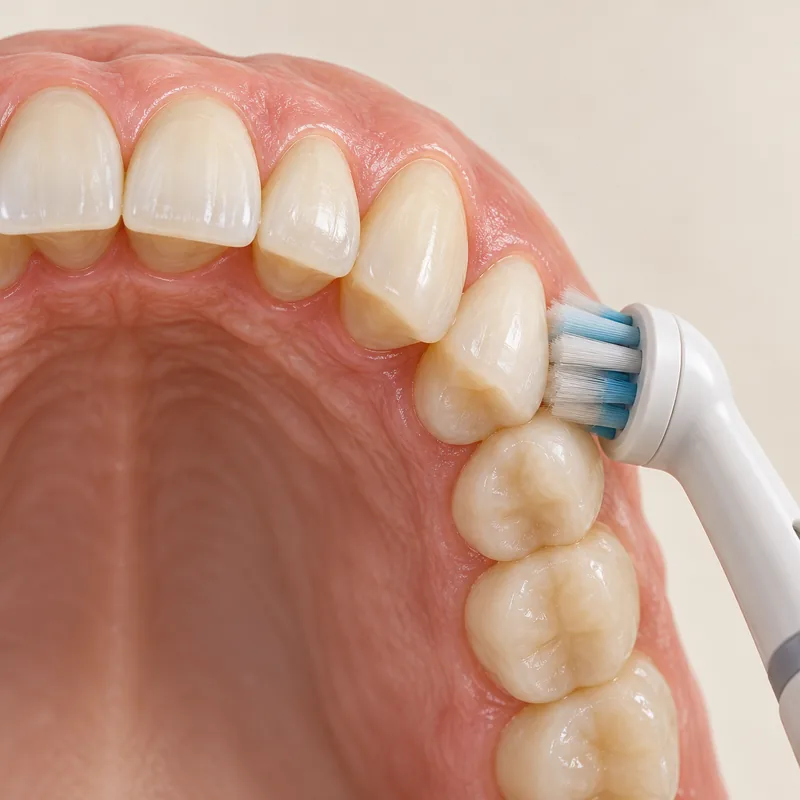
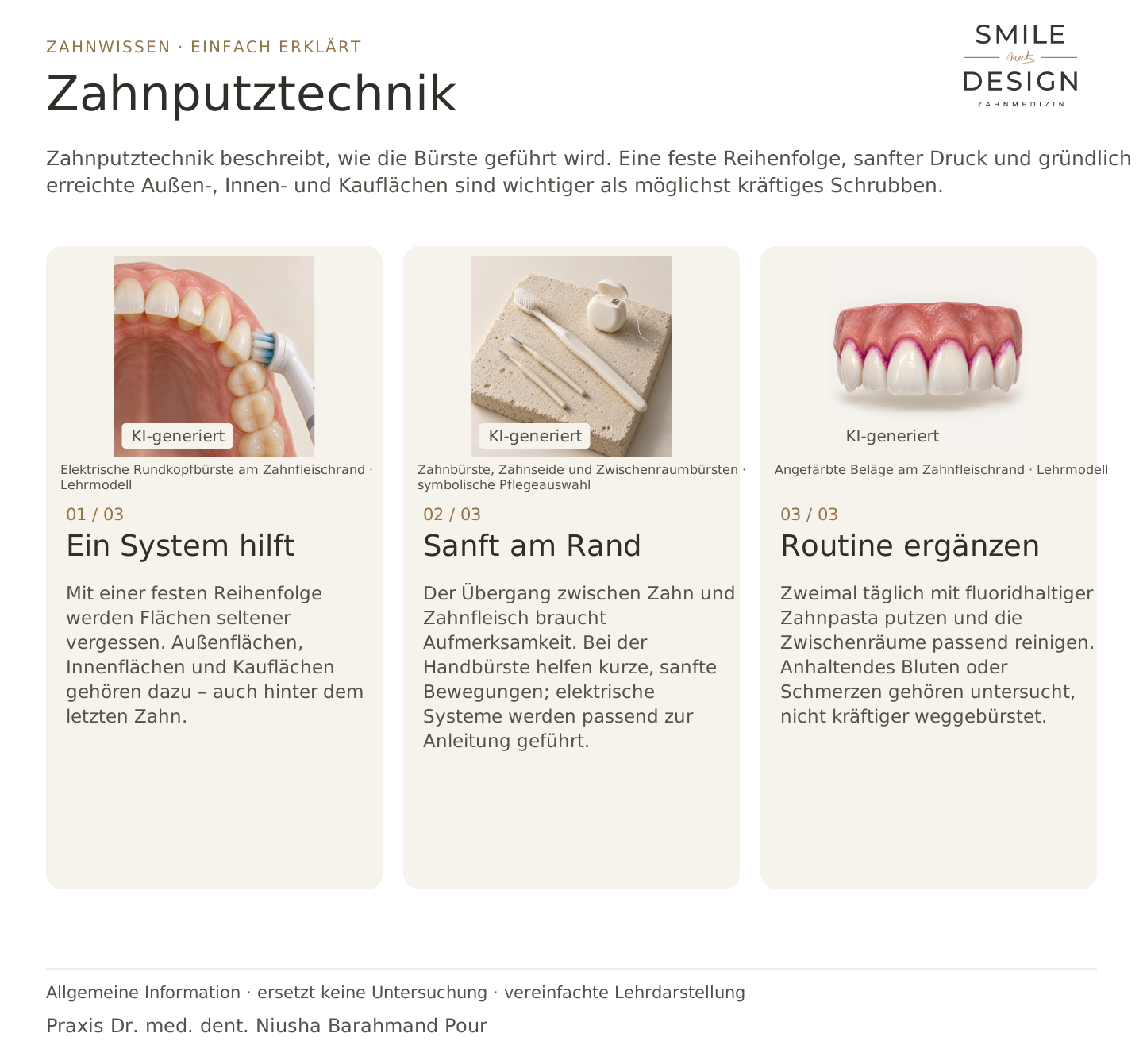
A consistent order makes surfaces harder to miss. Include outer, inner and chewing surfaces, as well as the back of the last tooth.
The junction between tooth and gum needs attention. Short gentle strokes help with a manual brush; follow the appropriate guidance for powered systems.
Brush twice daily with fluoride toothpaste and clean appropriately between teeth. Persistent bleeding or pain needs assessment, not more forceful brushing.
Sequence, guidance and gentle pressure.
Children, people with limited dexterity and anyone with recurring deposits or symptoms.
By surfaces reached and clinical findings, not only a timer.
Three steps. Straight to the point.
Explanations are also shown on screen.

Silent film in German · English explanations in the three views above
Time supports a routine, but does not replace deliberate cleaning of every surface.
It must suit age, dexterity, brush and oral condition. Individual instruction is more useful than a complicated technique name.
No. Excess pressure can strain tissues. Soft bristles and controlled movements are usually more useful.
They provide a helpful guide. It also matters whether every surface is actually reached.
A question to discuss with Dr. med. dent. Niusha Barahmand Pour:
Which areas am I missing, and which movement would help there?
Individual findings are the basis for discussing appropriate next steps.
A practical demonstration can make difficult areas easier to manage in everyday care.
Discuss practical oral careChoose an appointment on DoctolibBuild on the simple explanation with clinical terms, key distinctions and a knowledge question.
A sequence organises the surfaces; technique describes the brush movement.
Editorial research: 23 October 2026. This explanation covers general principles and does not replace a personal examination. Suitable treatment is discussed following individual assessment.