Meaning?
Connected endodontic and periodontal disease.

An endodontic-periodontal lesion links disease inside a tooth with damage to its supporting tissues. Pain, pus or a deep pocket alone does not identify the cause. Both areas require assessment.
For training & practice ↓
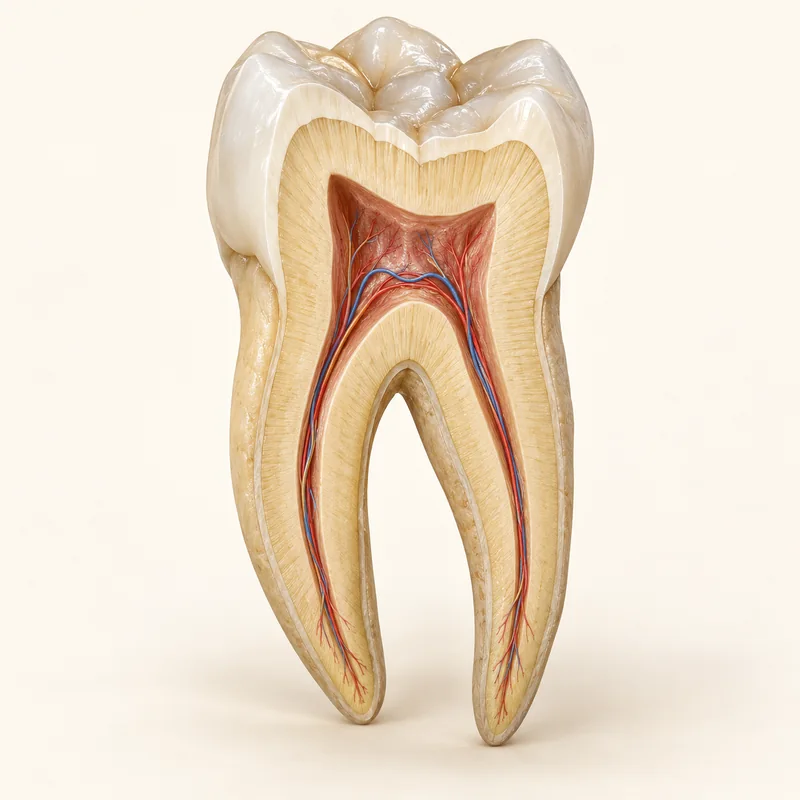
Pulp and tissues around the root can communicate through natural or pathological pathways.
Sensibility testing, probing and appropriate imaging help; root damage also matters.
Root canal and periodontal care may both be needed. Tooth retention depends on the overall findings.
Pulp and tissues around the root can communicate through natural or pathological pathways.
Sensibility testing, probing and appropriate imaging help; root damage also matters.
Root canal and periodontal care may both be needed. Tooth retention depends on the overall findings.
Connected endodontic and periodontal disease.
Multiple findings together.
No; damage and response matter.
Three steps. No audio.
Each scene can also be selected manually.

Silent educational film with German on-screen text and simplified teaching images. Not a patient case or a promised treatment outcome. The full English explanation is available as text.
The first addresses the tooth interior; the second its supporting tissues. A combined lesion needs both perspectives.
Not when an infected root canal is involved. Treatment follows the diagnosis.
No. A local deep defect can reflect endodontic communication or root damage.
Seek prompt assessment, the same day if worsening acutely; breathing or swallowing difficulty requires emergency help.
Editorially suggested question to discuss with Dr Niusha Barahmand Pour:
Which findings suggest involvement of the tooth interior?
Phone about swelling or discharge so tooth and gum findings can be assessed together.
Call the practice · 0221 669 401 80Telephone contactThe first addresses the tooth interior; the second its supporting tissues. A combined lesion needs both perspectives.
Editorial research: . General information, not an individual diagnosis or treatment recommendation. Teaching illustrations are simplified and do not depict a patient case.