What is insufficient?
Space for the teeth within a dental arch.

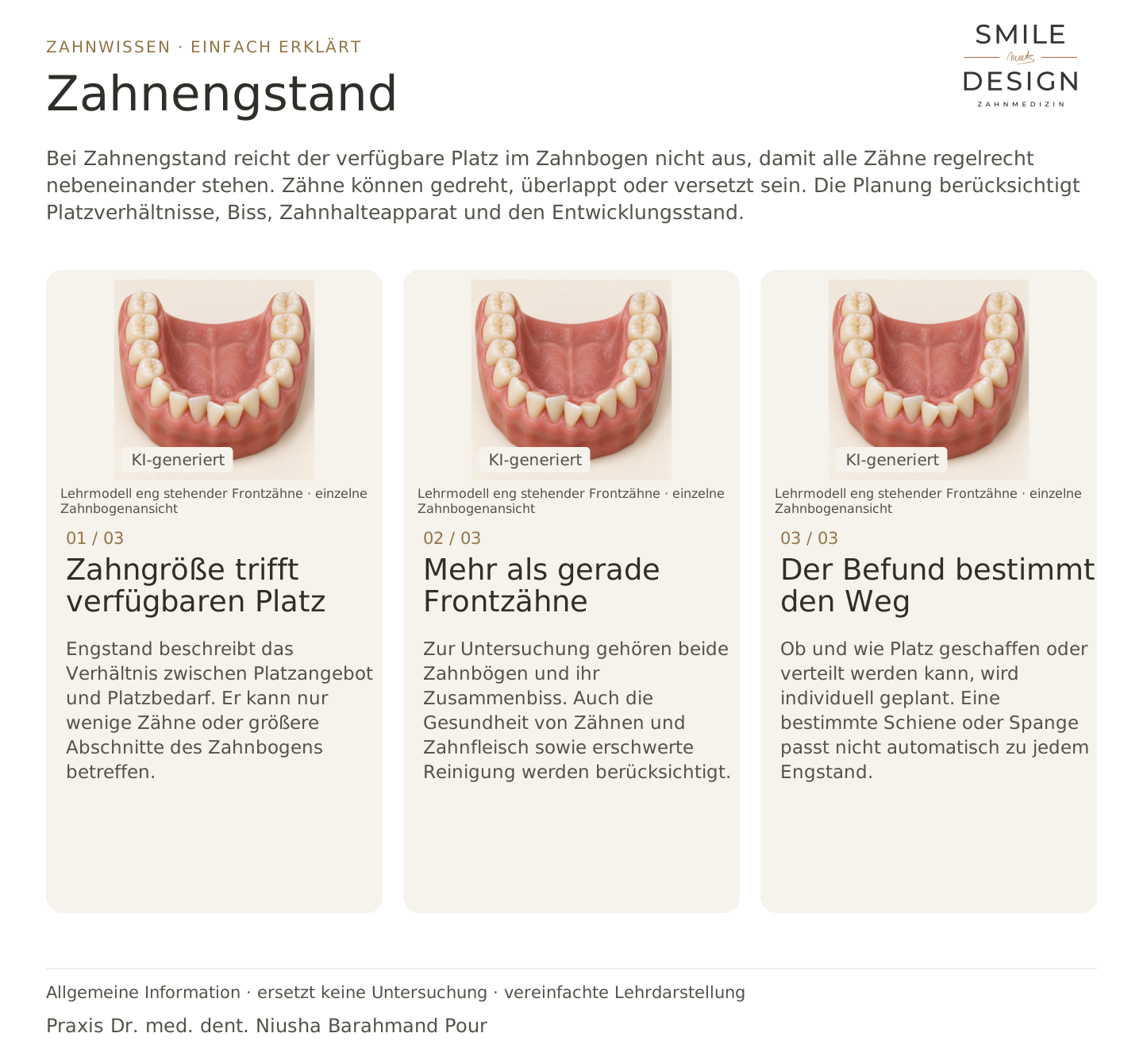
With dental crowding, there is not enough room in the dental arch for all teeth to align normally side by side. Teeth may rotate, overlap or be displaced. Planning considers space, bite, supporting tissues and developmental stage.
For dental trainees & teams
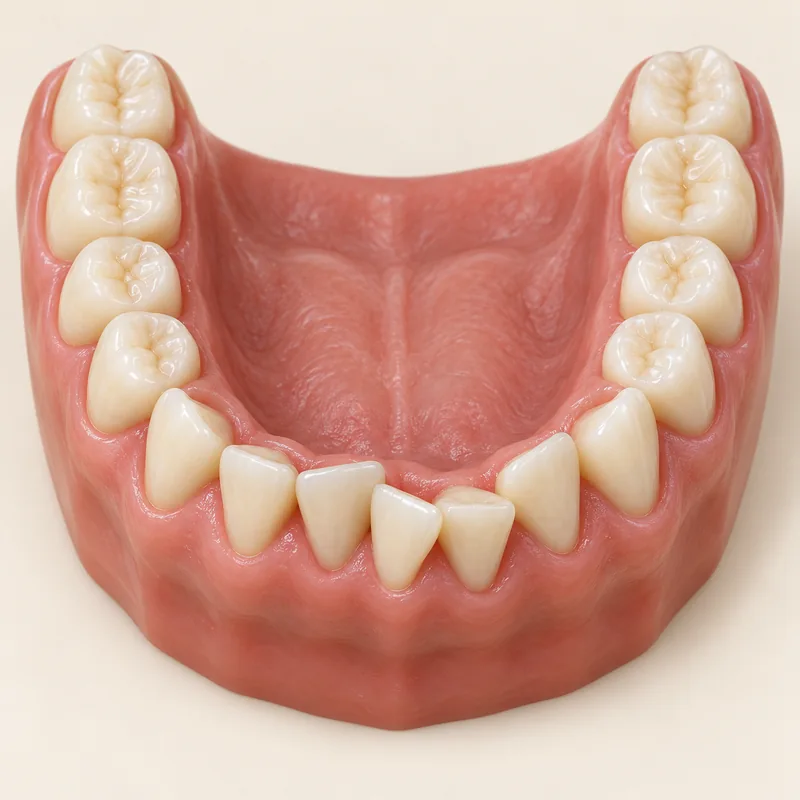
Crowding describes the relationship between available and required space. It may affect only a few teeth or larger sections of the arch.
Examination includes both arches and how they meet. Tooth and gum health, as well as difficulty cleaning, are also considered.
Whether and how space can be created or redistributed is planned individually. A particular aligner or brace does not automatically suit every case of crowding.
Space for the teeth within a dental arch.
Overlapping, rotated or displaced teeth, for example.
Both arches, their bite relationship and healthy supporting tissues.
Three steps. Straight to the point.
Explanations are also shown on screen.

Silent film in German · English explanations in the three views above
Crowding describes a shortage of space within an arch. Bite relationship describes how the upper and lower teeth meet. Both are assessed together; crowding can also occur with an otherwise normal bite relationship.
No. A single feature does not reveal the total space requirement. Examination and models or scans support planning.
Yes. Tooth positions can change throughout life. New movement should also prompt assessment of the supporting tissues.
No. Options depend on the overall findings. Extraction is not an automatic consequence of the term crowding.
A question to discuss with Dr. med. dent. Niusha Barahmand Pour:
How much space is lacking, and what role do the bite and supporting tissues play in planning?
Symptoms, examination findings and personal wishes form the basis of individual treatment planning.
Tooth position and bite are assessed together before a correction is planned.
Discuss tooth alignmentChoose an appointment on DoctolibBuild on the simple explanation with clinical terms, key distinctions and a knowledge question.
Crowding is assessed within the dental arch; the occlusion between upper and lower jaws needs additional examination.
Editorial research: 23 October 2026. This explanation covers general principles and does not replace a personal examination. Suitable treatment is discussed following individual assessment.