What is it?
A thin protective layer for selected grooves on back teeth.

A fissure sealant covers selected grooves and pits on the chewing surface with a thin protective layer. It can help prevent decay. Whether it is appropriate depends on the tooth and the risk of decay.
For dental trainees & teams
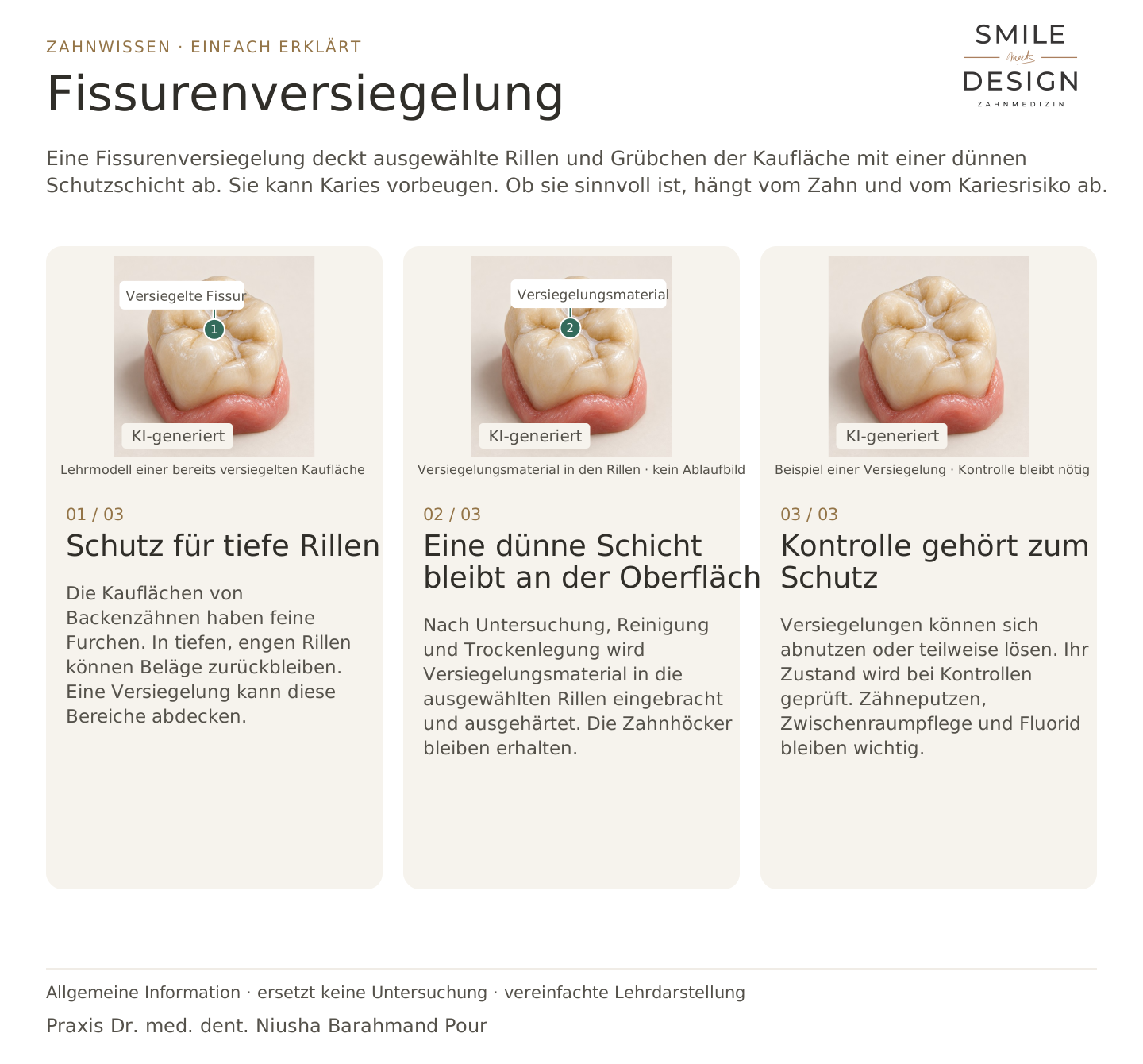
The chewing surfaces of back teeth have fine grooves. Deposits can remain in deep, narrow grooves. A sealant can cover these areas.
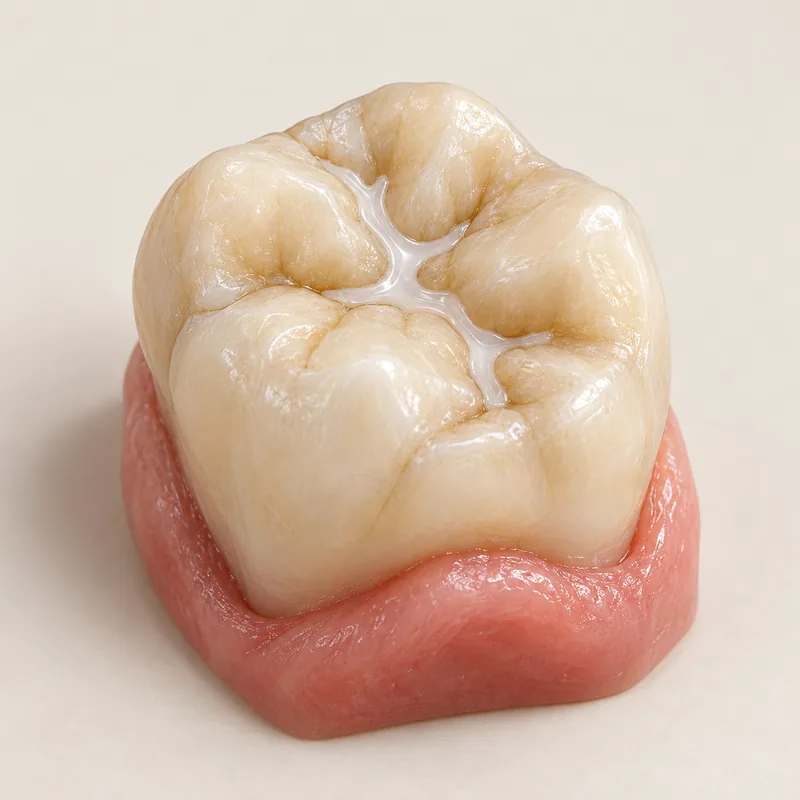
After examination, cleaning and isolation to keep the tooth dry, sealant material is placed in the selected grooves and hardened. The tooth cusps are preserved.
Sealants can wear down or partly come away. Their condition is checked at reviews. Toothbrushing, cleaning between teeth and fluoride remain important.
A thin protective layer for selected grooves on back teeth.
People with suitable teeth and fissures at risk; an examination establishes the need.
The grooves are cleaned, prepared under dry conditions, sealed and then checked.
Three steps. Straight to the point.
Explanations are also shown on screen.

Silent film in German · English explanations in the three views above
A sealant forms a local barrier in grooves. Fluoride supports the mineral balance at the tooth surface. Neither replaces daily cleaning.
Yes, they may be considered for suitable adult teeth. The surface and the individual's risk of decay are key.
No. A sealant protects selected grooves. A filling restores a defect. Any areas of concern are examined first.
Yes. The protective layer does not cover every tooth surface and needs to be checked itself.
A question to discuss with Dr. med. dent. Niusha Barahmand Pour:
Which grooves on my teeth are at risk, and would a sealant be useful there?
Prevention and tooth preservation are part of the practice's care; recommendations are tailored to the individual's starting situation.
We can discuss whether a sealant suits your teeth after examining the chewing surfaces.
Have your chewing surfaces assessedChoose an appointment on DoctolibBuild on the simple explanation with clinical terms, key distinctions and a knowledge question.
Sealing protects grooves; a filling replaces lost tooth structure. An examination determines which measure suits the surface.
Editorial research: 23 October 2026. This explanation covers general principles and does not replace a personal examination. Suitable treatment is discussed following individual assessment.